
"60587"
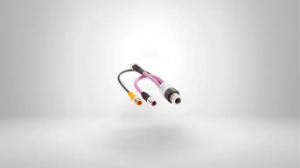
Sensor cables are specialized cables designed for connecting sensors to control systems or data acquisition devices. These cables provide the necessary electrical connections for transmitting power supply, signal, and data between the sensor and the target device. Sensor cables are often shielded to minimize interference and maintain signal integrity in noisy industrial environments. They come in different lengths, connector types, and specifications to accommodate various sensor configurations and connectivity requirements. Sensor cables ensure reliable and accurate data transmission from sensors to the control or monitoring systems.
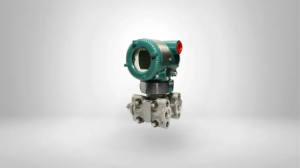
Pressure sensors, also known as pressure transducers or pressure transmitters, are devices used to measure and monitor pressure levels in various systems and applications. These sensors convert pressure into an electrical signal, providing real-time information about pressure changes or absolute pressure values. Pressure sensors are employed in industries such as HVAC, manufacturing, automotive, and aerospace for tasks like pressure monitoring, control, or safety. They offer accuracy, reliability, and compatibility with different media and pressure ranges, facilitating precise pressure measurement in diverse environments.
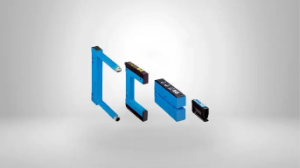
Fork sensors are critical in industrial automation, providing efficient and accurate object detection within defined areas. Comprising a sender and receiver unit, these sensors create a "fork" of infrared light beams. When an object interrupts the beams, the sensor triggers a response, enabling reliable detection. Fork sensors are versatile, finding applications in packaging lines, material handling, and assembly processes. Their ability to detect small, transparent, or irregular objects enhances production efficiency and quality control. By swiftly identifying object presence or absence, fork sensors streamline automation workflows, reduce errors, and enhance overall productivity, making them tools in modern manufacturing environments.
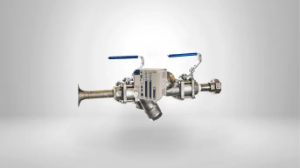
Steam traps are essential for any business that uses steam to power its machinery. They are responsible for removing condensate from the piping, which can build up and cause damage if left unchecked. Steam traps come in a variety of different designs, each with its advantages and disadvantages. The most common types are thermostatic, inverted buckets, and mechanical traps. Thermostatic traps are the most common type of steam trap, and they use a sensing element to open and close the valve in response to changes in temperature. Inverted bucket traps use a float to control the valve and are well-suited for applications where large volumes of condensate need to be removed. Mechanical traps use a diaphragm or piston to open and close the valve and are often used in high-pressure applications. No matter what type of steam trap you need, Centro has a complete selection available online.
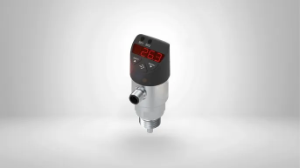
Temperature sensors are devices used to measure and monitor temperature levels in various industrial, HVAC, or scientific applications. These sensors provide accurate temperature readings for process control, environmental monitoring, equipment protection, or research purposes. Temperature sensors utilize different technologies, including thermocouples, resistance temperature detectors (RTDs), or thermistors, offering options for different temperature ranges and accuracy requirements. They are crucial in ensuring optimal operating conditions, safety, and efficiency in diverse temperature-sensitive applications.
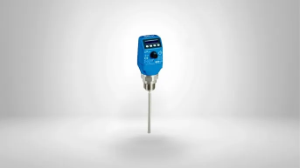
Level sensors are devices used to measure and monitor the level of liquids, powders, or granular materials in tanks, vessels, or containers. These sensors provide information about the fill level, ensuring efficient inventory management, process control, or safety monitoring. Level sensors utilize different technologies, including ultrasonic, capacitive, optical, or float-based methods, depending on the application and the properties of the material being measured. They are widely used in industries such as manufacturing, agriculture, wastewater treatment, and food processing.

$4,302.98
Subject to factory lead times

$712.43
Subject to factory lead times
$642.95
Subject to factory lead times
$712.43
Subject to factory lead times
$377.48
Subject to factory lead times
$1,741.14
Subject to factory lead times
Subject to factory lead times
$786.05
Subject to factory lead times
$298.66
Subject to factory lead times

$35.40
Subject to factory lead times

$41.47
Subject to factory lead times

$46.53
Subject to factory lead times
$4,302.98
Subject to factory lead times
$712.43
Subject to factory lead times
$642.95
Subject to factory lead times
$712.43
Subject to factory lead times
$377.48
Subject to factory lead times
$1,741.14
Subject to factory lead times
Subject to factory lead times
$786.05
Subject to factory lead times
$298.66
Subject to factory lead times
$35.40
Subject to factory lead times
$41.47
Subject to factory lead times
$46.53
Subject to factory lead times