
Instrumentation Valves - ICON
Instrumentation valves provide precise fluid control for measurement, sampling, and process control systems. Shop instrumentation solenoid valves for automated on/off switching in control loops, needle valves for fine flow adjustment in analyzer and transmitter installations, proportioning valves for electronically modulated flow control, and air-actuated valves for remote operation in process environments. Built-in materials like 316 stainless steel, brass, and PTFE, these small-bore instrumentation valves are designed for tight spaces, high pressures, and compatibility with gases, liquids, steam, and corrosive media. Browse our full selection of instrumentation valves below to find the right fit for your application, or contact Centro for sizing and selection assistance.
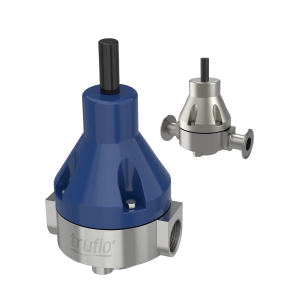
Configure product to see pricing
Configure product to see pricing
Configure product to see pricing
Configure product to see pricing
- Instrumentation and process control valves regulate, isolate, and direct the flow of fluids in industrial piping systems. The main types include ball valves (quarter-turn valves for quick on/off isolation with low pressure drop), globe valves (linear-motion valves designed for precise throttling and flow control), butterfly valves (compact quarter-turn valves for larger pipe sizes), gate valves (full-bore isolation valves for minimal pressure drop when fully open), check valves (prevent reverse flow to protect pumps and equipment), needle valves (fine-adjustment valves for instrument tubing and low-flow applications), diaphragm valves (isolate the process fluid from the valve mechanism — ideal for corrosive, abrasive, or sanitary applications), and plug valves (robust quarter-turn valves for dirty or viscous service). Each type is available in a range of materials, sizes, and pressure ratings to match specific process conditions.
- The choice depends on the function you need the valve to perform. A ball valve is the best choice for quick on/off isolation — it opens and closes with a 90° turn of the handle, provides a full-bore flow path with minimal pressure drop when open, and seals tightly when closed. Use a ball valve when you need to fully open or fully close a line and don't need to control flow at intermediate positions. A globe valve is designed for throttling and flow control — its linear-motion plug can be positioned at any point between fully open and fully closed to regulate flow rate precisely. Use a globe valve when you need to modulate flow to a setpoint, especially in control valve applications with actuators and positioners. A butterfly valve is the most compact and lightweight option for larger pipe sizes (4" and above) — it uses a rotating disc to control flow and is commonly used in water, HVAC, and general process applications. Butterfly valves cost less than ball or globe valves in larger sizes but are not as tight-sealing for critical isolation.
- A control valve is an automated valve that continuously adjusts its position in response to a signal from a controller (PLC, DCS, or standalone controller) to regulate a process variable — flow rate, pressure, temperature, or level. It consists of the valve body (typically a globe, ball, or butterfly type), an actuator (pneumatic, electric, or hydraulic that moves the valve to the commanded position), and often a positioner (an intelligent device that compares the controller's signal to the valve's actual position and makes corrections for precision). A manual valve, by contrast, is positioned by hand using a handwheel, lever, or gear operator — it stays wherever the operator sets it and does not adjust automatically. Use a control valve when the process requires continuous, automatic regulation. Use a manual valve for isolation (fully open or fully closed) and for applications where occasional manual adjustment is sufficient.
- Cv (valve flow coefficient) is a standardized number that quantifies how much fluid a valve can pass at a given pressure drop. Specifically, a Cv of 1 means the valve will pass 1 gallon per minute of water at a pressure drop of 1 psi across the valve. A higher Cv means the valve can pass more flow. Cv matters because it is the primary tool for matching the valve size to your process flow requirements — if you select a valve with too low a Cv, it won't be able to pass enough flow even when fully open; if you select a valve with too high a Cv, it will operate mostly near the closed position, making precise control difficult and accelerating wear. To size a valve correctly, calculate the required Cv using your process flow rate, fluid properties (specific gravity, viscosity), and the available pressure drop across the valve, then select a valve model whose Cv range brackets the calculated value with the valve operating between 20% and 80% open at normal conditions.
- Valve material selection must match the fluid chemistry, temperature, and pressure. For general non-corrosive service (water, air, oil), carbon steel or ductile iron bodies with standard trim are cost-effective and widely used. For corrosive chemicals, acids, and caustics, stainless steel (316SS) is the standard upgrade — it resists a wide range of corrosive media and handles moderate temperatures. For highly corrosive environments (concentrated acids, chloride-rich media, bleach), specialty alloys like Hastelloy C, Monel, or titanium may be required. For sanitary applications (food, beverage, pharmaceutical), 316L stainless steel with electropolished surfaces and FDA-compliant elastomers is standard. For high-temperature service (steam, thermal oil, hot gas), the body material must maintain strength at temperature — carbon steel is good to about 800°F, stainless steel to about 1,000°F, and specialty alloys beyond that. Seat and seal materials are equally critical — PTFE seats handle most chemicals but are limited to about 450°F; metal seats handle higher temperatures; elastomers like Viton, EPDM, and Kalrez are selected based on chemical compatibility.