
Pilot Valves - Spartan Scientific
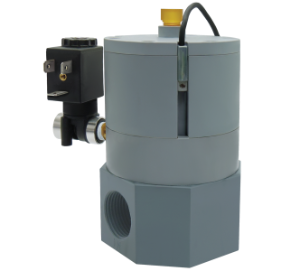
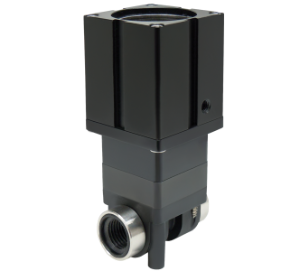
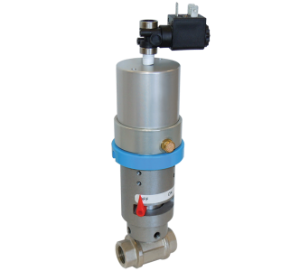
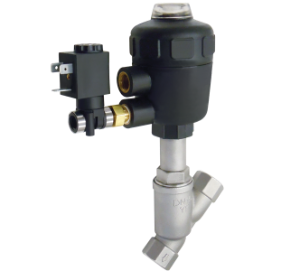
Pilot valves are critical for operating larger valves or control actuators in fluid control systems. These valves act as control mechanisms, receiving signals from external devices such as sensors, controllers, or other valves and initiating the opening or closing of the main valve or actuator. Pilot valves are commonly used in applications where high-pressure fluids or significant flow rates are involved, such as hydraulic systems, pneumatic systems, and industrial machinery. They provide reliable and precise control, ensuring efficient operation and safety. With various configurations and actuation methods available, including solenoid-operated, manual, or pilot-operated, pilot valves offer versatility and flexibility to meet specific system requirements.
Configure product to see pricing
Configure product to see pricing
Configure product to see pricing
Configure product to see pricing
Configure product to see pricing
Configure product to see pricing
Configure product to see pricing
Configure product to see pricing
Configure product to see pricing
Configure product to see pricing
Configure product to see pricing
Configure product to see pricing
Configure product to see pricing
Configure product to see pricing
Configure product to see pricing
Configure product to see pricing
$107.46$112.84
Subject to factory lead times
$159.22$167.18
Subject to factory lead times
Configure product to see pricing
Configure product to see pricing
Configure product to see pricing
Configure product to see pricing
Configure product to see pricing
Configure product to see pricing
Configure product to see pricing
Configure product to see pricing
Configure product to see pricing
Configure product to see pricing
Configure product to see pricing
Configure product to see pricing
Configure product to see pricing
Configure product to see pricing
Configure product to see pricing
Configure product to see pricing
$107.46$112.84
Subject to factory lead times
$159.22$167.18
Subject to factory lead times
- A pilot valve is a small solenoid valve used to control a larger valve or actuator by managing the pilot air or hydraulic signal that operates the main valve. Rather than the solenoid directly opening and closing the main process valve (which would require an impractically large and expensive solenoid), a small pilot valve is energized to route control pressure to the actuator of the main valve, which then opens or closes. This two-stage approach allows a small, low-power electrical signal to control a large process valve handling high pressures and flow rates. Pilot valves are available in 3/2-way and 4/2-way configurations. A 3/2-way pilot valve is used to control single-acting actuators — it alternately supplies pressure to and exhausts one side of the actuator. A 4/2-way pilot valve controls double-acting actuators. Centro carries ASCO Series 327/8327 direct-acting pilot valves, Series 316/8316 high-flow 3-way pilot valves, and Series 344/8344 4-way piston-operated pilot valves.
- A direct-acting solenoid valve uses the electromagnetic force of the solenoid coil to directly lift or push the valve element to open or close the flow path. The solenoid provides all the force needed to operate the valve, regardless of line pressure. Direct-acting valves work at zero pressure differential and are used for smaller orifice sizes and lower flow rates. A pilot-operated solenoid valve uses the solenoid to open a small pilot orifice, which then allows line pressure to act on a larger diaphragm or piston to open the main valve. The line pressure does most of the work. This allows pilot-operated valves to handle much larger orifice sizes and higher flow rates with a compact, low-power solenoid. However, pilot-operated valves require a minimum pressure differential across the valve to function. The ASCO Series 327/8327 available through Centro is a direct-acting 3/2-way valve with balanced poppet construction that provides high flow at minimum power levels, with PTFE rider rings and graphite-filled seals that reduce friction and eliminate sticking — making it ideal for process valve piloting in power plants, refineries, and chemical processing facilities.
- Pilot valves serve several critical functions in industrial process applications. Process valve piloting is the primary use — pilot valves provide the control air signal that operates the pneumatic actuators on large ball valves, butterfly valves, plug valves, globe valves, and other process valves in chemical plants, refineries, power plants, and water treatment facilities. When a control system sends an electrical signal to open or close a process valve, the pilot valve converts that electrical signal into pneumatic energy to move the actuator. Safety shutdown systems use pilot valves to quickly vent actuator air pressure and drive process valves to their fail-safe position during an emergency. Actuator control packages use pilot valves to provide the directional air control needed for double-acting pneumatic actuators. They are also used to pilot larger solenoid valves, diaphragm valves, and piston valves where the main valve requires more flow than a direct solenoid can provide. The ASCO Series 316/8316 is specifically designed as a high-flow 3-way pilot valve for quick closing of large control valves.
- When selecting a pilot valve for industrial applications, several features determine its reliability and suitability. Construction materials must be compatible with the pilot medium and ambient environment — stainless steel bodies and trim for corrosive environments, brass or aluminum for general service. Low friction internal components (PTFE rider rings, graphite-filled seals) prevent sticking and ensure reliable operation even after extended periods in one position — this is a common failure mode where pilot valves seize because they sit energized for weeks or months without cycling. The ASCO Series 327/8327 specifically addresses this with PTFE rider rings and graphite-filled seals. Explosion-proof or intrinsically safe electrical ratings are essential for installation in hazardous classified areas. Low power consumption reduces heat buildup in the coil and extends service life. Manual override capability allows operators to manually actuate the valve during testing or control system failures. The valve should be rated for the actuator's air supply pressure and temperature, and port connections should match the actuator and control tubing.
- Sizing a pilot valve for a pneumatic actuator requires matching the pilot valve's flow capacity (Cv) to the actuator's air volume and required response time. Determine the actuator's air volume — the total volume of compressed air needed to stroke the actuator fully, measured in cubic inches or liters. Determine the required stroking time — how fast the actuator must move the process valve. Calculate the required Cv using the actuator volume, available air supply pressure, and required stroking time. The pilot valve's Cv must equal or exceed this value. Also consider the port size — the pilot valve connections must be compatible with the actuator's pilot air connections and the tubing used in the installation. For double-acting actuators, a 4-way pilot valve (like the ASCO Series 344/8344) is needed; for single-acting (spring-return) actuators, a 3-way pilot valve (like the ASCO Series 327/8327 or 316/8316) is used. Undersizing the pilot valve results in slow actuator response because the valve cannot supply enough air volume quickly; oversizing adds cost but does not harm performance.