
Pressure Control
Centro carries a complete selection of pressure control products available to purchase online. Our inventory includes pressure gauges, switches, and pressure transmitters from leading manufacturers. Pressure contro...
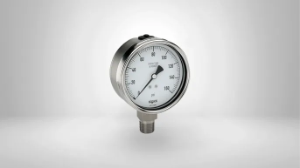
Centro offers pressure gauges, vital instruments that measure and indicate fluid or gas pressure within a system. These gauges are commonly employed in various industries, including manufacturing, oil and gas, automotive, and HVAC systems. Pressure gauges consist of a dial or digital display that shows the pressure reading and a sensing element that detects the pressure and converts it into a readable form. They come in different types, such as Bourdon tube gauges, diaphragm gauges, and digital pressure gauges, each suited for specific applications and pressure ranges. Pressure gauges provide crucial information for monitoring and controlling processes, ensuring optimal performance and safety. They enable operators to gauge system pressure levels, detect abnormalities, and make informed decisions regarding system adjustments or maintenance. Pressure gauges may also incorporate features such as maximum pressure indicators, adjustable pointers, or alarms for added functionality. With their accuracy, reliability, and ease of use, pressure gauges are crucial in maintaining operational efficiency and safety in various industries.
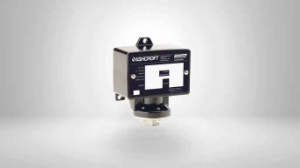
A pressure switch is a device used to monitor and control pressure levels in systems or equipment. It detects changes in pressure and activates or deactivates a switch or relay based on predefined pressure thresholds. Pressure switches are widely used in various applications such as HVAC, industrial automation, hydraulic systems, and pneumatic equipment. They provide reliable pressure monitoring, ensuring safe and efficient operation by triggering alarms, activating pumps or valves, or controlling system pressure.
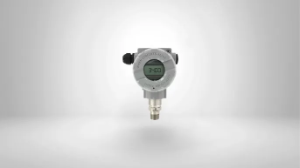
Pressure transmitters, also known as pressure transducers, are instruments used to measure and transmit pressure readings as electrical signals. These devices convert pressure into an analog or digital signal, which can be utilized for monitoring, control, or data acquisition purposes. Pressure transmitters offer accurate and reliable pressure measurement in industrial processes, HVAC systems, manufacturing, and other applications. They provide real-time pressure information, enabling precise control, system optimization, and preventive maintenance.
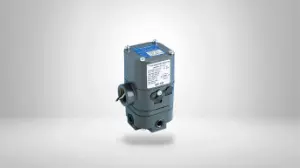
Pressure transducers are devices used to convert pressure measurements into electrical signals. These transducers utilize various sensing technologies such as strain gauges, capacitive elements, or piezoresistive elements to measure the pressure of liquids or gases accurately. They are widely used in industrial, automotive, and HVAC applications for monitoring and controlling pressure. Pressure transducers offer benefits like high accuracy, fast response times, and compatibility with different pressure ranges. They provide valuable data for process control, safety monitoring, and system optimization.
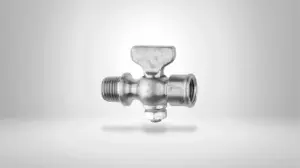
Pressure control accessories encompass a range of supplementary components and tools used to enhance the functionality, installation, or protection of pressure control systems. These accessories include pressure relief valves, pressure gauges, snubbers, manifolds, fittings, and connectors, among others. Pressure control accessories ensure proper system integration, accurate pressure measurement, secure connections, and protection against overpressure or contaminants. They play a crucial role in optimizing the performance, safety, and reliability of pressure control systems in various industries.
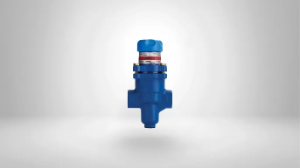
Pressure regulators are critical components in fluid control systems, designed to maintain and regulate the desired pressure level within pipelines and equipment. These devices play a crucial role in various industries, including oil and gas, manufacturing, and HVAC, where precise pressure control is essential for optimal performance and safety. Pressure regulators ensure a steady and consistent flow of fluids, protecting downstream equipment and preventing overpressure situations. With a wide range of pressure ratings, sizes, and materials available, pressure regulators offer versatile solutions to meet specific application requirements and ensure efficient and reliable fluid control.
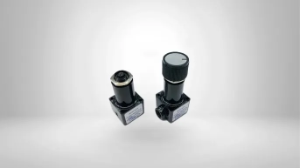
Sequence valves are indispensable for pressure control in various applications, offering precise management of fluid or gas pressure in instrumentation systems. Engineered to ensure controlled and systematic pressure adjustments, these valves play a critical role in maintaining optimal conditions for equipment and processes. Whether utilized in laboratories, manufacturing environments, or other instrumentation systems, sequence valves contribute to the accuracy and reliability of pressure control. Their precise functionality and durable design make them essential components for industries that require meticulous pressure management in instrumentation applications.

$314.01
Subject to factory lead times

$397.92
Subject to factory lead times
$176.45
$182.20
Subject to factory lead times
$176.45
$192.53
Subject to factory lead times
$182.20
Subject to factory lead times
$182.20
Subject to factory lead times

$79.68$117.62
Subject to factory lead times
$72.33$106.77
Subject to factory lead times
$82.81$122.23
Subject to factory lead times
$74.45$109.90
Subject to factory lead times
$314.01
Subject to factory lead times
$397.92
Subject to factory lead times
$176.45
$182.20
Subject to factory lead times
$176.45
$192.53
Subject to factory lead times
$182.20
Subject to factory lead times
$182.20
Subject to factory lead times
$79.68$117.62
Subject to factory lead times
$72.33$106.77
Subject to factory lead times
$82.81$122.23
Subject to factory lead times
$74.45$109.90
Subject to factory lead times
- Measuring process pressure starts with choosing between local indication and remote monitoring. A pressure gauge gives you a visual reading right at the point of measurement — ideal for operator rounds, maintenance checks, and quick local verification. If the pressure data needs to go to a PLC, DCS, or SCADA system for trending, alarming, or closed-loop control, you need a pressure transmitter that converts the measurement into a standard 4–20 mA or digital signal. Many installations use both — a gauge for local visibility and a transmitter for the control system. Pressure switches provide a discrete on/off output when pressure crosses a set threshold, used for high-pressure alarms and safety shutdowns. For corrosive, viscous, or high-temperature media that would damage a standard sensor, a diaphragm seal isolates the instrument with a flexible membrane and fill fluid. Accessories like snubbers (to dampen pulsation from pumps and compressors) and siphons (to protect gauges from live steam) extend instrument life and improve accuracy in challenging conditions.
- A pressure gauge is a local, visual indicator — it displays the current pressure on a dial or digital screen at the point where it is installed. Gauges are used for operator rounds, maintenance checks, and local process verification. They do not send a signal to the control system. A pressure transmitter converts the measured pressure into a standard electrical signal (typically 4–20 mA) that is sent to a PLC, DCS, or SCADA system for monitoring, trending, alarming, and control. Transmitters enable remote pressure monitoring and closed-loop pressure control without requiring an operator to be physically present at the gauge. Many installations include both — a gauge for local visual indication and a transmitter for remote monitoring and control. When selecting between them, consider whether the pressure data needs to be available only locally (gauge) or integrated into the plant control system (transmitter, or both).
- A diaphragm seal (also called a chemical seal or remote seal) is a flexible membrane that isolates the pressure-sensing element of a gauge or transmitter from direct contact with the process media. The space between the diaphragm and the instrument is filled with a compatible fill fluid (typically silicone oil or fluorinated fluid) that transmits the process pressure to the instrument's sensing element hydraulically. Diaphragm seals are needed when the process media would damage, clog, or contaminate a standard instrument — corrosive chemicals, viscous fluids, slurries, hot media that would damage the sensor, sanitary/food-grade applications requiring cleanable surfaces, or media that solidify or crystallize in instrument cavities. They are also used when the process temperature exceeds the instrument's rating — the diaphragm seal acts as a thermal barrier. Seals are available in a wide range of materials (316SS, Hastelloy, tantalum, PTFE-lined) and mounting configurations (direct mount, remote mount with capillary tubing).
- The gauge range should be selected so that the normal operating pressure falls in the middle third of the dial — between 25% and 75% of the full-scale range. This ensures accurate reading under normal conditions while providing headroom for pressure spikes without pegging the pointer. For example, if the normal operating pressure is 60 psi, a gauge with a range of 0–100 psi or 0–150 psi is appropriate — not 0–60 psi (too close to full scale, no headroom) or 0–300 psi (operating point is in the bottom 20% of the scale, reducing readability). ASME B40.100 recommends that the maximum operating pressure not exceed 75% of the gauge's full-scale range for steady pressure service, and 65% for fluctuating pressure service. Also consider the gauge's accuracy class, dial size (larger dials for better readability), connection size and type (NPT, socket weld), case material, wetted material compatibility, and whether a liquid-filled case is needed for vibration damping.
- Snubbers and siphons are protective accessories installed between the process and the pressure gauge to extend gauge life and accuracy. A snubber (also called a pulsation dampener or restrictor) contains a small orifice or porous element that restricts the flow of media into the gauge, damping out rapid pressure pulsations from pumps, compressors, or reciprocating equipment. Without a snubber, the gauge pointer oscillates rapidly, making reading impossible and wearing out the gauge mechanism prematurely. A siphon (pigtail siphon) is a U-shaped or coiled tube installed between a steam line and the gauge — it traps a column of condensed water that prevents live steam from reaching the gauge's Bourdon tube. Steam temperature would damage the gauge's internal mechanism; the water column transmits the pressure while keeping the gauge at a safe temperature. Use a snubber whenever the process pressure pulsates or fluctuates rapidly, and use a siphon whenever measuring steam or high-temperature vapors.