
Gas Filtration and Separation - Balston | Parker
Centro carries a complete online selection of gas filtration products to meet your needs. Whether you're looking for compressed air filtration or FRLs, we have the right product. Our gas vessels and coalescers...

Compressed air FRLs, which encompass Filter, Regulator, and Lubricator components, are integral to pneumatic systems. These units filter, regulate air pressure, and provide lubrication to ensure clean, controlled, and well-maintained compressed air for various industrial applications. Compressed air FRLs are crucial for optimizing the performance and longevity of pneumatic equipment in settings such as manufacturing and automation.
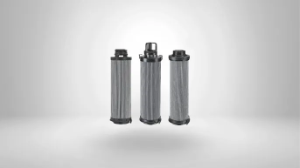
Compressed air filter elements are integral components within filtration systems, designed to remove impurities, contaminants, and particles from compressed air. These elements are crucial in ensuring that the compressed air remains clean and free from pollutants, safeguarding the integrity of pneumatic equipment and various applications. Compressed air filter elements are versatile and applicable across various industries where air quality is paramount.
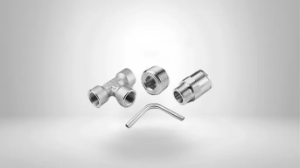
Compressed air parts and accessories encompass a wide range of components that enhance the functionality and performance of pneumatic systems. From connectors and hoses to couplers and regulators, these accessories are pivotal in optimizing the operation of compressed air systems. They are utilized across various industries and applications, ensuring the reliability and efficiency of pneumatic equipment.
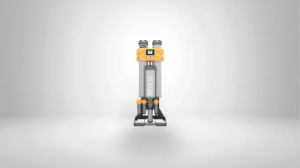
Compressed air dryers are essential components in pneumatic systems that remove moisture and humidity from compressed air. These dryers ensure that the air delivered to pneumatic tools and equipment is dry and free from water vapor, preventing damage and enhancing system efficiency. They find wide applications in various industries where compressed air quality is crucial for operational success.
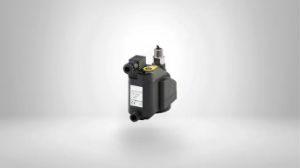
Compressed air drains are essential components in air compressor systems, designed to remove condensate and moisture from the compressed air, ensuring the delivery of clean and dry air. These drains are crucial in preventing damage to pneumatic equipment and maintaining system efficiency. Compressed air drains are widely used in various applications, offering effective moisture removal and improved performance.

$98.20
Subject to factory lead times
$545.99
Subject to factory lead times
$338.99
Subject to factory lead times
$334.99
Subject to factory lead times
$239.99
Subject to factory lead times
$237.99
Subject to factory lead times
$395.99
Subject to factory lead times
$392.99
Subject to factory lead times
$239.99
Subject to factory lead times
$237.99
Subject to factory lead times
$405.99
Subject to factory lead times
$239.99
Subject to factory lead times
$237.99
Subject to factory lead times
$395.99
Subject to factory lead times
$392.99
Subject to factory lead times
Subject to factory lead times
$214.99
Subject to factory lead times
Subject to factory lead times
Subject to factory lead times
Subject to factory lead times
$214.99
Subject to factory lead times
$276.99
Subject to factory lead times
$304.99
Subject to factory lead times
$304.99
Subject to factory lead times
- Compressed air straight from a compressor contains three primary contaminants that must be removed before the air reaches pneumatic equipment, instruments, or products: solid particulates (dust, pipe scale, rust, and compressor wear debris), liquid water (condensed from atmospheric moisture during compression), and oil (from lubricant carryover in oil-lubricated compressors as liquid droplets, aerosols, and vapor). These contaminants damage pneumatic valves, cylinders, and instruments by causing corrosion, seal degradation, and clogging. In applications where compressed air contacts the product — food packaging, pharmaceutical manufacturing, electronics assembly, painting — contamination can cause product rejection, health hazards, and regulatory violations. Compressed air filtration uses a staged approach: a particulate filter removes solid particles, a coalescing filter removes liquid water and oil aerosols, and an adsorption (activated carbon) filter removes oil vapor and odors. The degree of filtration required depends on the application — ISO 8573-1 defines compressed air quality classes from Class 0 (highest purity) to Class 6 (general industrial) to help specify the appropriate filtration level.
- A coalescing filter removes liquid aerosols — tiny droplets of water and oil suspended in the compressed air stream — that are too small for a standard particulate filter to capture. The filter element is made of multiple layers of fine borosilicate glass fibers or similar coalescing media. As the aerosol-laden air passes through the element from the inside out, the micro-droplets collide with the fibers and progressively merge (coalesce) into larger and larger droplets. Once the droplets are large enough, gravity pulls them down to the bottom of the filter housing where they collect in a sump and are drained off — either manually or through an automatic drain. A properly selected coalescing filter can reduce oil aerosol content to 0.01 ppm and remove liquid water down to the aerosol level, though it does not remove water vapor (a compressed air dryer is needed for that). Coalescing filters are the workhorse of compressed air treatment systems and should be installed downstream of the aftercooler and water separator, and upstream of any air dryer.
- The proper sequence of compressed air treatment equipment follows the order in which contaminants are most effectively removed, with each stage protecting the next. Starting from the compressor discharge: first, an aftercooler cools the hot compressed air and condenses the bulk of the water vapor into liquid, which is removed by a moisture separator. Second, a particulate pre-filter (typically 3–5 micron) removes solid particles and protects the downstream coalescing filter from premature loading. Third, a coalescing filter (typically 0.01 micron) removes liquid water and oil aerosols down to trace levels. Fourth, if very dry air is required, a compressed air dryer (refrigerated, desiccant, or membrane type) reduces the dew point to the required level. Fifth, if oil-free air is required for food contact, pharmaceutical, or painting applications, an activated carbon adsorption filter removes oil vapor and odors that coalescing filters cannot capture. Finally, a point-of-use particulate filter at each machine or application provides a final safety barrier against any contaminants introduced by the distribution piping. Skipping stages or installing them out of order reduces performance and shortens element life.
- A particulate filter and a coalescing filter are both used in compressed air systems but remove different types of contaminants. A particulate filter removes solid particles — dust, pipe scale, rust, and compressor wear debris — from the air stream using a fibrous or pleated media element. Particles that are larger than the filter's rated pore size are trapped in or on the media. Particulate filters are available in various micron ratings, typically 1 to 25 microns for general service and down to 0.01 microns for high-purity applications. They do not effectively remove liquid water or oil in aerosol form. A coalescing filter is specifically designed to remove liquid aerosols — micro-droplets of water and oil that are suspended in the air stream as a mist. The coalescing media causes these tiny droplets to merge into larger droplets that drain by gravity. Coalescing filters also capture solid particles, but their primary function is aerosol removal. In a properly designed system, a particulate filter is installed upstream of the coalescing filter to protect the more expensive coalescing element from premature loading with solid debris.
- Compressed air filter sizing is based on the maximum air flow rate (measured in SCFM — standard cubic feet per minute), the operating pressure, and the allowable pressure drop across the filter. Every filter element has a rated flow capacity at a specific pressure and maximum recommended pressure drop — exceeding the rated flow causes excessive pressure drop, which wastes energy (every 2 psi of unnecessary pressure drop across a filter costs approximately 1% of compressor energy), reduces downstream tool and equipment performance, and can force contaminants through the media. To size correctly, determine the peak compressed air demand of all equipment downstream of the filter, select a filter housing and element combination whose rated flow capacity exceeds that demand at your operating pressure, and verify that the initial (clean element) pressure drop is acceptably low — typically less than 1–3 psi for a new element, leaving headroom for the differential pressure to increase as the element loads with contaminants. Also consider connection size — the filter's port size should match the distribution piping to avoid creating a flow bottleneck. Manufacturers publish sizing charts that make it straightforward to match flow rate, pressure, and connection size to the correct model.