
High Force Actuators - Fabco-Air
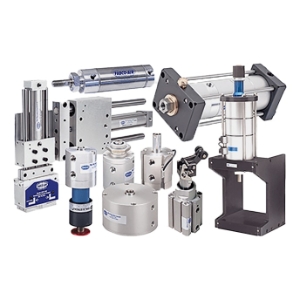
High force actuators are powerful mechanical devices used to generate significant linear or rotary force in industrial and aerospace applications. These actuators are designed to handle heavy loads or perform tasks requiring substantial force output, such as lifting heavy objects, controlling large valves, or operating aerospace control surfaces. Browse our selection below or contact us to speak with a product expert.
$523.28
Subject to factory lead times
$596.37
Subject to factory lead times
$605.90
Subject to factory lead times
$848.90
Subject to factory lead times
$805.65
Subject to factory lead times
$1,183.59
Subject to factory lead times
$2,007.42
Subject to factory lead times
$2,081.38
Subject to factory lead times
$2,025.59
Subject to factory lead times
$2,071.85
Subject to factory lead times
$2,042.62
Subject to factory lead times
$523.28
Subject to factory lead times
$596.37
Subject to factory lead times
$605.90
Subject to factory lead times
$848.90
Subject to factory lead times
$805.65
Subject to factory lead times
$1,183.59
Subject to factory lead times
$2,007.42
Subject to factory lead times
$2,081.38
Subject to factory lead times
$2,025.59
Subject to factory lead times
$2,071.85
Subject to factory lead times
$2,042.62
Subject to factory lead times
- A high force pneumatic actuator is a heavy-duty cylinder or press system designed to produce very large linear forces using compressed air, typically for pressing, stamping, punching, forming, riveting, clinching, and other operations that require significant force in an automated production environment. Centro carries Fabco-Air Multi-Power air press actuators that use large-diameter pistons (such as 5-1/2 inch bore with 19.6 square inches of effective piston area) with hard-anodized aluminum bodies, base plate mounting, and various stroke lengths. These actuators produce forces of several thousand pounds at standard shop air pressure, providing an alternative to hydraulic presses for applications where the required force is within the capability of pneumatic power. High force actuators integrate directly into automated production lines with PLC control.
- High force pneumatic actuators are used in production operations requiring substantial force delivered quickly and repeatably. Assembly press operations use them for pressing bearings, bushings, pins, and interference-fit components into housings and shafts. Stamping and forming use them for bending, coining, embossing, and forming sheet metal and other materials. Riveting and clinching use them to join multiple layers of material by deforming fasteners or creating mechanical interlocks. Punching and piercing use them to cut holes or shapes through sheet material. Testing and quality inspection use them to apply controlled loads to components for strength testing, leak testing under load, and proof testing. Crimping and swaging use them to permanently deform connectors, ferrules, and fittings onto wires, hoses, and tubes.
- Pneumatic high force actuators offer several advantages for applications within their force capability. Cleaner operation — compressed air does not leak oil, eliminating the contamination risk inherent in hydraulic systems, which is important in clean manufacturing environments. Simpler infrastructure — most facilities already have compressed air available throughout the plant, while hydraulic systems require a separate hydraulic power unit, reservoir, filters, cooling, and dedicated plumbing. Lower maintenance — pneumatic systems have fewer components, no hydraulic fluid to change, no filters to replace, and no risk of hose failures spraying hot oil. Faster cycling — pneumatic actuators typically cycle faster than hydraulic cylinders, improving throughput. Easier integration — pneumatic control with standard directional valves and PLCs is simpler than hydraulic proportional or servo control. The trade-off is that pneumatic actuators produce lower maximum force than hydraulic systems of the same size — for very high forces, hydraulic remains the standard.
- High force pneumatic actuators from Fabco-Air available through Centro include the Multi-Power air press series with large bore sizes and high effective piston areas for maximum force output. For example, the 5-1/2 inch bore models provide 19.6 square inches of effective piston area, producing approximately 1,960 pounds of force at 100 PSI and nearly 3,000 pounds at 150 PSI. Various frame plate heights (such as 10-inch) accommodate different tooling and stroke requirements. Strokes are available in multiple lengths (such as 1 inch, 2 inches, and longer). The actuators feature hard-anodized aluminum bodies, base plate mounting for rigid installation, and NPT-threaded pneumatic ports (such as 3/8 inch NPT) for connection to the air supply. Models are available with options including rubber bumpers for cushioning at end of stroke. Higher forces can be achieved by using larger bore sizes or higher operating pressures within the actuator's rated capacity.
- Start by determining the maximum force required for the operation (pressing force, punching force, forming force, etc.) and add a safety factor of at least 25%. Calculate the required piston area: Piston Area = Force ÷ Air Supply Pressure. Select an actuator with an effective piston area that meets or exceeds the required area. Then determine the stroke needed — the actuator must travel far enough to engage the workpiece and complete the operation. Consider the frame plate height to ensure the actuator fits within the machine structure and provides adequate open height for loading and unloading workpieces. Evaluate the cycle time requirement — the actuator must extend, perform the work, and retract within the allocated time. If the required force exceeds what is achievable with pneumatic actuators at your available air pressure, a hydraulic press may be necessary. Centro's product specialists can help evaluate your force, stroke, and cycle requirements to recommend the right high force actuator.