
Pressure Control - ICON Process Controls
Pressure control products measure, monitor and regulate pressure in liquids, gases and steam. Accurate pressure control protects equipment and keeps processes stable.
Pressure Control Products
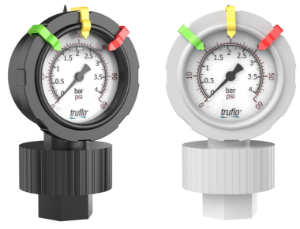
We offer pressure gauges, vital instruments that measure and indicate fluid or gas pressure within a system. These gauges are commonly employed in various industries, including manufacturing, oil and gas, automotive, and HVAC systems. Pressure gauges consist of a dial or digital display that shows the pressure reading and a sensing element that detects the pressure and converts it into a readable form. They come in different types, such as Bourdon tube gauges, diaphragm gauges, and digital pressure gauges, each suited for specific applications and pressure ranges. Pressure gauges provide crucial information for monitoring and controlling processes, ensuring optimal performance and safety. They enable operators to gauge system pressure levels, detect abnormalities, and make informed decisions regarding system adjustments or maintenance. Pressure gauges may also incorporate features such as maximum pressure indicators, adjustable pointers, or alarms for added functionality. With their accuracy, reliability, and ease of use, pressure gauges are crucial in maintaining operational efficiency and safety in various industries.
Shop by type: Boiler Gauges | Manometers | Pressure Gauges | Gauge Parts & Accessories | Tridicators
Related categories: Pressure Control | Pressure Switch | Pressure Control Accessories | Pressure Transmitters | Pressure Transducers
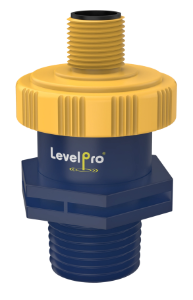
Pressure transmitters send accurate pressure readings to your control system over long distances. They're the standard instrument for process monitoring, control loops and safety systems.
Transmitter Types
- Gauge and absolute transmitters – line pressure measurement
- Differential pressure transmitters – flow, level and filter monitoring
- Smart transmitters – HART and digital communication
- Remote seal transmitters – hot, viscous or corrosive media
- Hazardous area models – explosion-proof and intrinsically safe
Choosing a Transmitter
Select range, accuracy, process connection and wetted materials. Consider output, display and approvals. Manifolds simplify installation and calibration.
Centro supplies pressure transmitters and manifolds for process measurement.
Related categories: Pressure Control | Pressure Regulators | Pressure Switch | Sequence Valves | Gauges

Pressure control accessories protect instruments, simplify maintenance and make pressure measurements more accurate. Syphons, snubbers, manifolds and valves are essential to a dependable gauge or transmitter installation.
Accessories Available
- Pressure snubbers – dampen pulsation and spikes
- Syphons – protect gauges from live steam
- Manifold valves – isolate and equalize transmitters
- Gauge cock and instrument valves – isolate instruments for service
- PT plugs – quick test ports for pressure and temperature checks
Building an Installation
A typical gauge installation includes an isolation valve, a protection device (snubber or syphon) and the gauge itself. Choose materials compatible with the media and pressure ratings above system maximum.
Centro carries pressure control accessories to complete and protect your instrument installations.
Shop by type: Pressure Snubber | Manifold Valves | Gauge Cock Valve | Instrument Valve | Syphons | Instrument Valve Accessories | PT Plugs
Related categories: Pressure Control | Gauges | Pressure Transducers | Pressure Switch | Pressure Transmitters
Configure product to see pricing
Configure product to see pricing

Configure product to see pricing
Configure product to see pricing

Configure product to see pricing
Configure product to see pricing
Configure product to see pricing
Configure product to see pricing

Configure product to see pricing
Configure product to see pricing

Configure product to see pricing
Configure product to see pricing
Configure product to see pricing
Configure product to see pricing

Configure product to see pricing
Configure product to see pricing

Configure product to see pricing
Configure product to see pricing

Configure product to see pricing
Configure product to see pricing

Configure product to see pricing
Configure product to see pricing

Configure product to see pricing
Configure product to see pricing
Configure product to see pricing
Configure product to see pricing
Configure product to see pricing
Configure product to see pricing

Configure product to see pricing
Configure product to see pricing

Configure product to see pricing
Configure product to see pricing
$553.82$599.95
Subject to factory lead times
Subject to factory lead times
$461.51$499.95
Subject to factory lead times
$203.04$219.95
Subject to factory lead times
$89.86
Subject to factory lead times
$299.86
Subject to factory lead times
$119.86
Subject to factory lead times
$433.82$469.95
Subject to factory lead times
Configure product to see pricing
Configure product to see pricing
Configure product to see pricing
Configure product to see pricing
Configure product to see pricing
Configure product to see pricing
Configure product to see pricing
Configure product to see pricing
Configure product to see pricing
Configure product to see pricing
Configure product to see pricing
Configure product to see pricing
Configure product to see pricing
Configure product to see pricing
Configure product to see pricing
Configure product to see pricing
Configure product to see pricing
Configure product to see pricing
Configure product to see pricing
Configure product to see pricing
Configure product to see pricing
Configure product to see pricing
Configure product to see pricing
Configure product to see pricing
Configure product to see pricing
Configure product to see pricing
Configure product to see pricing
Configure product to see pricing
Configure product to see pricing
Configure product to see pricing
Configure product to see pricing
Configure product to see pricing
$553.82$599.95
Subject to factory lead times
Subject to factory lead times
$461.51$499.95
Subject to factory lead times
$203.04$219.95
Subject to factory lead times
$89.86
Subject to factory lead times
$299.86
Subject to factory lead times
$119.86
Subject to factory lead times
$433.82$469.95
Subject to factory lead times
- Measuring process pressure starts with choosing between local indication and remote monitoring. A pressure gauge gives you a visual reading right at the point of measurement — ideal for operator rounds, maintenance checks, and quick local verification. If the pressure data needs to go to a PLC, DCS, or SCADA system for trending, alarming, or closed-loop control, you need a pressure transmitter that converts the measurement into a standard 4–20 mA or digital signal. Many installations use both — a gauge for local visibility and a transmitter for the control system. Pressure switches provide a discrete on/off output when pressure crosses a set threshold, used for high-pressure alarms and safety shutdowns. For corrosive, viscous, or high-temperature media that would damage a standard sensor, a diaphragm seal isolates the instrument with a flexible membrane and fill fluid. Accessories like snubbers (to dampen pulsation from pumps and compressors) and siphons (to protect gauges from live steam) extend instrument life and improve accuracy in challenging conditions.
- A pressure gauge is a local, visual indicator — it displays the current pressure on a dial or digital screen at the point where it is installed. Gauges are used for operator rounds, maintenance checks, and local process verification. They do not send a signal to the control system. A pressure transmitter converts the measured pressure into a standard electrical signal (typically 4–20 mA) that is sent to a PLC, DCS, or SCADA system for monitoring, trending, alarming, and control. Transmitters enable remote pressure monitoring and closed-loop pressure control without requiring an operator to be physically present at the gauge. Many installations include both — a gauge for local visual indication and a transmitter for remote monitoring and control. When selecting between them, consider whether the pressure data needs to be available only locally (gauge) or integrated into the plant control system (transmitter, or both).
- A diaphragm seal (also called a chemical seal or remote seal) is a flexible membrane that isolates the pressure-sensing element of a gauge or transmitter from direct contact with the process media. The space between the diaphragm and the instrument is filled with a compatible fill fluid (typically silicone oil or fluorinated fluid) that transmits the process pressure to the instrument's sensing element hydraulically. Diaphragm seals are needed when the process media would damage, clog, or contaminate a standard instrument — corrosive chemicals, viscous fluids, slurries, hot media that would damage the sensor, sanitary/food-grade applications requiring cleanable surfaces, or media that solidify or crystallize in instrument cavities. They are also used when the process temperature exceeds the instrument's rating — the diaphragm seal acts as a thermal barrier. Seals are available in a wide range of materials (316SS, Hastelloy, tantalum, PTFE-lined) and mounting configurations (direct mount, remote mount with capillary tubing).
- The gauge range should be selected so that the normal operating pressure falls in the middle third of the dial — between 25% and 75% of the full-scale range. This ensures accurate reading under normal conditions while providing headroom for pressure spikes without pegging the pointer. For example, if the normal operating pressure is 60 psi, a gauge with a range of 0–100 psi or 0–150 psi is appropriate — not 0–60 psi (too close to full scale, no headroom) or 0–300 psi (operating point is in the bottom 20% of the scale, reducing readability). ASME B40.100 recommends that the maximum operating pressure not exceed 75% of the gauge's full-scale range for steady pressure service, and 65% for fluctuating pressure service. Also consider the gauge's accuracy class, dial size (larger dials for better readability), connection size and type (NPT, socket weld), case material, wetted material compatibility, and whether a liquid-filled case is needed for vibration damping.
- Snubbers and siphons are protective accessories installed between the process and the pressure gauge to extend gauge life and accuracy. A snubber (also called a pulsation dampener or restrictor) contains a small orifice or porous element that restricts the flow of media into the gauge, damping out rapid pressure pulsations from pumps, compressors, or reciprocating equipment. Without a snubber, the gauge pointer oscillates rapidly, making reading impossible and wearing out the gauge mechanism prematurely. A siphon (pigtail siphon) is a U-shaped or coiled tube installed between a steam line and the gauge — it traps a column of condensed water that prevents live steam from reaching the gauge's Bourdon tube. Steam temperature would damage the gauge's internal mechanism; the water column transmits the pressure while keeping the gauge at a safe temperature. Use a snubber whenever the process pressure pulsates or fluctuates rapidly, and use a siphon whenever measuring steam or high-temperature vapors.