
Automation and Robotics - Numatics
What is Automation and Robotics?
Automation and Robotics involve leveraging technology to automate tasks and processes traditionally performed by people. This integration enhances efficiency ...
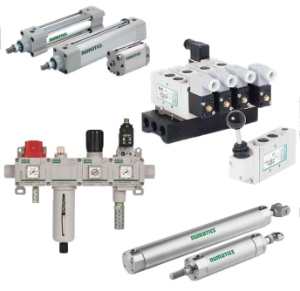
Filter regulator combos combine the functions of air filtration and pressure regulation into a single unit, offering a compact and space-saving solution for compressed air systems. These combos feature integrated filters and regulators, allowing users to remove contaminants and control pressure in a streamlined manner. By combining these two functions, filter regulator combos simplify installation, reduce piping, and minimize pressure drop. They provide efficient and reliable air treatment, ensuring clean and regulated air supply to pneumatic equipment and systems. Filter regulator combos are commonly used in applications where space is limited or when a compact air preparation unit is required.
Air regulators are devices used to control and maintain a consistent and adjustable pressure level in compressed air systems. They are essential for optimizing the performance of pneumatic tools, actuators, and other air-powered equipment. Air regulators monitor the incoming air pressure and regulate it to a desired setpoint, ensuring reliable and consistent operation. They provide precise control over the air pressure, allowing users to adjust and maintain the optimal pressure for specific applications. Air regulators are available in various configurations, including relieving and non-relieving types, with features like pressure gauges and lockout options, offering flexibility and functionality for different pneumatic systems.
Air filters are essential to removing contaminants, particles, and impurities from compressed air systems. They play a critical role in ensuring clean, high-quality air for various applications, such as pneumatic tools, machinery, and equipment. Air filters capture dust, dirt, moisture, and other airborne particles, preventing them from entering downstream components and causing damage or malfunctions. They are available in different types, including particulate filters, coalescing filters, and activated carbon filters, offering filtration capabilities for specific air quality requirements. Air filters help maintain system performance, prolong equipment lifespan, and ensure reliable and efficient operation.
Sensor cables are specialized cables designed for connecting sensors to control systems or data acquisition devices. These cables provide the necessary electrical connections for transmitting power supply, signal, and data between the sensor and the target device. Sensor cables are often shielded to minimize interference and maintain signal integrity in noisy industrial environments. They come in different lengths, connector types, and specifications to accommodate various sensor configurations and connectivity requirements. Sensor cables ensure reliable and accurate data transmission from sensors to the control or monitoring systems.
2-jaw grippers are essential in automation and robotics, designed for precise and efficient object manipulation. These grippers feature two opposing jaws that provide a secure and balanced grip on a wide variety of objects. They are commonly used in packaging, assembly, and material handling industries, where precise positioning and control are essential. The 2-jaw design allows for streamlined automation processes, making these grippers valuable for tasks requiring accuracy and reliability.
Safety pneumatic valves are critical components in industrial settings that ensure equipment and personnel safety. These valves have features such as emergency shutdown and quick exhaust, allowing for rapid depressurization and averting potential hazards. In environments where the release of compressed air poses safety risks, such as in the event of a malfunction, safety pneumatic valves play a pivotal role in preventing accidents and damage. They are indispensable in manufacturing, energy, and other industrial sectors, enhancing safety measures and ensuring a secure working environment.
Lubricators are vital components in industrial settings, playing a crucial role in maintaining and performing machinery and equipment. These devices are designed to supply a controlled and consistent flow of lubricating oil or grease to various mechanical parts, reducing friction, minimizing wear and tear, and ultimately prolonging the lifespan of critical components. Whether in manufacturing, automotive, or heavy machinery applications, lubricators ensure that moving parts operate smoothly, efficiently, and reliably. By providing the right amount of lubrication precisely where it's needed, lubricators contribute to increased productivity and reduced maintenance costs, making them an indispensable asset in industrial maintenance and machinery.
Air preparation repair kits are essential for maintaining and optimizing pneumatic systems. These kits include components like filters, regulators, lubricators, and seals, allowing you to address issues and ensure consistent performance. By promptly replacing worn-out parts, these kits help extend the lifespan of pneumatic equipment and maintain reliable operation.
Angular grippers are indispensable tools in automation and robotics, known for their versatility and precise gripping capabilities. These grippers are designed to handle a wide range of objects, regardless of shape or size, offering a superior grip and control. Angular grippers are commonly used in assembly lines, manufacturing processes, and industrial applications where reliable, adaptable handling is paramount. Their ability to securely grasp objects at various angles makes them essential for achieving efficient and precise automation.
3-jaw grippers are a versatile and robust solution for automation and industrial applications. These grippers feature three equally spaced jaws that can securely grasp a wide range of objects, making them well-suited for tasks that require strength and precision. They are commonly used in manufacturing and material handling processes to pick and place items with efficiency and reliability. The 3-jaw design ensures a stable and balanced grip, making them a valuable addition to automation systems where accuracy and durability are paramount.
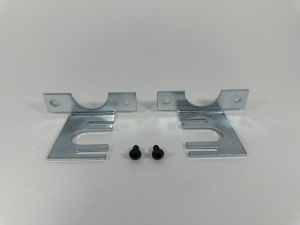
In the realm of automation and robotics, the significance of air preparation misc. products cannot be overstated. These often-overlooked components are the backbone of efficient and reliable pneumatic systems, ensuring that the air supplied to robotic and automated equipment is of the highest quality. Whether removing moisture and contaminants to protect sensitive components or fine-tuning air pressure for precise control, these products are the unsung heroes of automation. They contribute to seamless operation, reduced downtime, and extended equipment lifespan. In the dynamic world of automation and robotics, where precision and reliability are paramount, air preparation misc. products quietly play a critical role in upholding performance standards and ensuring that pneumatic systems remain the backbone of efficient, automated processes.

Mount bases provide stable, secure support for industrial equipment, instruments, and enclosures, ensuring proper alignment, vibration resistance, and long-term durability. Designed for a wide range of applications including electrical panels, sensors, pumps, and control systems, these bases are available in various materials and configurations to meet structural, environmental, and mounting requirements. Whether for floor, wall, or panel installation, mount bases simplify setup and enhance equipment performance and safety.
Subject to factory lead times
$173.44$215.06
Subject to factory lead times
$164.51$203.99
Subject to factory lead times
$175.63$217.78
Subject to factory lead times
$169.73$210.46
Subject to factory lead times
$152.94$189.65
Subject to factory lead times
$164.51$203.99
Subject to factory lead times
$213.21$264.38
Subject to factory lead times
$205.22$254.47
Subject to factory lead times
$132.07$163.77
Subject to factory lead times
$137.69$170.74
Subject to factory lead times
$158.56$196.62
Subject to factory lead times
Subject to factory lead times
$173.44$215.06
Subject to factory lead times
$164.51$203.99
Subject to factory lead times
$175.63$217.78
Subject to factory lead times
$169.73$210.46
Subject to factory lead times
$152.94$189.65
Subject to factory lead times
$164.51$203.99
Subject to factory lead times
$213.21$264.38
Subject to factory lead times
$205.22$254.47
Subject to factory lead times
$132.07$163.77
Subject to factory lead times
$137.69$170.74
Subject to factory lead times
$158.56$196.62
Subject to factory lead times
- Getting started with industrial automation begins with identifying the tasks that are repetitive, hazardous, labor-intensive, or quality-critical — these are the best candidates for automation. Common first steps include adding sensors for detection and feedback, installing pneumatic or electric actuators to replace manual movements, and using PLCs or smart relays to coordinate the sequence. For more advanced automation, industrial robots and collaborative robots (cobots) can handle pick-and-place, assembly, welding, palletizing, and packaging tasks with grippers and end-of-arm tooling (EOAT). Machine vision systems add inspection and quality control capabilities. Safety equipment — light curtains, safety switches, emergency stops, and guarding — is required to protect operators working near automated equipment. Centro's Automation and Robotics division offers products across all of these areas and can help you evaluate which tasks to automate first for the best return on investment.
- End-of-arm tooling (EOAT) refers to the device mounted on the end of a robotic arm that directly interacts with the workpiece — it is what allows the robot to grip, move, orient, and place parts. The most common EOAT type is the gripper, and selecting the right one depends on the workpiece material, shape, weight, and process requirements. Pneumatic grippers use compressed air and are the workhorse for general-purpose pick-and-place — they are fast, reliable, and available in parallel, angular, and three-finger configurations. Electric grippers use servo motors for programmable grip force and position, making them ideal for delicate or variable parts requiring precise control. Vacuum grippers use suction cups to handle flat, smooth, or irregularly shaped items like boxes, sheets, and glass without mechanical clamping. Magnetic grippers handle ferrous metal parts without contact mechanisms, offering quick cycle times for steel stamping and machining operations. Quick-change systems allow a single robot to swap between different EOAT types for multi-task flexibility.
- A collaborative robot — or cobot — is designed to work safely alongside human operators in a shared workspace without requiring safety fencing or caged enclosures. Cobots use built-in force and torque sensors, speed monitoring, and rounded, pinch-free designs to detect contact with a person and immediately stop or reverse motion, meeting ISO 10218 and ISO/TS 15066 safety standards. Traditional industrial robots operate at high speeds and forces behind safety guarding because they are not designed to detect or respond to human contact. Cobots are the right choice for applications that require human-robot interaction — tasks like machine tending, light assembly, quality inspection, and palletizing where an operator works nearby or hands off parts to the robot. They are also easier to program (often through hand-guiding or intuitive software), making them practical for small-batch and high-mix production where tasks change frequently. Traditional robots remain the better choice for high-speed, high-payload, or hazardous applications where human proximity is not needed.
- Industrial sensors detect physical conditions — presence, position, distance, temperature, pressure, level, and more — and convert them into electrical signals that PLCs and controllers use to make decisions. Selecting the right sensor starts with what you need to detect. Inductive proximity sensors detect metal objects at close range without contact and are the standard for detecting machine parts, cylinders at end-of-stroke, and metal targets on conveyors. Photoelectric sensors use light beams to detect objects at longer ranges and work on any material — through-beam, retroreflective, and diffuse types cover different range and mounting scenarios. Capacitive sensors detect both metallic and non-metallic materials including liquids, powders, and plastics, making them useful for level sensing through container walls. Ultrasonic sensors measure distance using sound waves, ideal for level measurement and position sensing of irregular surfaces. Beyond sensing type, consider the mounting environment — temperature, washdown exposure, vibration — and select the appropriate IP rating and housing material.
- Every automated or robotic work cell must include safety equipment to protect personnel from hazardous motion, in compliance with OSHA regulations and machine safety standards such as ANSI/RIA 15.06 and ISO 13849. The specific equipment depends on the risk assessment, but common components include safety light curtains that create an invisible detection field and stop the machine if a person enters the hazardous zone, safety laser scanners that monitor floor-level areas and can define warning and stop zones, safety interlock switches on access doors and gates that cut power when opened, emergency stop buttons placed within reach of operators, and safety-rated PLCs or safety relays that monitor all safety inputs and ensure the machine reaches a safe state before restarting. For collaborative robot applications, the cobot's built-in safety system may reduce the need for external guarding, but a thorough risk assessment is still required to determine whether additional measures — such as area scanners or reduced speed zones — are needed.