
Bar Code Scanners - SICK
Barcode scanners are essential for businesses that track inventory levels and manage product data. Whether you need to scan items at a retail point of sale or track products in a warehouse, we have the proper barco...
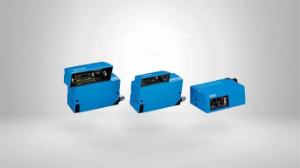
Fixed mount scanners are the cornerstone of automated data capture and inventory management systems. These discreet yet powerful devices provide a seamless and efficient solution for consistently and accurately reading barcodes, even in high-throughput industrial environments. By offering a hands-free, always-on scanning solution, fixed-mount scanners ensure that businesses can maintain real-time inventory tracking, improve process efficiency, and minimize human error. These devices are a vital component in the modern supply chain, manufacturing, and retail operations, playing a pivotal role in enhancing productivity and data accuracy while reducing operational costs.
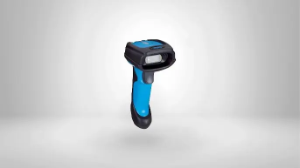
Handheld scanners are versatile tools that empower users to swiftly and accurately capture data on the go. These portable devices have applications across various industries, from retail and healthcare to warehousing and logistics. Handheld scanners offer the flexibility to easily scan barcodes, QR codes, and other data, facilitating inventory management, order processing, and asset tracking. Their ergonomic design and wireless capabilities make them invaluable for improving efficiency and accuracy in data collection tasks, making them an essential tool in today's fast-paced, data-driven world.

$2,334.15
Subject to factory lead times
$3,033.68
Subject to factory lead times
$5,937.40
Subject to factory lead times
$2,700.67
Subject to factory lead times
$2,334.15
Subject to factory lead times
$2,700.67
Subject to factory lead times
$2,334.15
Subject to factory lead times
$2,700.67
Subject to factory lead times
$2,334.15
Subject to factory lead times
$2,700.67
Subject to factory lead times
$2,334.15
Subject to factory lead times
$2,700.67
Subject to factory lead times
$2,334.15
Subject to factory lead times
$3,033.68
Subject to factory lead times
$5,937.40
Subject to factory lead times
$2,700.67
Subject to factory lead times
$2,334.15
Subject to factory lead times
$2,700.67
Subject to factory lead times
$2,334.15
Subject to factory lead times
$2,700.67
Subject to factory lead times
$2,334.15
Subject to factory lead times
$2,700.67
Subject to factory lead times
$2,334.15
Subject to factory lead times
$2,700.67
Subject to factory lead times
- Barcode scanners read printed barcodes (1D) or matrix codes (2D, such as QR codes and Data Matrix) on products, labels, and packaging to automatically identify items, track inventory, and route products through manufacturing and distribution processes. In automation, fixed-mount barcode scanners are integrated into conveyor lines, packaging machines, and sorting systems to read codes at high speed without human intervention — enabling automated routing, quality verification, and traceability. Handheld scanners are used at receiving docks, workstations, and shipping areas where operators manually scan items. Barcode scanning eliminates manual data entry errors, increases throughput, and provides real-time visibility into material flow.
- 1D barcode scanners read traditional linear barcodes — the familiar series of vertical bars and spaces found on retail packaging (UPC, Code 128, Code 39). They use a single laser line or linear imager to decode the barcode in one direction. 2D barcode scanners read both 1D barcodes and 2D matrix codes — QR codes, Data Matrix, and PDF417 — which encode data in a grid of squares or dots in two dimensions. 2D codes store significantly more information in a smaller space and can be read even when partially damaged. For industrial automation, 2D scanners are the recommended standard because they read all barcode types (backward-compatible with 1D), handle direct part marks (DPM) etched or printed directly on parts, and provide more robust reading of damaged or poorly printed codes. 1D-only scanners are less expensive but limit you to linear barcodes.
- Fixed-mount barcode scanners are permanently installed at a specific point on a conveyor, production line, or machine and read codes automatically as items pass through the scan field — no operator interaction required. They are designed for high-speed, high-volume applications and integrate directly with PLCs and plant networks. Handheld barcode scanners are portable devices operated by a person who aims the scanner at each barcode manually. They are suited for receiving, shipping, workstation verification, and any task where items are not on a conveyor or where scanning locations vary. Many operations use both: fixed-mount scanners on automated lines for continuous throughput, and handheld scanners at manual workstations and dock areas for flexibility.
- Key selection factors include barcode type (1D only vs. 2D/DPM), read distance (close-range for small codes on a conveyor vs. long-range for warehouse scanning), read speed (how fast items move past the scanner), code size and quality (small, dense, or low-contrast codes require higher-resolution optics), environmental conditions (temperature, moisture, ambient light), and connectivity (Ethernet/IP, PROFINET, serial, USB). For high-speed conveyor applications, select a fixed-mount scanner rated for the line speed with sufficient depth of field to handle product height variation. For harsh environments, choose IP65 or IP67-rated housings. For applications reading codes on irregular or curved surfaces, consider scanners with wide-angle or omnidirectional reading capability. Most manufacturers offer configuration software that simplifies setup and allows the scanner to be tuned for specific code types and reading conditions.
- Barcode scanners connect to PLCs, SCADA systems, and warehouse management systems (WMS) through industrial communication interfaces. Fixed-mount scanners typically offer Ethernet-based protocols — EtherNet/IP, PROFINET, or Modbus TCP — allowing them to send scanned data directly to the PLC as a string value that the program uses for sorting, routing, or verification decisions. Serial interfaces (RS-232) and USB are common for handheld and PC-connected scanners. For conveyor sorting applications, the scanner reads the code, the PLC matches it against a routing table, and activates the appropriate divert at the correct time based on encoder tracking. For traceability, scanned data is logged to a database with timestamps, enabling full product genealogy. Trigger inputs (from photoeyes or PLCs) tell the scanner exactly when to read, improving reliability and reducing misreads on high-speed lines.