
Vision - SICK
Centro carries a complete selection of vision products available to purchase online. Vision Surveillance is the technology used to monitor and detect an area's activities: Smart Cameras capture and process ima...
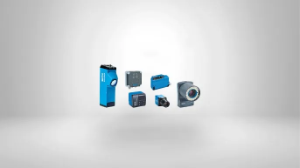
Vision accessories are crucial components in automation and robotics systems, enhancing their capabilities by providing advanced vision sensing and image recognition functionalities. These accessories encompass various technologies and devices, including cameras, sensors, lenses, and lighting systems, all designed to enable automation systems to "see" and interpret their surroundings. They play a pivotal role in object detection, quality control, navigation, and more applications. By providing real-time data and feedback, vision accessories empower automation and robotics systems to make informed decisions and adapt to dynamic environments. Their integration enhances system accuracy, efficiency, and flexibility, making them indispensable in modern automation solutions across various industries.
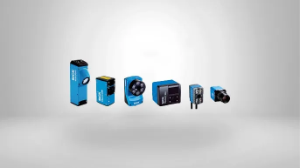
Smart cameras are advanced imaging devices equipped with embedded processing capabilities and software algorithms for performing real-time image analysis and machine vision tasks. These cameras combine the functions of traditional cameras with built-in intelligence, enabling them to capture and process images without the need for external processing systems. Smart cameras are widely used in industrial automation, robotics, quality control, and inspection applications. They can perform tasks such as object recognition, defect detection, barcode reading, and measurement. With their onboard processing power and integrated communication interfaces, smart cameras can provide immediate feedback and data analysis, enhancing efficiency and productivity in manufacturing and inspection processes.
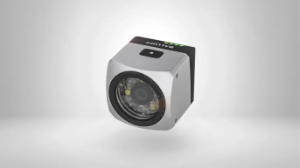
Vision sensors are the cornerstone of modern automation and quality control. These specialized devices combine imaging technology with powerful processing capabilities to analyze visual data and make real-time decisions. Vision sensors are used in various applications, from inspecting manufactured products for defects to guiding robotic systems with precision. Their ability to detect and interpret visual information quickly and accurately makes them invaluable in industries where quality, efficiency, and reliability are paramount. Vision sensors empower automation and enhance decision-making processes across various fields, offering a new dimension of control and productivity.

$23,947.32$25,058.00
Subject to factory lead times
$25,092.13
Subject to factory lead times
$22,461.84
Subject to factory lead times
$3,264.97
Subject to factory lead times
$24,255.99$25,381.00
Subject to factory lead times
$3,264.97
Subject to factory lead times
$3,898.59
Subject to factory lead times
$3,898.59
Subject to factory lead times
$11,116.44
Subject to factory lead times
$11,116.44
Subject to factory lead times
$11,116.44
Subject to factory lead times
$3,898.59
Subject to factory lead times
$23,947.32$25,058.00
Subject to factory lead times
$25,092.13
Subject to factory lead times
$22,461.84
Subject to factory lead times
$3,264.97
Subject to factory lead times
$24,255.99$25,381.00
Subject to factory lead times
$3,264.97
Subject to factory lead times
$3,898.59
Subject to factory lead times
$3,898.59
Subject to factory lead times
$11,116.44
Subject to factory lead times
$11,116.44
Subject to factory lead times
$11,116.44
Subject to factory lead times
$3,898.59
Subject to factory lead times
- Machine vision uses cameras, optics, lighting, and image processing software to automatically inspect, measure, identify, and guide products in manufacturing and logistics. A vision system captures an image of a part or product, processes it using algorithms, and makes a pass/fail decision or provides measurement data to the control system — all at production speed without human intervention. Common applications include dimensional measurement (verifying part geometry within tolerance), defect detection (scratches, dents, discoloration, missing features), label and print verification (confirming correct content, position, and readability), barcode and 2D code reading, color verification, robotic guidance (providing position and orientation data so a robot can pick parts from unstructured locations), and assembly verification (confirming all components are present and correctly placed).
- A machine vision system consists of four core components. The camera captures the image — options range from simple 2D area-scan cameras to line-scan cameras for continuous web inspection and 3D cameras for height and volume measurement. The lens determines the field of view, working distance, and resolution — it must be matched to the camera sensor and the object size. The lighting is often the most critical element — proper illumination creates the contrast needed for reliable image analysis and minimizes the effects of ambient light variation. Common lighting types include ring lights, bar lights, backlights, and dome lights, each creating different contrast effects on the object. The vision processor and software analyze the captured image using tools like pattern matching, edge detection, blob analysis, and OCR to extract the required information and communicate results to the PLC or rejection system.
- Lighting is the single most important factor determining whether a machine vision system produces reliable, consistent results. The camera and software can only analyze what is visible in the image, and the lighting creates the contrast that makes features detectable. The wrong lighting produces images where defects blend into the background, edges are ambiguous, and results vary with ambient conditions — leading to false rejects and missed defects. Different lighting techniques highlight different features: backlighting creates sharp silhouettes for dimensional measurement, dark-field (low-angle) lighting reveals surface scratches and texture defects, bright-field (direct) lighting illuminates flat features and print, and diffuse dome lighting eliminates specular reflections on shiny or curved surfaces. The best approach is to test multiple lighting options with actual production samples during the system design phase to identify the setup that produces the highest and most consistent contrast on the features being inspected.
- 2D vision systems capture a flat image — essentially a photograph — and analyze features in the X-Y plane, such as shape, size, position, color, and pattern. They are the standard for the majority of inspection applications: label verification, dimensional gauging of flat features, surface defect detection, barcode reading, and robotic pick guidance on a flat surface. 3D vision systems capture depth information in addition to X-Y data, creating a point cloud or height map of the object's surface. This enables measurement of height, volume, surface flatness, and feature depth — tasks that 2D systems cannot perform. 3D vision is essential for applications like bin picking (determining the position and orientation of randomly stacked parts), sealant bead inspection (verifying bead height and width), completeness checking of assembled components with varying heights, and robotic depalletizing of mixed-case loads. 3D systems are more complex and costly, so they are specified when the inspection task genuinely requires depth data.
- Machine vision provides robots with the ability to see and adapt to their environment rather than relying solely on fixed, pre-programmed positions. In a vision-guided robotics (VGR) application, the camera captures an image of the parts, the vision system determines the exact position and orientation of each part, and sends this data to the robot controller, which adjusts its pick path accordingly. This enables robots to pick parts from random positions on a conveyor (2D guidance), pick parts from unstructured bins (3D bin picking), adjust placement based on measured part variation, and perform visual quality inspection as part of the handling process. Vision guidance dramatically increases flexibility — parts no longer need to be precisely fixtured or presented in a known orientation — and enables automation of tasks that would otherwise require manual handling. The vision system communicates with the robot controller over industrial Ethernet protocols, transmitting coordinate data in real time.