
Automation & Robotics Sensors - Stauff USA
At Centro, we carry a complete selection of automation and robotics sensors to keep your operations running with precision. From Proximity and Photoelectric Sensors for reliable o...
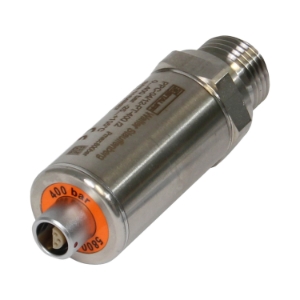
Pressure sensors, also known as pressure transducers or pressure transmitters, are devices used to measure and monitor pressure levels in various systems and applications. These sensors convert pressure into an electrical signal, providing real-time information about pressure changes or absolute pressure values. Pressure sensors are employed in industries such as HVAC, manufacturing, automotive, and aerospace for tasks like pressure monitoring, control, or safety. They offer accuracy, reliability, and compatibility with different media and pressure ranges, facilitating precise pressure measurement in diverse environments.
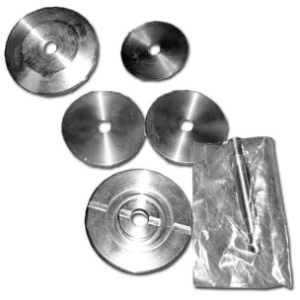
Hydraulic Accessories like O-rings and filters help maintain the performance and reliability of hydraulic systems. O-rings provide a secure seal to prevent fluid leaks, ensuring the system operates efficiently and safely under high-pressure conditions. Filters are essential for removing contaminants from hydraulic fluid, protecting sensitive components from wear and extending the system’s lifespan. At Centro, we offer a wide range of high-quality O-rings and filters to meet the demands of various industrial applications. Contact us to find the right hydraulic accessories for your needs.
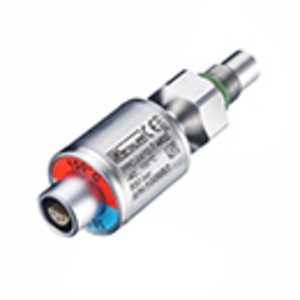
Temperature sensors are devices used to measure and monitor temperature levels in various industrial, HVAC, or scientific applications. These sensors provide accurate temperature readings for process control, environmental monitoring, equipment protection, or research purposes. Temperature sensors utilize different technologies, including thermocouples, resistance temperature detectors (RTDs), or thermistors, offering options for different temperature ranges and accuracy requirements. They are crucial in ensuring optimal operating conditions, safety, and efficiency in diverse temperature-sensitive applications.
$4,420.03$4,804.39
Subject to factory lead times
Subject to factory lead times
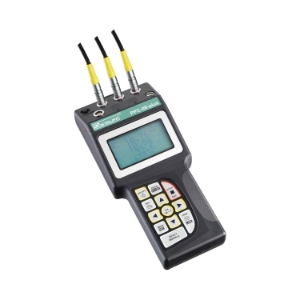
$5,238.60$5,694.12
Subject to factory lead times
Subject to factory lead times
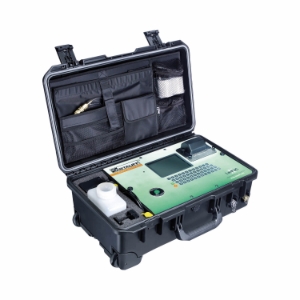
Subject to factory lead times
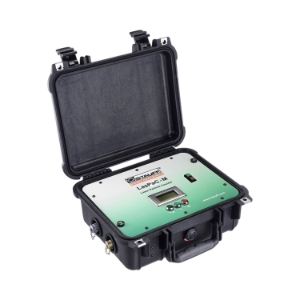
$32,769.28$35,618.78
Subject to factory lead times
$36,043.61$39,177.83
Subject to factory lead times
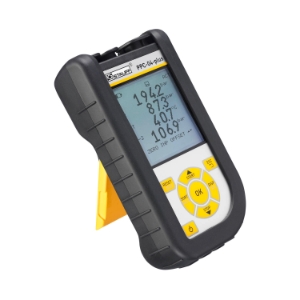
$2,686.84$2,920.47
Subject to factory lead times
$1,244.19$1,352.37
Subject to factory lead times
$1,244.19$1,352.37
Subject to factory lead times
$1,244.19$1,352.37
Subject to factory lead times
$2,504.72$2,722.52
Subject to factory lead times
$4,420.03$4,804.39
Subject to factory lead times
Subject to factory lead times
$5,238.60$5,694.12
Subject to factory lead times
Subject to factory lead times
Subject to factory lead times
$32,769.28$35,618.78
Subject to factory lead times
$36,043.61$39,177.83
Subject to factory lead times
$2,686.84$2,920.47
Subject to factory lead times
$1,244.19$1,352.37
Subject to factory lead times
$1,244.19$1,352.37
Subject to factory lead times
$1,244.19$1,352.37
Subject to factory lead times
$2,504.72$2,722.52
Subject to factory lead times
- Choosing the right industrial sensor starts with identifying what you need to detect and the conditions the sensor will operate in. For detecting metal objects at close range in harsh environments, inductive proximity sensors are the most reliable choice — they use an electromagnetic field and are resistant to dirt and contamination. For non-metallic materials like plastics, liquids, or powders, capacitive sensors detect changes in capacitance and can even sense through container walls. For longer-range detection of virtually any material, photoelectric sensors use light beams and are available in through-beam, retroreflective, and diffuse configurations. For distance and level measurement, ultrasonic sensors use sound waves while laser sensors offer high-precision alternatives. Magnetic cylinder sensors detect piston position inside pneumatic cylinders and are standard in pneumatic automation. Encoders measure rotational position and speed for motion control feedback. Pressure sensors, temperature sensors, flow sensors, and color and contrast sensors round out the range for specialized measurement tasks. Always match the sensor's IP rating and housing material to your environment, and verify that the output type (PNP, NPN, analog, or IO-Link) is compatible with your PLC or controller.
- These three sensor types cover the majority of object detection applications in automation, each with distinct operating principles and strengths. Inductive proximity sensors detect metal objects only, using an electromagnetic field — they are extremely reliable, resistant to dirt and contamination, and ideal for detecting machine parts, cylinders, and metal targets in harsh conditions. Capacitive sensors detect changes in capacitance and can sense both metallic and non-metallic materials — plastics, wood, liquids, powders, and granular materials — making them the go-to choice for level sensing through container walls and detecting non-metal objects. Photoelectric sensors emit and detect a light beam (visible red, infrared, or laser) and can detect virtually any material at longer sensing distances — from millimeters to tens of meters. They are available in through-beam (highest range and reliability), retroreflective (uses a reflector), and diffuse (detects light reflected from the object) configurations. The right choice depends on the target material, sensing range, and environmental conditions.
- A magnetic cylinder sensor is a compact sensor designed to detect the position of a piston inside a pneumatic cylinder without physical contact. Most modern pneumatic cylinders have a permanent magnet embedded in the piston. The magnetic cylinder sensor mounts externally on the cylinder barrel — typically in a T-slot or C-slot groove machined into the extrusion — and detects the magnet's field as the piston reaches that position, sending a discrete signal to the PLC confirming the cylinder has reached its end-of-stroke or a specific intermediate position. These sensors are ubiquitous in pneumatic automation — virtually every cylinder in a machine has at least two (one for extended, one for retracted) to confirm position before the PLC advances to the next step in the sequence. They are available with Reed switch, GMR (Giant Magneto-Resistive), or Hall-effect sensing elements.
- Encoders are sensors that measure the rotational position, speed, and direction of a shaft — converting mechanical motion into electrical signals that a PLC, drive, or controller uses for feedback and control. Incremental encoders generate pulses as the shaft rotates — the controller counts pulses to determine relative position and calculates speed from pulse frequency. They require a home or reference point to establish absolute position. Absolute encoders output a unique digital code for every angular position, providing immediate position knowledge at power-up without a reference run. Encoders are used in motion control systems (servo motor feedback), conveyor speed and position tracking (for product spacing and divert timing), winding and unwinding applications (web tension control), and any application where knowing the exact rotational position or speed of a shaft is required for process control.
- Start with four fundamental questions: What am I detecting? (metal, plastic, liquid, any material), At what distance? (millimeters, centimeters, or meters), In what environment? (clean, dusty, wet, high-temperature, washdown), and What output do I need? (discrete on/off, analog distance measurement, digital communication like IO-Link). For metal detection at short range in harsh conditions, inductive sensors are the first choice. For non-metal or liquid detection, capacitive sensors excel. For long-range detection or where the target material varies, photoelectric sensors offer the most versatility. For distance measurement, ultrasonic or laser sensors provide continuous analog output proportional to distance. Always match the sensor's IP rating and housing material to the environment, and verify that the output type (PNP, NPN, analog 4-20mA, IO-Link) is compatible with your PLC or controller input.