
Conductivity - Van London
Conductivity analytical tools play a pivotal role in measuring the ability of a solution to conduct electric current, providing valuable insights into the concentration of dissolved ions. These tools are widely use...
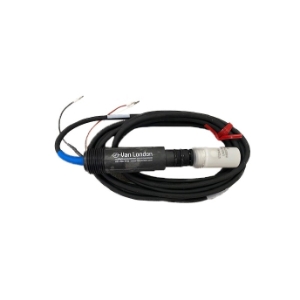
Conductivity probes measure the electrical conductivity of liquids. These probes typically consist of electrodes that immerse into the liquid to assess its ability to conduct electricity, which correlates with ion concentration and purity. Conductivity probes provide real-time data for providing optimal conditions and compliance with industry standards. Browse our selection below or contact us to speak with a product expert.

pH probes, also known as pH sensors or electrodes, are essential tools in analytical chemistry and various industrial processes for measuring the acidity or alkalinity of a solution. These probes operate based on the principle of detecting hydrogen ion concentration in a given medium. Typically composed of a glass electrode and a reference electrode, pH probes generate a voltage signal proportional to the pH of the solution being measured. The glass electrode, sensitive to hydrogen ions, facilitates the conversion of chemical information into an electrical signal. Accurate pH measurements are crucial in diverse applications, ranging from scientific research and environmental monitoring to quality control in food and beverage production. pH probes find utility in laboratories, water treatment plants, pharmaceutical manufacturing, and many other industries where precise control of acidity or alkalinity is imperative for maintaining optimal conditions and ensuring the quality of end products. Regular calibration and maintenance are essential to uphold the accuracy and reliability of pH probes in various settings.

Conductivity transmitters measure and transmit electrical conductivity levels in liquids. These transmitters convert conductivity measurements into standardized electrical signals (such as 4-20 mA) for monitoring and control systems. Conductivity transmitters provide real-time data to optimize processes and ensure compliance with regulatory standards. Browse our selection below or contact us to speak with a product expert.
Instrumentation refers to devices that measure or control physical variables such as temperature, level, flow, or pressure. These products are essential in the industry because they allow for maximum output with minimum use of raw materials. Flow instruments include flow meters, positive displacement meters, rotameters, flow switches, oval gear meters, and calibration equipment. Analytical instruments measure temperature, pH, conductivity, dissolved oxygen, turbidity, humidity, chlorine, gases, trace oxygen resistivity, and carbon. Pressure instruments include pressure gauges, pressure switches, pressure transmitters, differential pressure gauges, cryogenic gauges, O.E.M. gauges, submersible gauges, digital pressure gauges, and calibration equipment. Level instruments, such as ultrasonic sensors, magnetic float sensors, capacitance sensors, submersible pressure sensors, differential pressure sensors, float valve sensors, float switches, electro-optic sensors, and radar sensors, are used to measure the level of a substance in a container or vessel.
$391.00$446.85

$842.68
Subject to factory lead times

$406.11$464.12
$456.32
Subject to factory lead times
$631.24
Subject to factory lead times
$4,235.47

$699.59
Subject to factory lead times
$1,198.98$1,370.25
$391.00$446.85
$842.68
Subject to factory lead times
$406.11$464.12
$456.32
Subject to factory lead times
$631.24
Subject to factory lead times
$4,235.47
$699.59
Subject to factory lead times