
Actuation and Engineered Products - Watson McDaniel
Actuation refers to the process of causing something to move or operate. This can be achieved by using an actuator, a device that converts a source of energy into motion. There are two types of actuators: linear ac...
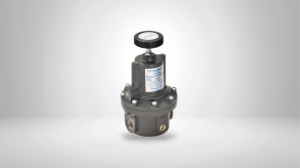
Regulators are devices that control the pressure of gases and liquids. Centro carries a complete selection of regulators available to purchase online, including compress air regulators, FRL compressed air regulators, and air regulators. Our compress air regulators are designed to maintain a constant output pressure, even as the input pressure changes. Our FRL compressed air regulators are ideal for applications where the inlet pressure is unstable or unknown. And our air regulators can be used to adjust the flow rate of gases. We have the perfect solution for your commercial or industrial application. Please browse our website today to find the suitable regulator for your needs.

$476.54
Subject to factory lead times
$420.88$481.00
$204.09
Subject to factory lead times
$476.54
Subject to factory lead times
$420.88$481.00
$204.09
Subject to factory lead times
- The right actuator type depends on your application's speed, force, control precision, and environment. Pneumatic actuators use compressed air and are the most common choice for on/off valve service — they are fast, simple, reliable, and inherently safe in hazardous areas since they produce no electrical sparks. Electric actuators convert electrical energy into mechanical motion and offer precise positioning, modulating control, and easy integration with digital control systems — ideal for applications requiring accurate throttling or remote operation where compressed air is not available. Hydraulic actuators deliver the highest force output in the most compact size, making them the choice for very large valves or high-pressure applications where pneumatic or electric actuators cannot generate sufficient torque. Also consider the fail-safe requirement: pneumatic spring-return actuators provide inherent fail-open or fail-close capability on loss of air supply, while electric actuators require battery backup or a spring-return mechanism for fail-safe operation.
- Fail-open and fail-close describe what position the valve moves to when the actuator loses its power source — air supply for pneumatic actuators or electrical power for electric actuators. A fail-close actuator drives the valve to the fully closed position on loss of signal or power, which is critical in applications where an uncontrolled open valve could release hazardous materials or cause a safety incident. A fail-open actuator drives the valve to the fully open position on loss of power, which is essential in cooling water systems, relief paths, or any application where flow must continue during a power failure. The fail-safe action is typically achieved with a spring-return mechanism — compressed springs store energy and drive the actuator to the safe position when air or power is removed. Selecting the correct fail-safe mode is one of the most important safety decisions in valve automation and must be defined during the engineering phase based on a process hazard analysis.
- Valve automation replaces manual handwheel or lever operation with an actuator — pneumatic, electric, or hydraulic — that opens, closes, or modulates the valve in response to signals from a control system. You should automate a valve when the application requires remote operation from a control room, fast or precise response to process changes, frequent cycling that would be impractical by hand, operation in hazardous or hard-to-reach locations, or integration into an automated process sequence controlled by a PLC or DCS. An automated valve package typically includes the valve body, actuator, mounting hardware (often to ISO 5211 standard), and accessories such as solenoid valves for pneumatic control, positioners for modulating service, and limit switches for position feedback. Automating even a few critical valves in a process can significantly improve safety, consistency, and throughput while reducing the labor required for routine operations.
- ISO 5211 is an international standard that defines the flange dimensions, bolt patterns, and drive interfaces for mounting actuators to quarter-turn valves such as ball valves, butterfly valves, and plug valves. It matters because it enables interchangeability — an ISO 5211 compliant actuator from one manufacturer can be mounted directly onto an ISO 5211 compliant valve from a different manufacturer without custom adapters or machining. The standard specifies a series of flange sizes (F03 through F40) that correspond to increasing torque capacities and valve stem dimensions. When specifying an actuator, matching the ISO 5211 flange pattern to the valve ensures a bolt-on fit with proper alignment between the actuator drive and the valve stem. This standardization reduces lead time, simplifies spare parts management, and makes future actuator replacements straightforward because the mounting interface remains the same regardless of brand.
- Sizing an actuator requires matching the actuator's torque output to the valve's torque requirement with an appropriate safety factor. Start by obtaining the valve's required operating torque from the valve manufacturer — this includes the breakaway torque (force needed to unseat the valve from fully closed), the running torque (force to move the valve through its travel), and the dynamic torque (force from fluid pressure acting on the disc or ball during operation). The actuator's available torque must exceed the highest of these values by a safety factor — typically 25% to 50% above the maximum required torque to account for friction increase over time, temperature effects on seals, and supply pressure variations. For pneumatic actuators, torque output varies with supply air pressure, so always calculate at the minimum expected air supply pressure, not the nominal. For electric actuators, verify the torque rating at the specific voltage available. Undersized actuators stall or fail to close tightly; oversized actuators waste energy and can damage valve seats and stems.