
Bulk Solids Filtration
At Centro, we provide a complete range of bulk solid filtration products online. Bulk solid filtration plays a major role in many conveying systems, designed to prevent fine particles from escaping while enhancing ...

Conveying systems are integral to industrial operations, enabling the efficient, automated transport of bulk materials, components, or finished products across manufacturing, processing, and packaging environments. From belt and screw conveyors to pneumatic and tubular drag systems, each design is tailored to handle specific materials, flow rates, and spatial constraints. These systems improve throughput, reduce manual handling, and enhance safety, making them essential for optimizing productivity and material flow in industries such as food, pharmaceuticals, mining, and heavy manufacturing.

Metal structures and stairs, including platforms, mezzanines, and staircases, are engineered from durable materials like steel and aluminum. They provide secure access to elevated areas, optimizing space utilization, and facilitating smooth workflow logistics in manufacturing facilities, warehouses, and distribution centers. Designed for durability and resilience against heavy loads and challenging conditions, metal structures ensure long-term reliability and operational function. Our stairs promote safe vertical movement, adhering to safety standards and enhancing worker confidence. Browse our selection below or contact us to speak to a product specialist.
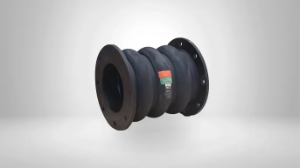
Expansion joints are essential for piping and ducting systems, designed to handle thermal expansion, contraction, vibration, and other dynamic movements. Expansion joints are vital in preventing damage caused by temperature changes and mechanical stress, ensuring the integrity and efficiency of the systems. Available in various types, including metal, rubber, and fabric, each type is designed for specific applications and environments. By accommodating movement and reducing stress, expansion joints help extend the lifespan and reliability of infrastructure in industries like construction, power generation, chemical processing, and water treatment. Choosing and installing the right expansion joints is crucial for optimal system performance and safety. Explore Centro's expansion joint offerings below or reach out to a product expert at Centro for assistance in selecting the right solution for your application.
The Material Handling category within the Bulk Solids division encompasses equipment and solutions designed to efficiently move, feed, store, and control the flow of bulk materials throughout the filtration process. From pneumatic conveying systems and mechanical conveyors to bins, feeders, and valves, these components ensure a consistent and controlled material stream—critical for optimizing filtration efficiency, reducing downtime, and maintaining product integrity.
Whether handling fine powders, granules, or abrasive solids, this category supports a wide range of industrial applications including chemical processing, food and beverage, pharmaceuticals, mining, and plastics. Material handling equipment is carefully engineered to integrate with filtration systems, improve throughput, and support dust control and contamination prevention measures.
Configure product to see pricing
Configure product to see pricing
Configure product to see pricing
Configure product to see pricing
Configure product to see pricing
Configure product to see pricing
Configure product to see pricing
Configure product to see pricing
Configure product to see pricing
Configure product to see pricing
Configure product to see pricing
Configure product to see pricing
Configure product to see pricing
Configure product to see pricing
Configure product to see pricing
Configure product to see pricing
Configure product to see pricing
Configure product to see pricing

Configure product to see pricing
Configure product to see pricing
Configure product to see pricing
Configure product to see pricing
Configure product to see pricing
Configure product to see pricing
Configure product to see pricing
Configure product to see pricing
Configure product to see pricing
Configure product to see pricing
Configure product to see pricing
Configure product to see pricing
Configure product to see pricing
Configure product to see pricing
Configure product to see pricing
Configure product to see pricing
Configure product to see pricing
Configure product to see pricing
Configure product to see pricing
Configure product to see pricing
Configure product to see pricing
Configure product to see pricing
Configure product to see pricing
Configure product to see pricing
Configure product to see pricing
Configure product to see pricing
Configure product to see pricing
Configure product to see pricing
Configure product to see pricing
Configure product to see pricing
- Bulk solids filtration refers to the equipment and systems used to capture and contain fine particles, dust, and airborne contaminants generated during the handling, conveying, processing, and transfer of dry bulk materials. In any conveying system — whether pneumatic, mechanical, or vibratory — material movement creates dust at transfer points, discharge outlets, and anywhere material is agitated or dropped. Without effective filtration, this dust escapes into the workplace where it degrades air quality, creates health hazards for workers, contaminates other products, settles on equipment and surfaces causing maintenance issues, and in many cases creates explosion risks if the dust is combustible. A complete bulk solids filtration system typically includes dust collectors (to capture and filter dust-laden air), dust filtration cartridges (the filter elements inside collectors), dust filtration ducting (the duct network connecting pickup points to the collector), and dust personnel cleaning systems (to remove dust from workers' clothing and PPE). These components work together to maintain air quality standards, protect worker health, ensure product purity, and help facilities comply with OSHA, EPA, and NFPA regulations.
- A dust collector is a system designed to capture airborne dust and particulate matter from industrial processes by drawing contaminated air through filter media that traps the particles while allowing clean air to pass through. The basic operating principle is the same across types: a fan pulls dust-laden air from the process through ductwork into the collector housing, where the air passes through filter elements (bags or cartridges) that capture the particulates. As dust accumulates on the filter surface, resistance increases, so the filters must be periodically cleaned — most modern collectors use pulse-jet cleaning, which sends short bursts of compressed air backward through each filter element to dislodge the dust cake into a collection hopper below. Baghouse collectors use long fabric filter bags and are well suited for high-volume, high-temperature, or heavy dust-load applications. Cartridge dust collectors use pleated filter cartridges that provide more filter area in a smaller footprint, making them efficient for finer dust and space-constrained installations. The choice between baghouse and cartridge collectors depends on the dust characteristics (particle size, loading, temperature, moisture), airflow volume, available space, and regulatory requirements.
- Dust filtration cartridges are replaceable filter elements used inside cartridge-style dust collectors to trap dust particles from air or gas streams. Each cartridge consists of a pleated filter media pack bonded to end caps, with a gasket seal that sits in the collector's tube sheet to separate the dirty-air side from the clean-air side. The pleated design provides a large surface area in a compact package, allowing the cartridge to capture more dust before needing cleaning or replacement compared to flat filter surfaces. Choosing the right filter media depends on the specific dust and operating conditions. Standard cellulose media works for general-purpose dry dust applications at ambient temperatures. Cellulose-polyester blends offer better moisture resistance and longer life for slightly damp or hygroscopic dusts. Spunbond polyester media provides excellent performance for fine dust, oily mist, and applications requiring washable, reusable cartridges. PTFE-coated (membrane) media offers the highest efficiency and easiest cake release, ideal for very fine or sticky dusts where pulse-jet cleaning effectiveness is critical. Nanofiber surface-loading media captures fine particles on the surface rather than depth-loading into the media, maintaining lower pressure drop and extending cartridge life. The operating temperature, moisture content, chemical exposure, particle size, and desired efficiency rating all factor into the correct media selection.
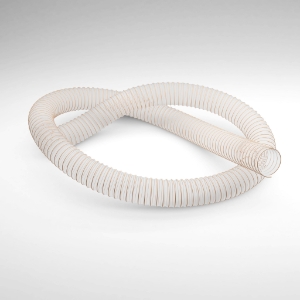
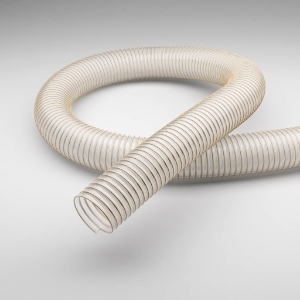
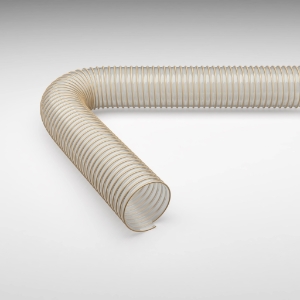
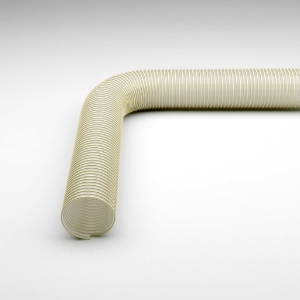
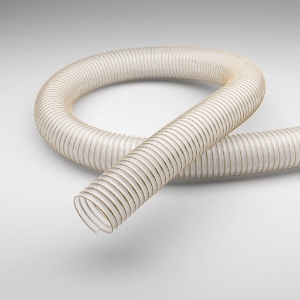
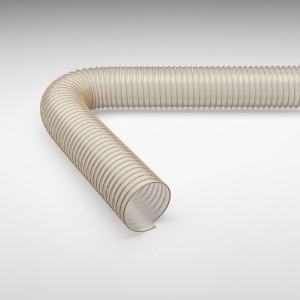
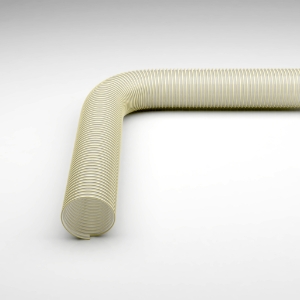
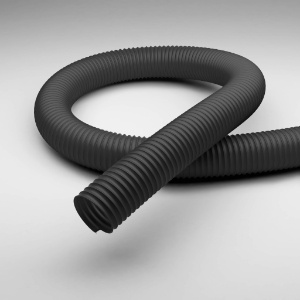
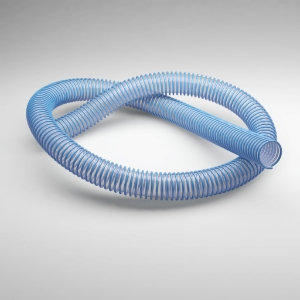
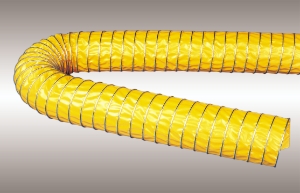
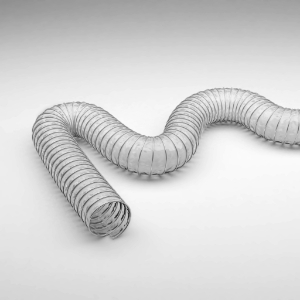
- Dust filtration ducting is the network of ducts that connects dust-generating sources — such as conveyor transfer points, bin vents, mixer discharges, and packaging equipment — to the dust collection system. The ducting captures dust-laden air at the source and transports it to the dust collector for filtration before clean air is returned to the facility or exhausted outside. Proper duct design is critical to the performance of the entire dust collection system. Duct velocity must be high enough to keep dust particles suspended and moving through the system (called transport velocity) without settling and accumulating inside the duct — typical transport velocities range from 3,500 to 4,500 feet per minute depending on the material, though heavier or more abrasive particles may require higher velocities. Duct sizing (diameter) is based on the required airflow volume at each pickup point and the target transport velocity. The layout should minimize the number of elbows, transitions, and branch entries because each fitting adds resistance (static pressure loss) that the fan must overcome. Ductwork must be properly sealed to prevent air leaks that reduce capture effectiveness, and access doors should be provided at strategic points for inspection and cleanout. In systems handling combustible dust, ducting must also incorporate explosion protection measures such as isolation valves, venting, or suppression.
- Dust personnel cleaning systems are self-contained stations designed to remove dust and debris from workers' clothing, hair, and personal protective equipment (PPE) before they leave a dusty work area. These systems use strategically positioned high-pressure air nozzles that blast compressed air over the worker's body to dislodge dust particles, while a built-in filtration system simultaneously captures the dislodged dust to prevent it from re-entering the work environment. Workers typically step into a booth or enclosure where the cleaning cycle runs automatically for a set duration. Personnel cleaning systems are used in industries where workers are routinely exposed to heavy dust — including mining, cement manufacturing, grain and food processing, pharmaceutical production, foundries, and any bulk material handling operation that generates significant airborne particulates. They serve multiple purposes: protecting worker health by reducing dust inhalation and skin exposure when workers remove respirators or PPE, preventing cross-contamination by keeping dust from being tracked into clean areas or break rooms, and helping facilities demonstrate compliance with occupational health and safety requirements. These systems are typically installed at transition points between dusty production areas and clean zones, such as exits from processing floors, entrances to break rooms, or locker room entries.