
Flow Control
Explore our comprehensive range of Flow Control products, featuring precision instruments such as flow meters, flow switches, flow transmitters, and flow sensors. Our offerings cater to diverse applications, ensuri...
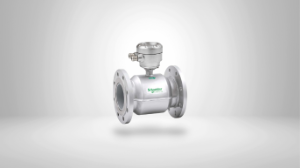
Flow meters are a piece of essential equipment for many industries, as they allow for accurately measuring fluid flow rates. At Centro, we carry a complete online selection of flow meters, including magnetic flow meters, turbine flow meters, and positive displacement flow meters. We also offer a variety of accessories and replacement parts to ensure that your flow meter always operates at peak efficiency. Whether you're looking for a new flow meter or need to restock your supplies, Centro has everything you need to keep your operation running smoothly.
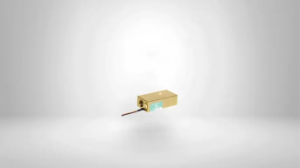
Flow switches are vital instruments in fluid systems that detect the presence or absence of flow. These devices ensure proper operation and prevent issues such as pump damage or system failure. Flow switches are employed in various industries to monitor and control the flow of liquids or gases, providing a reliable means of safeguarding equipment and optimizing fluid processes.
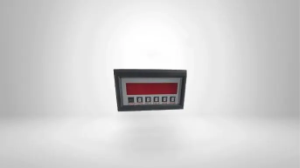
Flow Transmitters are essential in fluid systems, accurately measuring and transmitting flow rate data. These devices play a critical role in monitoring and controlling the flow of liquids or gases in various applications. By providing real-time information, Flow Transmitters enable precise adjustments, ensuring optimal performance and efficiency. Their reliability and accuracy make them indispensable for industries where precise flow measurement is crucial.

Flow Sensors are key elements in fluid systems, detecting and measuring the flow rate. These devices offer real-time data on liquid or gas movement, enabling precise control and monitoring. Flow Sensors are essential in manufacturing, healthcare, and environmental monitoring industries, providing valuable insights for process optimization, quality control, and regulatory compliance.

Centro offers a wide range of flow, pH, and conductivity meters, transmitters, and controllers to meet the demands of various industrial and commercial applications. From monitoring flow rates and maintaining chemical balance for fluid quality and consistency, our solutions are engineered for precision, reliability, and seamless integration. We provide products such as magnetic and ultrasonic flow meters, pH controllers, and conductivity transmitters designed to optimize performance in industries like water treatment, food and beverage, chemical processing, and pharmaceuticals.
Whether you need accurate measurements, durable equipment, or easy system integration, Centro has the expertise and products to support your operations. Explore our selection online or contact our team to find the right solution for your application and ensure peak system efficiency.
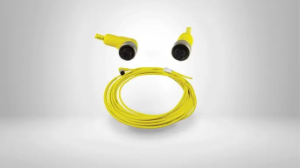
Flow Control Accessories encompass a range of supplementary components designed to optimize, support, or enhance the operation of primary flow control equipment such as valves, regulators, actuators, and pumps. These accessories are critical in ensuring precise control, safety, and efficiency within fluid and gas systems across industrial, commercial, and residential applications.

$222.84
Subject to factory lead times

$27.94
Subject to factory lead times

$114.73
Subject to factory lead times

$115.18
Subject to factory lead times
$44.45
Subject to factory lead times

$133.79
Subject to factory lead times

$122.34
Subject to factory lead times
$113.97
Subject to factory lead times

$252.90
Subject to factory lead times

$93.83
Subject to factory lead times
$76.23
Subject to factory lead times

$473.80
Subject to factory lead times
$222.84
Subject to factory lead times
$27.94
Subject to factory lead times
$114.73
Subject to factory lead times
$115.18
Subject to factory lead times
$44.45
Subject to factory lead times
$133.79
Subject to factory lead times
$122.34
Subject to factory lead times
$113.97
Subject to factory lead times
$252.90
Subject to factory lead times
$93.83
Subject to factory lead times
$76.23
Subject to factory lead times
$473.80
Subject to factory lead times
- Measuring flow rate in a pipe requires a flow meter matched to the fluid type, pipe size, flow range, and accuracy requirement. For conductive liquids (water, chemicals, slurries), magnetic flow meters are the most popular choice — they have no moving parts, create no pressure drop, and handle dirty or abrasive fluids. For non-conductive liquids or retrofit installations where you can't cut the pipe, clamp-on ultrasonic flow meters mount externally and measure through the pipe wall. For applications requiring the highest accuracy or mass flow measurement (batching, custody transfer), Coriolis meters measure mass flow directly. For steam and gas, vortex meters are robust and widely used. For simple, low-cost local visual indication of flow rate, variable-area meters (rotameters) provide a direct reading without power or electronics. Flow switches are used when you only need to confirm flow is present or absent — for example, verifying cooling water is running before allowing a machine to start. The flow meter output (typically 4–20 mA) feeds back to a PLC or controller for monitoring, totalization, or closed-loop flow control.
- The flow meter technology must match the fluid type, pipe size, accuracy requirement, and process conditions. Magnetic (mag) flow meters measure conductive liquids (water, chemicals, slurries) using Faraday's law — they have no moving parts, handle dirty or abrasive fluids well, and are the default for water and wastewater applications. Ultrasonic flow meters (transit-time and Doppler) are non-intrusive and can be clamp-on, ideal for retrofit or applications where the pipe cannot be cut. Coriolis meters measure mass flow directly with very high accuracy — the premium choice for custody transfer, batching, and applications requiring density measurement. Vortex meters are robust and versatile for steam, gas, and liquid measurement in moderate-to-large pipe sizes. Variable-area meters (rotameters) provide simple, low-cost local visual indication of flow rate. Turbine meters offer high accuracy for clean, low-viscosity liquids. The best approach is to define the fluid properties, flow range, accuracy requirement, and installation constraints, then match to the technology that fits.
- A flow switch detects whether flow is present or absent (or above/below a threshold) and outputs a discrete on/off signal — it does not measure the actual flow rate. Flow switches are used for protection and alarm functions: confirming cooling water is flowing before allowing a machine to operate, detecting loss of lubrication flow to trigger a shutdown, or verifying that a pump is actually moving fluid. They are simpler and less expensive than flow meters. A flow meter, by contrast, measures the actual flow rate (GPM, liters/minute, SCFM, etc.) and provides a continuous analog or digital output proportional to the flow value. Flow meters are used when the control system needs to know how much fluid is flowing — for batching, dosing, energy accounting, and closed-loop flow control. If you only need to know whether flow is on or off, a flow switch is sufficient. If you need to know how much, you need a flow meter.
- A magnetic flow meter (mag meter) uses Faraday's law of electromagnetic induction to measure the velocity of a conductive liquid flowing through a pipe. The meter generates a magnetic field across the pipe, and the flowing conductive liquid produces a voltage proportional to its velocity — this voltage is measured by electrodes in the pipe wall and converted to a flow rate. Mag meters have several significant advantages: no moving parts (zero maintenance on the sensor itself), no obstruction to flow (full bore, no pressure drop), excellent performance with dirty, abrasive, and slurry-containing liquids, wide turndown ratios (typically 100:1 or greater), and bidirectional measurement capability. They are the standard choice for water and wastewater treatment, chemical processing, food and beverage, pharmaceutical, and pulp and paper applications. The main limitation is that the liquid must be electrically conductive (minimum ~5 µS/cm) — mag meters cannot measure hydrocarbons, deionized water, or gases.
- Flow meter sizing must balance accuracy, rangeability, and pressure drop. The meter should be sized so that the normal operating flow rate falls within the meter's optimal accuracy range — typically between 25% and 75% of its full-scale capacity. Sizing based solely on the pipe diameter is a common mistake — if the pipe is oversized for the actual flow rate (which is common in many installations), the flow velocity through the meter will be too low for accurate measurement. In these cases, the meter should be sized smaller than the pipe, with reducers and expanders installed to transition from the pipe size to the meter size. Key data needed for sizing includes the fluid type and properties (density, viscosity, conductivity, temperature, pressure), the minimum, normal, and maximum flow rates, the required accuracy, and the acceptable pressure drop. Most flow meter manufacturers provide online sizing tools where you input these parameters and receive a recommended meter size and model.