
Electrical Control
Discover a world of precision in our Electrical Controls lineup, featuring Miniature Contactors, Control Contactors, Control Accessories, and Indicator Lights. Our products are designed to provide seamless control ...
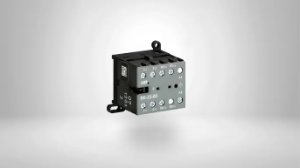
Miniature Contactors are compact electrical switches designed for efficient control in confined spaces. They enable the opening and closing of electrical circuits, serving as crucial components in systems where space is limited. These precision devices ensure reliable and precise control, making them ideal for applications where size, efficiency, and accuracy are paramount, such as in small-scale machinery or intricate control panels. Offer reliable and space-saving solutions with miniature contactors at Centro.
Miniature contactors are supplementary components designed to enhance the functionality and performance of small-scale electrical contactors in various applications. These accessories include items like auxiliary contacts, overload relays, mechanical interlocks, and surge suppressors, which expand the capabilities of miniature contactors for controlling electrical circuits. Browse our selection below or contact us to speak to a product expert.
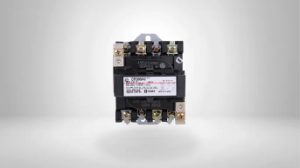
Control Contactors are pivotal in electrical systems, managing the flow of electricity to devices. As robust switches, they enable efficient control of motors, lighting, and other electrical loads. Control Contactors' reliable operation contributes to the seamless functioning of industrial and commercial applications. These devices are integral for maintaining precision and safety in diverse electrical control setups.
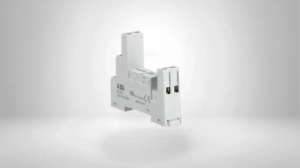
Control accessories for electrical controls are essential components that enhance the functionality and versatility of control systems. These accessories fine-tune electrical circuits, from contactor coils to auxiliary contacts, allowing for customization and optimization. Adding flexibility and control options is vital in tailoring electrical setups to specific requirements, ensuring seamless integration and performance.
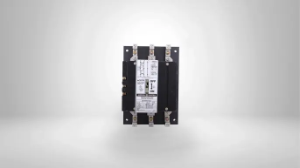
Lighting Contactors are specialized switches designed to control the operation of lighting systems. These devices manage the switching of multiple lighting fixtures, allowing for centralized and automated control. Typically used in commercial and industrial settings, Lighting Contactors provide efficient and reliable management of lighting circuits, enabling energy savings through scheduled or automated on/off functions. With their robust design, these contactors are essential for ensuring optimal lighting control and energy efficiency in diverse environments.
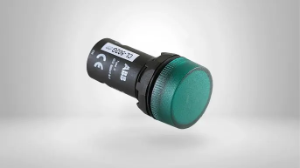
Indicator Lights play a crucial role in providing visual cues within control panels, offering instant insights into the operational status of systems. These compact and vibrant lights serve as essential indicators for various functions, helping operators and technicians monitor processes efficiently. Whether signaling normal operation, faults, or specific conditions, Indicator Lights contribute to improved safety, quick diagnostics, and streamlined control in diverse applications.
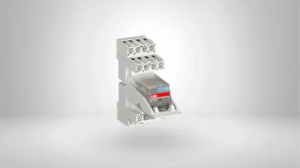
General purpose relays are designed to control circuits by opening or closing contacts based on electrical signals. Relays are widely used across various industries, from automotive and telecommunications to industrial automation and household appliances. They facilitate the switching of electrical loads, providing reliable operation and safety features such as overload protection and isolation. With configurations for different voltage ratings, contact types, and mounting options, general purpose relays accommodate diverse application requirements. Their robust design promises longevity and performance consistency in controlling motors, lights, heaters, and other electrical devices. Browse our selection below or contact us to speak with a product expert.
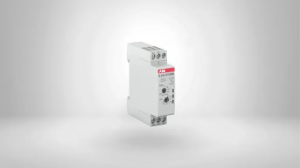
Timing relays are used in automation systems, essential for controlling the timing of operations based on preset intervals or specific triggers. They are used widespread across industries like manufacturing, automotive, and process control, where they are used for tasks such as starting motors, operating valves, and managing lighting systems. These relays offer precise timing functions, making sure accurate coordination of processes to enhance overall operational efficiency. Browse our selection below or contact us to speak with a product expert.

$6.80
$0.26$0.46
$18.13$19.60
$50.19$54.25
Subject to factory lead times
$1.02
Subject to factory lead times

$1.02
Subject to factory lead times

$19.72
Subject to factory lead times
$20.53
Subject to factory lead times
$5.56$6.54
$7.23
Subject to factory lead times
$68.78$123.80
$246.86
Subject to factory lead times
$6.80
$0.26$0.46
$18.13$19.60
$50.19$54.25
Subject to factory lead times
$1.02
Subject to factory lead times
$1.02
Subject to factory lead times
$19.72
Subject to factory lead times
$20.53
Subject to factory lead times
$5.56$6.54
$7.23
Subject to factory lead times
$68.78$123.80
$246.86
Subject to factory lead times
- A miniature contactor and a control relay both switch electrical circuits using an electromagnetic coil, but they serve different roles in a control panel. A miniature contactor is a compact IEC-rated switching device designed to handle power loads — typically small motors up to 5 HP at 460V or resistive loads up to 20A. It switches higher-current circuits on and off and is commonly used for small conveyor motors, fans, heaters, lighting circuits, and pump auxiliaries. A control relay, by contrast, is designed for low-power signal switching — it uses a low-power coil signal to open or close one or more sets of contacts for interlocking, sequencing, and signal routing in control circuits, usually handling up to 10A. Control relays offer multiple independently switchable contact poles (commonly 2 or 4), while miniature contactors typically have three main power poles plus auxiliary contacts. Both are supported by accessories such as auxiliary contact blocks, suppressor modules, and mounting adapters that expand their functionality in panel builds.
- A miniature contactor is a compact IEC-rated contactor designed for switching small electrical loads — typically motors up to 5 HP at 460V or resistive/lighting loads up to 20A. They offer the same basic functionality as full-size contactors (electromagnetically operated switching with rated contact life) but in a significantly smaller package, often 35–45mm wide and DIN-rail mountable. Use a miniature contactor when the load is within its rating and panel space is at a premium — common applications include small conveyor motors, fans, heaters, lighting circuits, and pump auxiliaries. Their smaller coil burden also reduces the power required from the control circuit transformer or 24V DC supply, which adds up when a panel contains many contactors. If the motor or load exceeds the miniature contactor's current or horsepower rating, step up to a standard IEC contactor.
- A control relay is an electromechanical device that uses a low-power coil (typically energized by a PLC output or control circuit) to open or close one or more sets of contacts. It is designed for switching low-power signals and control circuits — not for directly switching motor loads. The key differences from a contactor are load capacity and contact configuration. Contactors are built to handle high-current power loads (motors, heaters) and typically have three main power poles plus auxiliary contacts. Control relays handle lower currents (usually up to 10A) but offer multiple independently switchable contact poles (commonly 2 or 4 poles), each configurable as normally open or normally closed. Control relays are used for signal multiplication (one PLC output controlling multiple circuits), interlocking logic, and isolating control circuits from power circuits.
- Accessories for miniature contactors and control relays expand their functionality and simplify installation. Auxiliary contact blocks add normally open (NO) or normally closed (NC) contacts to a contactor, providing status feedback to the PLC (e.g., confirming the contactor has energized). Suppressor modules — RC suppressors for AC coils and diode or varistor suppressors for DC coils — are installed across the coil to suppress voltage spikes generated when the coil de-energizes, protecting PLC outputs and extending contact life. Mechanical interlocking kits connect two contactors so only one can be energized at a time, essential for reversing motor applications. Timer modules can be attached to add on-delay or off-delay functionality. DIN-rail mounting adapters and labeling strips simplify panel layout and identification during commissioning and maintenance.
- The coil voltage must match the control circuit voltage that will energize it. In most modern industrial panels, the control circuit operates at 24V DC (powered by the panel's DC power supply), making 24V DC coils the most common choice — they are compatible with PLC transistor outputs and offer quiet, bounce-free operation. For panels with AC control circuits, 120V AC and 240V AC coils are standard, and they are energized through relay outputs or pilot devices. When selecting coil voltage, consider the PLC output type — transistor (DC) outputs require DC coils, and relay outputs can drive either AC or DC coils. Also account for cumulative coil burden: each coil draws current from the control circuit power source, and panels with many contactors and relays may require a larger control transformer or DC supply to handle the total inrush and holding current of all coils.