
Seals
Industrial seals are used to prevent air and fluid leaks, maintain pressure and deflect contamination between two components by creating a tight enclosure. The type of seal used depends on the surface of the compon...

Diaphragm seals are devices that seal pressure transmitters to prevent process fluid from coming into contact with the inner workings of the transmitter. Centro's diaphragm seals are made from high-quality rubber resistant to wear and tear. They are available in various sizes to fit most pressure transmitters. Centro carries a complete selection of diaphragm seals available to purchase online. In addition, Centro offers a wide range of accessories for diaphragm seals, including replacement diaphragms, o-rings, and mounting brackets. Whether you need a single diaphragm seal or a complete Diaphragm Seal kit, Centro has the products to keep your pressure transmitter working correctly.

At Centro, we carry a complete selection of seal accessories for all your needs. Industrial seals are designed to create a tight, leak-proof seal between two surfaces. Industrial seals are designed to create a tight, leak-proof seal between two surfaces. Hydraulic cylinder seals are designed to prevent leaks in hydraulic cylinders, which are used to power a variety of machinery and equipment. Piston seals are designed to prevent leaks in pistons, which are used to pump fluids through a system. O-ring seals are designed to create a tight, leak-proof seal between two surfaces. Rod seals are designed to prevent leaks in rods, which are used to connect hydraulic cylinders to pumps. We have hydraulic cylinder seals, piston seals, rod seals, and O-ring seals in various sizes and materials. We also have a wide selection of sealant compounds and Seal Kits. Whether you need a new Seal Kit for your excavator or a replacement O-Ring Seal for your loader, we have the right product for the job. We only carry the highest quality products from the leading manufacturers in the industry, so you can be sure you're getting the best possible value for your money. Please browse our website today to see our complete selection of seal accessories.
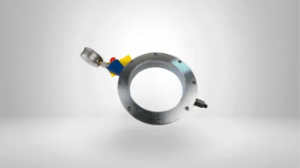
Isolation rings, also known as isolation mounts or isolation pads, are essential components used to prevent the transfer of vibrations and shocks between interconnected machinery or equipment. These rings are typically made of resilient materials like rubber, neoprene, or silicone, and are designed to absorb and dampen vibrations generated by rotating or moving equipment. By creating a barrier between the equipment and its surroundings, isolation rings effectively reduce noise, protect sensitive machinery from damage, and improve overall system performance. They find widespread applications in various industries, including manufacturing, automotive, aerospace, and electronics, where precision and stability are crucial. Isolation rings play a critical role in maintaining smooth and efficient operations while ensuring the longevity of equipment and machinery.

Centro is your premier destination for top-tier industrial solutions, and our O-rings collection is a testament to our commitment to quality and performance. Explore a comprehensive array of meticulously engineered O-rings, crafted from durable materials and precision-molded for reliability in various applications. Whether you require standard sizes or bespoke configurations, Centro provides a diverse range of O-rings to meet your specific needs. Our website offers comprehensive insights into specifications, technical details, and practical applications, empowering you with the knowledge necessary to make informed decisions for your industrial sealing requirements. Count on Centro for excellence in O-Ring solutions, delivering unparalleled reliability and sealing precision for your operations.

$314.17$433.88
Subject to factory lead times

$250.92$346.53
Subject to factory lead times

$314.85$434.83
Subject to factory lead times

$314.17$433.88

$314.17$433.88
Subject to factory lead times

$250.92$346.53
Subject to factory lead times

$151.66$209.46

$250.92$346.53
Subject to factory lead times

$174.93$188.90
Subject to factory lead times

$146.73$158.45
Subject to factory lead times

$226.50$244.60
Subject to factory lead times

$174.93$188.90
Subject to factory lead times
$314.17$433.88
Subject to factory lead times
$250.92$346.53
Subject to factory lead times
$314.85$434.83
Subject to factory lead times
$314.17$433.88
$314.17$433.88
Subject to factory lead times
$250.92$346.53
Subject to factory lead times
$151.66$209.46
$250.92$346.53
Subject to factory lead times
$174.93$188.90
Subject to factory lead times
$146.73$158.45
Subject to factory lead times
$226.50$244.60
Subject to factory lead times
$174.93$188.90
Subject to factory lead times
- For vibration-heavy environments, diaphragm seals are generally the superior choice. They use a flexible membrane that physically decouples the sensing instrument from the process fluid, absorbing mechanical vibration before it reaches the gauge or transmitter. Isolation rings, while useful for thermal and pressure isolation, don't offer the same mechanical dampening and can transmit vibration directly to the instrument. If your application involves pump vibration, rotating machinery, or high-cycle pulsation, a diaphragm seal with a viscous fill fluid (such as glycerin or silicone oil) provides the best protection and longest instrument life.
- High-pressure hydraulic cylinders demand seals engineered for extreme load and dynamic movement. The top choices are polyurethane (PU) U-cup seals, which offer excellent wear resistance and high extrusion resistance up to 5,000+ psi; PTFE-loaded composite seals, which provide low friction with outstanding pressure ratings ideal for servo hydraulics; and nitrile (NBR) O-rings with backup rings, a cost-effective standard for static and dynamic high-pressure faces. For pressures exceeding 3,000 psi, always pair dynamic seals with anti-extrusion backup rings to prevent seal deformation into the clearance gap.
- The right material depends on the specific corrosive agent. PTFE (Teflon) is the broadest-spectrum choice — chemically inert to nearly all acids, bases, and solvents, making it the go-to for aggressive chemistry. Viton (FKM) handles fuels, oils, and many acids exceptionally well and offers high temperature resistance. EPDM excels against steam, hot water, ketones, and alkalis but fails with oils. For highly oxidizing acids like nitric or concentrated sulfuric acid, PTFE or FFKM (perfluoroelastomers) are the only reliable options. Always cross-reference your specific fluid, concentration, and operating temperature against a chemical compatibility chart before specifying.
- Industrial seals create a controlled interface that blocks fluid or gas passage through three main mechanisms. Compression sealing is where O-rings and gaskets deform under load to fill microscopic surface imperfections. Lip and dynamic sealing uses flexible lips that ride against a shaft or bore, maintaining contact through spring force or fluid pressure. Labyrinth and clearance sealing relies on non-contact designs that use tortuous paths and pressure drops to resist leakage in high-speed rotating equipment. Effective sealing depends on surface finish, material hardness match, correct compression ratio, and fluid compatibility. Even a perfectly designed seal will fail prematurely if installation damage, contamination, or thermal cycling degrade the sealing interface.
- A diaphragm seal (also called a chemical seal or remote seal) isolates the pressure transmitter's sensing element from direct contact with the process fluid. This serves several critical functions: it protects against corrosive, viscous, crystallizing, or high-temperature media that would damage or clog the transmitter's internals; it allows sanitary cleaning of process lines without exposing the instrument; and it enables remote mounting when the process connection and transmitter must be physically separated. The flexible diaphragm transfers process pressure hydraulically through a fill fluid to the transmitter, ensuring accurate measurement without any process fluid entering the instrument. Seal selection — material, fill fluid, and flush or purge configuration — must be matched to the process conditions for reliable, drift-free performance.