
Steam System Ancillary Products
Centro is your one-stop shop for all your steam system needs. We carry a complete online selection of steam systems and ancillary equipment, from boilers and piping to traps and valves. Whether you're looking for a new system or replacement parts for an existing one, we have everything you need. Please browse our website to find all your steam system and ancillary products today.

$433.63
Subject to factory lead times
$433.63
Subject to factory lead times
$453.83
Subject to factory lead times
$540.27
Subject to factory lead times
$345.73
Subject to factory lead times

$525.04
Subject to factory lead times

$1,109.84
Subject to factory lead times
$694.97
Subject to factory lead times
$409.53
Subject to factory lead times
$487.54
Subject to factory lead times
$467.61
Subject to factory lead times
$544.40
Subject to factory lead times
$433.63
Subject to factory lead times
$433.63
Subject to factory lead times
$453.83
Subject to factory lead times
$540.27
Subject to factory lead times
$345.73
Subject to factory lead times
$525.04
Subject to factory lead times
$1,109.84
Subject to factory lead times
$694.97
Subject to factory lead times
$409.53
Subject to factory lead times
$487.54
Subject to factory lead times
$467.61
Subject to factory lead times
$544.40
Subject to factory lead times
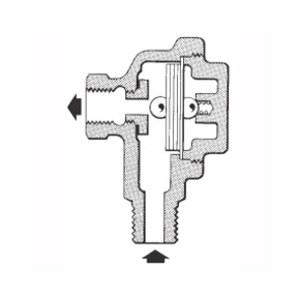
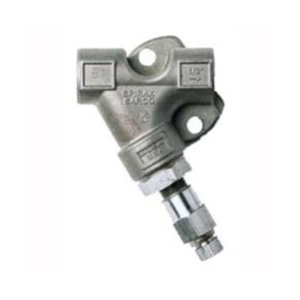
- Steam system ancillary products are the supporting components that work alongside steam traps, valves, and piping to ensure the steam system operates efficiently, safely, and reliably. Key ancillary products include pipeline strainer connectors (combination strainer and connector assemblies that protect traps from debris while providing isolation for maintenance), strainers (Y-type and basket strainers that remove pipe scale, rust, and debris ahead of traps and control valves), steam trap diffusers (installed downstream of traps to reduce noise and erosion caused by high-velocity condensate discharge), vacuum breakers and air vents (allow air to enter or exit the system to prevent vacuum lock and ensure proper drainage), and sight glasses (provide visual confirmation of condensate flow and trap operation).
- Strainers protect steam traps, control valves, pressure reducing valves, and other downstream components from damage caused by pipe scale, rust, welding slag, and other debris that is inevitably present in steam piping — especially in new installations or systems that have been repaired. A small piece of debris can lodge in a steam trap orifice or valve seat, causing it to fail open (leaking steam) or fail closed (blocking condensate). Y-strainers are the standard for steam lines — they are compact, install inline, and have a removable screen for cleaning. The strainer mesh size must be matched to the downstream component's requirements — steam traps typically require a mesh fine enough to catch particles that could damage the trap seat. Strainers should be installed upstream of every steam trap and control valve, and the screens should be inspected and cleaned periodically — particularly after system startup or maintenance work that may have introduced debris into the piping.
- A steam trap diffuser is a device installed immediately downstream of a steam trap to reduce the velocity and noise of the condensate and flash steam discharging from the trap into the condensate return line. When a steam trap discharges high-pressure condensate into a lower-pressure return line, a portion of the condensate flashes into steam — this high-velocity discharge can cause erosion of downstream piping, water hammer, noise, and vibration. The diffuser spreads the discharge over a larger cross-sectional area, reducing velocity and turbulence. Diffusers are recommended whenever the pressure drop across the trap is significant (high inlet pressure discharging into a low-pressure or atmospheric return line) and wherever noise, erosion, or water hammer in the condensate return piping is a concern. They are a compact, inexpensive component that extends the life of return piping and reduces system noise.
- A vacuum breaker is a device that admits air into a steam space when the steam pressure drops below atmospheric — preventing a vacuum from forming inside the equipment. When steam condenses rapidly inside a heat exchanger, coil, or vessel (for example, when the steam supply is shut off or the process load increases suddenly), the rapid volume reduction can create a partial vacuum. This vacuum can collapse thin-walled equipment (vacuum implosion), prevent condensate from draining through the steam trap (because the vacuum holds the condensate in the equipment), and cause water hammer when trapped condensate is suddenly released. Vacuum breakers are typically installed at the highest point of the steam space and open automatically when internal pressure drops below atmospheric, allowing air in to equalize pressure and ensure proper drainage. They are essential on batch process equipment, jacketed vessels, and any steam-heated equipment that cycles on and off.
- A pipeline strainer connector is an integrated assembly that combines an inlet strainer, isolation valves, and a test point into a single compact unit that installs upstream of a steam trap station. Instead of installing separate isolation valves, a strainer, and test fittings as individual components — which requires more piping, more connections, and more potential leak points — the strainer connector provides all of these functions in one body. This simplifies installation, reduces the physical footprint of the trap station, and most importantly makes trap testing and replacement faster and easier. The built-in isolation valves allow the trap to be isolated from the steam and condensate lines without separate gate valves, and the integrated test point provides a convenient connection for ultrasonic or temperature diagnostic equipment during trap surveys. Strainer connectors are available in a range of sizes and materials (cast steel, stainless steel) to match the piping specifications and pressure ratings of the system.