
PTFE Lined Butterfly Valves
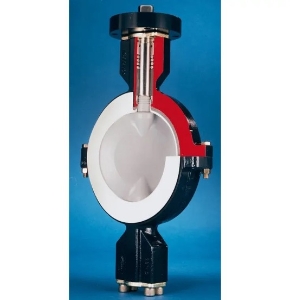
PTFE (polytetrafluoroethylene) lined butterfly valves offer chemical resistance and reliability in fluid handling systems. Featuring a PTFE lining, these valves provide superior protection against corrosion and are compatible with a wide range of aggressive chemicals and high-purity fluids. The butterfly valve design ensures smooth flow control and tight shut-off, making them well-suited for applications where precise regulation of flow rates is essential. PTFE-lined butterfly valves find extensive use in industries such as chemical processing, water treatment, and pharmaceuticals, where maintaining product purity and preventing contamination is critical. Their durable construction and ability to withstand harsh operating conditions make them a trusted choice for ensuring efficient fluid handling and optimal performance in demanding environments.
$1,980.64$2,536.00
Subject to factory lead times
$2,691.35$3,446.00
Subject to factory lead times
$1,868.17$2,392.00
Subject to factory lead times
$3,779.30$4,839.00
Subject to factory lead times
$3,482.51$4,459.00
Subject to factory lead times
$2,928.00$3,749.00
Subject to factory lead times
$1,380.82$1,768.00
Subject to factory lead times
$1,731.49$2,217.00
Subject to factory lead times
$1,980.64$2,536.00
Subject to factory lead times
$2,691.35$3,446.00
Subject to factory lead times
$1,868.17$2,392.00
Subject to factory lead times
$3,779.30$4,839.00
Subject to factory lead times
$3,482.51$4,459.00
Subject to factory lead times
$2,928.00$3,749.00
Subject to factory lead times
$1,380.82$1,768.00
Subject to factory lead times
$1,731.49$2,217.00
Subject to factory lead times
- A PTFE lined butterfly valve is a butterfly valve in which the body, disc, and stem are lined or encapsulated with PTFE (polytetrafluoroethylene, commonly known by the brand name Teflon) or PFA (perfluoroalkoxy, a related fluoropolymer) to protect the metal components from contact with corrosive media. These valves are needed in chemical processing and other applications where the process fluid would aggressively corrode standard carbon steel, ductile iron, or even stainless steel valve components — including strong acids (hydrochloric, sulfuric, hydrofluoric, nitric), caustic solutions, chlorine and chlorine compounds, solvents, and other highly corrosive chemicals. The PTFE/PFA lining creates a complete barrier between the process media and the valve's structural metal parts, providing exceptional chemical resistance across virtually the entire pH range and at temperatures up to approximately 400°F. The valve body is typically ductile iron for structural strength, with the interior fully lined with molded or machined PTFE, and the disc is a stainless steel core fully encapsulated in PFA or PTFE. This gives the valve the structural strength of metal with the corrosion resistance of a fluoropolymer.
- PTFE (polytetrafluoroethylene) and PFA (perfluoroalkoxy) are both fluoropolymers that offer outstanding chemical resistance across virtually the entire range of corrosive chemicals, but they differ in how they are manufactured and applied. PTFE is typically machined or compression-molded into shape — it is used for seats, gaskets, and body liners where the lining can be formed as a separate insert and assembled into the valve. PTFE is slightly harder and has better wear resistance, making it an excellent seat material. PFA is melt-processable (it can be injection-molded or applied as a coating), which makes it ideal for encapsulating complex shapes like discs and stems where a seamless, pinhole-free coating is needed over contoured metal surfaces. PFA lining on the disc creates a smooth, fully encapsulated shell with no exposed metal that can corrode. In practice, many PTFE lined butterfly valves use PTFE for the body liner and seat while using PFA for the disc encapsulation — combining the best properties of each material. Both materials handle a wide temperature range (up to approximately 400°F for continuous service) and are chemically inert to almost all industrial chemicals, making them interchangeable in most corrosive applications.
- PTFE lined butterfly valves are specified in any industry where process fluids are too corrosive for standard metal valves, even stainless steel. Chemical manufacturing and processing plants are the primary users — these facilities handle concentrated acids (sulfuric, hydrochloric, hydrofluoric, nitric, phosphoric), caustic soda, chlorine and hypochlorite, solvents, and other aggressive chemicals that would corrode unlined metal valves in weeks or months. Water and wastewater treatment facilities use them for handling sodium hypochlorite (bleach), ferric chloride, alum, sulfuric acid, and other treatment chemicals that are added to the process. Pulp and paper mills use them for chlorine dioxide, bleaching chemicals, and other corrosive process fluids. Pharmaceutical and specialty chemical plants use them for solvents and acidic or basic intermediates. Mining and mineral processing operations use them for acidic slurries and leaching solutions. Power generation facilities use them in flue gas desulfurization (FGD) systems where acidic scrubber liquids attack standard metals. Essentially, any application where the Cv requirement fits a butterfly valve and the media would aggressively corrode unprotected metal is a candidate for a PTFE lined butterfly valve.
- Both PTFE lined and plastic butterfly valves are used in corrosive chemical services, but they differ significantly in pressure and temperature capability, structural strength, and application suitability. PVC and CPVC butterfly valves are cost-effective for low-pressure, ambient-temperature corrosive applications — PVC handles most acids, bases, and salt solutions up to about 140°F and moderate pressures, while CPVC extends the temperature range to approximately 200°F. They are lightweight and commonly used in chemical feed systems, water treatment chemical lines, and laboratory waste systems. However, plastic valves are limited by their lower pressure ratings, narrow temperature range, and susceptibility to mechanical damage (impact, overtightening, and stress cracking). PTFE lined butterfly valves use a ductile iron or carbon steel body for structural strength, giving them much higher pressure ratings (ANSI Class 150 and above) and better resistance to mechanical loads, water hammer, and external forces. The PTFE/PFA lining provides chemical resistance equal to or better than PVC/CPVC across a wider temperature range (up to 400°F). For higher-pressure systems, larger pipe sizes, elevated temperatures, or applications where mechanical robustness and long-term reliability are critical, PTFE lined butterfly valves are the better choice despite the higher cost.
- When selecting a PTFE lined butterfly valve, start by confirming full chemical compatibility — while PTFE and PFA resist nearly all chemicals, certain conditions like extremely high concentrations, elevated temperatures near the material's limit, or combinations of chemicals and temperature may require specific lining grades or thicknesses. Verify the pressure and temperature ratings at your actual operating conditions, not just the maximum ratings, since lined valves often have derating at elevated temperatures. Choose between wafer and lug body styles based on whether the valve needs to serve as a dead-end isolation point (lug required) or only in-line service (wafer is sufficient). Confirm that the disc lining material (typically PFA) is rated for the same chemical and temperature as the body liner. For maintenance, the most important consideration is protecting the PTFE/PFA lining from mechanical damage — overtightening flange bolts can crack or deform the lining, and physical impact or inserting cleaning tools can gouge the liner surface, creating a spot where corrosive media can reach and attack the underlying metal. Always follow the manufacturer's recommended bolt torque values and installation procedures. Periodically inspect the lining for signs of wear, swelling, permeation, or cracking, particularly in high-temperature or highly concentrated chemical services. If the lining is damaged, the valve must be relined or replaced — patching is not a reliable repair for a corrosion barrier.