
Proportional Valves
Proportional valves are advanced control valves that provide precise and proportional control over fluid flow rates or pressures. These valves are designed to accurately regulate the flow or pressure of liquids or gases in various industrial applications. Proportional valves offer the ability to adjust the valve opening or position in proportion to an input signal, typically an electrical or analog signal. This allows for fine-tuned control and modulation of the flow or pressure, enabling precise adjustments based on system requirements. Proportional valves are commonly used in automation, robotics, process control, and hydraulic systems, where precise and dynamic control is essential for optimal performance.
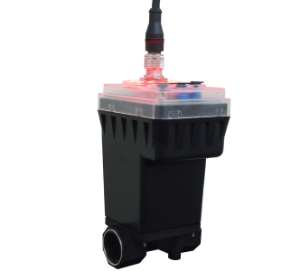
Configure product to see pricing
Configure product to see pricing
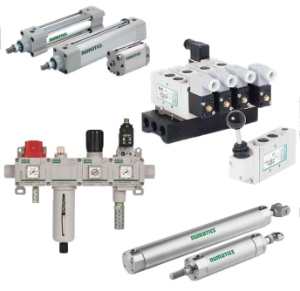
$128.00$158.72
Subject to factory lead times
$2,833.48
Subject to factory lead times

$470.38$537.00
Subject to factory lead times
$789.22$901.00
Subject to factory lead times
$480.02$548.00
Subject to factory lead times

$878.57$1,003.00
Subject to factory lead times
$665.71$760.00
Subject to factory lead times
$649.07$741.00
Subject to factory lead times

$663.09$757.00
Subject to factory lead times
$786.59$898.00
Subject to factory lead times
$693.74$792.00
Subject to factory lead times
Configure product to see pricing
Configure product to see pricing
$128.00$158.72
Subject to factory lead times
$2,833.48
Subject to factory lead times
$470.38$537.00
Subject to factory lead times
$789.22$901.00
Subject to factory lead times
$480.02$548.00
Subject to factory lead times
$878.57$1,003.00
Subject to factory lead times
$665.71$760.00
Subject to factory lead times
$649.07$741.00
Subject to factory lead times
$663.09$757.00
Subject to factory lead times
$786.59$898.00
Subject to factory lead times
$693.74$792.00
Subject to factory lead times
- A proportional valve provides continuously variable control over fluid flow rate or pressure in proportion to an electrical input signal, rather than simply switching between fully open and fully closed like a standard on/off solenoid valve. In a standard solenoid valve, the coil is either energized (valve open) or de-energized (valve closed) — there is no intermediate position. A proportional valve uses a specially designed solenoid and control electronics that allow the valve opening to be precisely adjusted to any position between closed and fully open by varying the electrical current to the coil. As the input signal increases, the valve opens further and allows more flow; as the signal decreases, the valve closes partially and reduces flow. This allows a control system to precisely regulate flow rate, pressure, or actuator speed in real time based on process feedback. Proportional valves are used in applications requiring variable speed control of pneumatic cylinders, precise pressure regulation, proportional fluid dispensing, and any application where the process demand varies and the valve output must continuously match it.
- Proportional valves are used in applications where the process requires continuously variable flow or pressure control rather than simple on/off switching. Pneumatic cylinder speed control — proportional valves provide infinitely variable speed adjustment of pneumatic cylinders by proportionally controlling the air supply or exhaust, allowing smooth acceleration, deceleration, and variable-speed motion profiles. Pressure regulation — proportional pressure regulators maintain a setpoint pressure that can be changed remotely by a PLC or controller signal, enabling automated pressure adjustments. Dispensing and filling — proportional valves precisely control the flow rate of liquids, gases, or adhesives for accurate volume dispensing in packaging, assembly, and coating operations. Gas blending and mixing — proportional valves control individual gas flow rates to maintain precise mixture ratios in welding, heat treating, and analytical instrument applications. Test and measurement systems use them to generate precisely controlled pneumatic pressures and flows for product testing and calibration.
- Proportional valves are controlled by an analog electrical signal — typically 0-10 VDC or 4-20 mA — that is proportional to the desired valve opening, flow rate, or output pressure. The control signal is generated by a PLC, DCS, process controller, or other electronic control system. Inside the proportional valve, electronic driver circuitry converts the command signal into a proportional electrical current that drives the solenoid coil. The solenoid force varies with current, moving the valve element to a position proportional to the signal. Most modern proportional valves include internal closed-loop electronics that use position feedback to maintain accurate control regardless of supply pressure variations, temperature changes, or friction. Some proportional valves accept digital communication protocols (Fieldbus, IO-Link) for remote configuration, diagnostics, and command signal input. The combination of proportional valve hardware with digital communication enables advanced features like automatic zero and span calibration, flow or pressure profiling, and remote valve health monitoring from the plant control system.
- Both proportional valves and servo valves provide continuously variable flow or pressure control, but they differ in precision, response speed, cost, and typical application. Proportional valves provide good control accuracy and response speed at moderate cost — they are suitable for the majority of industrial applications where precise but not ultra-high-performance control is needed, such as general pneumatic speed control, pressure regulation, dispensing, and process control. They are more tolerant of contamination in the air or fluid supply and require less sophisticated filtration. Servo valves provide the highest level of control precision, the fastest response times, and the tightest position control — they are used in high-performance motion control, aerospace, test equipment, and applications requiring extreme accuracy. However, servo valves are significantly more expensive, require extremely clean fluid supply, and are more sensitive to contamination. For most industrial process and pneumatic automation applications, proportional valves provide the best balance of performance, reliability, and cost-effectiveness.
- When selecting a proportional valve, several factors determine the right choice. Flow capacity — the valve must provide sufficient maximum flow rate (Cv) to meet the peak demand. Response time — how quickly the valve must change from one flow rate to another. Control signal type — verify the valve accepts the signal format your controller outputs (0-10 VDC, 4-20 mA, Fieldbus, IO-Link). Linearity — how accurately the valve output follows the input signal across the full range. Hysteresis — the difference in valve response between increasing and decreasing signals, which affects control stability. Port size and connection type must match your piping. Operating pressure and temperature must be within the valve's rated range. Media compatibility — ensure the valve's wetted materials are compatible with the fluid or gas being controlled. Electrical supply voltage must match your system. For hazardous areas, verify the valve carries appropriate explosion-proof or intrinsically safe certifications. Finally, consider whether the application requires flow control, pressure control, or both.