
Electrical Control - ABB
Electrical controls switch and signal the operation of motors, lighting and machines. Contactors, relays and indicator lights form the backbone of control panels.
Electrical Control Products

Lighting contactors switch large lighting loads in buildings, parking lots, warehouses and stadiums. They're rated for the inrush current of lighting ballasts and LED drivers.
Lighting Contactor Types
- Electrically held contactors – simple control
- Mechanically held contactors – quiet and energy-efficient
- Multi-pole designs – switch many circuits
- Enclosed contactors – standalone mounting
Choosing a Contactor
Select by load current, poles, coil voltage and holding method. Mechanically held contactors save energy and stay put through power interruptions.
Centro supplies lighting contactors for commercial and industrial facilities.
Related categories: Electrical Control | Indicator Lights | Control Accessories | General Purpose Relays | Control Contactors

Indicator lights show machine status, alarms and power at a glance. Clear indication helps operators respond quickly and safely.
Indicator Light Options
- LED pilot lights – long life and low power
- 22 mm and 30 mm sizes – match panel layouts
- Multiple colors – red, green, amber, blue and white
- Push-to-test lights – verify lamp function
- Tower lights – stacked machine status
Choosing Lights
Match voltage, size and color to your panel. Follow color conventions so status is easy to read.
Centro supplies indicator lights for control panels.
Related categories: Electrical Control | General Purpose Relays | Lighting Contactors | Timing Relays | Control Accessories

Control accessories complete push buttons, selector switches and pilot devices on control panels. Contact blocks, legend plates, guards and enclosures let you configure operator controls for each machine.
Accessories Available
- Contact blocks – normally open and normally closed
- Legend plates – clear function labeling
- Protective guards and boots – prevent accidental operation
- Push button enclosures – remote and pendant stations
- LED lamp modules – illuminated devices
Choosing Accessories
Accessories are series-specific, so match them to your operator brand and size (22 mm or 30 mm). Use standardized colors and legends for safety.
Centro supplies control accessories for operator devices.
Related categories: Electrical Control | Lighting Contactors | Control Contactors | Indicator Lights | Miniature Contactor Accessories

Miniature contactors switch small motors, heaters and control loads in compact panels. They save space while giving reliable switching.
Features
- Compact footprint – save panel space
- AC and DC coils – direct PLC control options
- Integrated auxiliary contacts – status signals
- Accessories – suppressors and overload relays
Choosing a Contactor
Size by load current and utilization category, and select coil voltage. Use suppressors with PLC outputs.
Centro supplies miniature contactors and accessories.
Related categories: Electrical Control | Timing Relays | General Purpose Relays | Indicator Lights | Lighting Contactors

Control contactors switch power to motors, heaters, lighting and other loads on command from a control circuit. They're a core part of industrial control panels, letting low-voltage signals from PLCs and pushbuttons safely switch high-current loads.
Contactor Types
- IEC contactors – compact, application-rated designs
- NEMA contactors – size-rated for robust industrial use
- Definite purpose contactors – HVAC and refrigeration equipment
- Reversing contactors – forward/reverse motor control
- Accessories – auxiliary contacts, suppressors and overloads
Choosing a Contactor
Size to the load's current and utilization category, such as AC-3 for motors, along with voltage, coil voltage and the number of poles. For frequent switching, check the electrical life rating. Pair with an overload relay to build a motor starter.
Centro carries control contactors and accessories from leading electrical brands.
Related categories: Electrical Control | Control Accessories | Miniature Contactor Accessories | Lighting Contactors | Indicator Lights

Miniature contactors save panel space in control circuits, small motor starters and HVAC equipment. Accessories add functions to these compact contactors without moving up to a larger frame, making it easy to add signaling, interlocking or surge protection where you need it.
Common Accessories
- Auxiliary contact blocks – front or side-mount contacts for status and interlocking
- Surge suppressors – RC, varistor and diode modules that protect control electronics
- Mechanical interlocks – for reversing and transfer applications
- Overload relays – sized to mount directly to miniature contactors
- Marking tags and covers – for clear identification and finger-safe wiring
Choosing Accessories
Accessories are usually brand- and series-specific, so start with the contactor model number. Check how many auxiliary contacts the contactor will accept and whether they mount on the front or side. For coils switched by PLC outputs, adding a suppressor extends output life and reduces electrical noise.
Centro can match accessories to the miniature contactors already in your panels. Send us the part number and we'll confirm compatibility.
Related categories: Electrical Control | Control Contactors | Control Accessories | Lighting Contactors | Indicator Lights
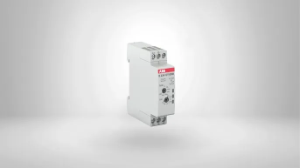
Timing relays add time delays to control circuits, such as delaying a start, keeping a fan running after shutdown or cycling equipment on and off.
Timing Relay Types
- On-delay relays – delay after energizing
- Off-delay relays – delay after de-energizing
- Repeat cycle relays – on/off cycling
- Multi-function relays – select modes
- DIN rail and plug-in styles – suit panels
Choosing a Relay
Select timing range, function, voltage and contacts. Multi-function relays reduce spare parts inventory.
Centro supplies timing relays for control circuits.
Related categories: Electrical Control | Miniature Contactors | General Purpose Relays | Indicator Lights | Lighting Contactors

General purpose relays are designed to control circuits by opening or closing contacts based on electrical signals. Relays are widely used across various industries, from automotive and telecommunications to industrial automation and household appliances. They facilitate the switching of electrical loads, providing reliable operation and safety features such as overload protection and isolation. With configurations for different voltage ratings, contact types, and mounting options, general purpose relays accommodate diverse application requirements. Their robust design promises longevity and performance consistency in controlling motors, lights, heaters, and other electrical devices. Tell us your coil voltage, contact arrangement and socket style, and we'll help you find the right general purpose relay for your panel.
Related categories: Electrical Control | Timing Relays | Indicator Lights | Miniature Contactors | Lighting Contactors

$212.29$1,152.00
Subject to factory lead times
$150.38$816.00
Subject to factory lead times
$150.38$816.00
Subject to factory lead times

$150.38$816.00
Subject to factory lead times

$150.38$816.00
Subject to factory lead times

$159.22$864.00
Subject to factory lead times

$159.22$864.00
Subject to factory lead times

$212.29$1,152.00
Subject to factory lead times
$274.21$1,488.00
Subject to factory lead times
$371.51$2,016.00
Subject to factory lead times
$274.21$1,488.00
Subject to factory lead times
$274.21$1,488.00
Subject to factory lead times

$274.21$1,488.00
Subject to factory lead times

$318.43$1,728.00
Subject to factory lead times

$318.43$1,728.00
Subject to factory lead times
$415.72$2,256.00
Subject to factory lead times
$442.26$2,400.00
Subject to factory lead times
$442.26$2,400.00
Subject to factory lead times

$442.26$2,400.00
Subject to factory lead times

$442.26$2,400.00
Subject to factory lead times

$530.72$2,880.00
Subject to factory lead times

$981.82$5,328.00
Subject to factory lead times

$981.82$5,328.00
Subject to factory lead times

$1,061.43$5,760.00
Subject to factory lead times
$212.29$1,152.00
Subject to factory lead times
$150.38$816.00
Subject to factory lead times
$150.38$816.00
Subject to factory lead times
$150.38$816.00
Subject to factory lead times
$150.38$816.00
Subject to factory lead times
$159.22$864.00
Subject to factory lead times
$159.22$864.00
Subject to factory lead times
$212.29$1,152.00
Subject to factory lead times
$274.21$1,488.00
Subject to factory lead times
$371.51$2,016.00
Subject to factory lead times
$274.21$1,488.00
Subject to factory lead times
$274.21$1,488.00
Subject to factory lead times
$274.21$1,488.00
Subject to factory lead times
$318.43$1,728.00
Subject to factory lead times
$318.43$1,728.00
Subject to factory lead times
$415.72$2,256.00
Subject to factory lead times
$442.26$2,400.00
Subject to factory lead times
$442.26$2,400.00
Subject to factory lead times
$442.26$2,400.00
Subject to factory lead times
$442.26$2,400.00
Subject to factory lead times
$530.72$2,880.00
Subject to factory lead times
$981.82$5,328.00
Subject to factory lead times
$981.82$5,328.00
Subject to factory lead times
$1,061.43$5,760.00
Subject to factory lead times
- A miniature contactor and a control relay both switch electrical circuits using an electromagnetic coil, but they serve different roles in a control panel. A miniature contactor is a compact IEC-rated switching device designed to handle power loads — typically small motors up to 5 HP at 460V or resistive loads up to 20A. It switches higher-current circuits on and off and is commonly used for small conveyor motors, fans, heaters, lighting circuits, and pump auxiliaries. A control relay, by contrast, is designed for low-power signal switching — it uses a low-power coil signal to open or close one or more sets of contacts for interlocking, sequencing, and signal routing in control circuits, usually handling up to 10A. Control relays offer multiple independently switchable contact poles (commonly 2 or 4), while miniature contactors typically have three main power poles plus auxiliary contacts. Both are supported by accessories such as auxiliary contact blocks, suppressor modules, and mounting adapters that expand their functionality in panel builds.
- A miniature contactor is a compact IEC-rated contactor designed for switching small electrical loads — typically motors up to 5 HP at 460V or resistive/lighting loads up to 20A. They offer the same basic functionality as full-size contactors (electromagnetically operated switching with rated contact life) but in a significantly smaller package, often 35–45mm wide and DIN-rail mountable. Use a miniature contactor when the load is within its rating and panel space is at a premium — common applications include small conveyor motors, fans, heaters, lighting circuits, and pump auxiliaries. Their smaller coil burden also reduces the power required from the control circuit transformer or 24V DC supply, which adds up when a panel contains many contactors. If the motor or load exceeds the miniature contactor's current or horsepower rating, step up to a standard IEC contactor.
- A control relay is an electromechanical device that uses a low-power coil (typically energized by a PLC output or control circuit) to open or close one or more sets of contacts. It is designed for switching low-power signals and control circuits — not for directly switching motor loads. The key differences from a contactor are load capacity and contact configuration. Contactors are built to handle high-current power loads (motors, heaters) and typically have three main power poles plus auxiliary contacts. Control relays handle lower currents (usually up to 10A) but offer multiple independently switchable contact poles (commonly 2 or 4 poles), each configurable as normally open or normally closed. Control relays are used for signal multiplication (one PLC output controlling multiple circuits), interlocking logic, and isolating control circuits from power circuits.
- Accessories for miniature contactors and control relays expand their functionality and simplify installation. Auxiliary contact blocks add normally open (NO) or normally closed (NC) contacts to a contactor, providing status feedback to the PLC (e.g., confirming the contactor has energized). Suppressor modules — RC suppressors for AC coils and diode or varistor suppressors for DC coils — are installed across the coil to suppress voltage spikes generated when the coil de-energizes, protecting PLC outputs and extending contact life. Mechanical interlocking kits connect two contactors so only one can be energized at a time, essential for reversing motor applications. Timer modules can be attached to add on-delay or off-delay functionality. DIN-rail mounting adapters and labeling strips simplify panel layout and identification during commissioning and maintenance.
- The coil voltage must match the control circuit voltage that will energize it. In most modern industrial panels, the control circuit operates at 24V DC (powered by the panel's DC power supply), making 24V DC coils the most common choice — they are compatible with PLC transistor outputs and offer quiet, bounce-free operation. For panels with AC control circuits, 120V AC and 240V AC coils are standard, and they are energized through relay outputs or pilot devices. When selecting coil voltage, consider the PLC output type — transistor (DC) outputs require DC coils, and relay outputs can drive either AC or DC coils. Also account for cumulative coil burden: each coil draws current from the control circuit power source, and panels with many contactors and relays may require a larger control transformer or DC supply to handle the total inrush and holding current of all coils.