
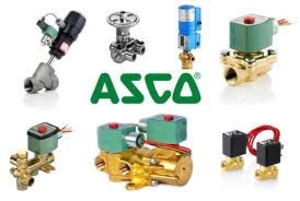
Solenoid Valves - ASCO
Solenoid valves provide fast, reliable on/off control of water, air, gas, oil, steam and chemicals using an electrical signal. They automate filling, dispensing, cooling, cleaning and safety shutoff in countless ma...

Fuel, gas and oil valves control and shut off flow to burners, boilers, engines and fuel systems. Safety-approved valves protect people and equipment.
Valve Types
- Safety shutoff solenoid valves – burner trains
- Fuel oil solenoid valves – oil burners
- Gas ball valves – manual isolation
- Motorized gas valves – slow-opening control
Choosing a Valve
Select by fuel type, pressure, size and required approvals (UL, FM, CSA). Burner trains must meet applicable codes.
Centro supplies fuel, gas and oil valves for combustion systems.
Related categories: Valves | Butterfly Valves | Flow Control Valves | Temperature Control Valves | Directional Control Valves

Hot Water and Steam Valves are essential components designed to control and regulate the flow of hot water and steam in various applications. These valves are specifically engineered to withstand high temperatures and pressures, ensuring reliable operation in heating systems, steam boilers, industrial processes, and other applications requiring hot water or steam control. With durable materials and robust construction, these valves provide precise control and help maintain system efficiency and safety. Hot Water and Steam Valves are widely used in industries such as HVAC, power generation, manufacturing, and commercial buildings where reliable and efficient hot water and steam management is crucial.
Related categories: Valves | Microfluidic Valves | Angle Seat Valves | Pilot Valves | Plug Valves
Valve accessories add control, feedback and protection to valves. Actuators, positioners, limit switches, handles and locking devices make valves easier and safer to run.
Accessories Available
- Actuators – pneumatic and electric automation
- Positioners – modulating control
- Limit switches – position feedback
- Gear operators and handwheels – manual operation
- Locking devices and extensions – safety and access
Choosing Accessories
Match valve type, size and mounting standard (ISO 5211). Choose environmental ratings for the installation.
Centro supplies valve accessories and automation packages.
Related categories: Valves | Gate Valves | Ball Valves | Valve Repair Kits & Parts | Gauge Cock Valves

Pilot valves are critical for operating larger valves or control actuators in fluid control systems. These valves act as control mechanisms, receiving signals from external devices such as sensors, controllers, or other valves and initiating the opening or closing of the main valve or actuator. Pilot valves are commonly used in applications where high-pressure fluids or significant flow rates are involved, such as hydraulic systems, pneumatic systems, and industrial machinery. They provide reliable and precise control, ensuring efficient operation and safety. With various configurations and actuation methods available, including solenoid-operated, manual, or pilot-operated, pilot valves offer versatility and flexibility to meet specific system requirements.
Related categories: Valves | Proportional Valves | Microfluidic Valves | Pneumatic Control Valves | Hot Water and Steam Valves

Pulse valves are specialized valves used in pulse-jet dust collection systems commonly found in industrial settings. These valves are specifically designed to provide efficient and reliable cleaning of dust collector filter bags or cartridges. Pulse valves release short bursts or pulses of compressed air into the filter bags, creating a shockwave that dislodges accumulated dust particles, allowing them to fall into the collection hopper. This cleaning process helps maintain the effectiveness and longevity of the filtration system. Pulse valves are known for their rapid response, high flow capacity, and durability in demanding environments. They are widely used in manufacturing, mining, and energy industries, where effective dust control is essential for maintaining air quality and preventing equipment damage.
Related categories: Valves | Repair Valves | Diaphragm Valves | Relief Valves and Vacuum Breakers | Pressure Reducing Valves

Flow control valves are essential devices used in fluid control systems to regulate the flow rate within a pipeline or system. These valves allow for precise adjustment of flow rates, ensuring optimal performance and efficiency. By controlling the opening or closing of the valve or by using throttling mechanisms, flow control valves can increase or decrease the flow rate as desired. This enables operators to maintain stable flow conditions, prevent fluid overload, and achieve accurate flow control for various applications. Flow control valves are commonly used in manufacturing, oil and gas, water treatment, and HVAC systems, where precise flow management is critical for operational success.
Related categories: Valves | Fuel, Gas, and Oil Valves | Directional Control Valves | Butterfly Valves | Valve Positioners

Cryogenic valves are designed to operate in extremely low-temperature environments, typically below -150°C (-238°F). These valves are engineered with materials and components that can withstand the challenges posed by cryogenic conditions, such as thermal contraction and brittleness. They are essential for safely and efficiently controlling cryogenic fluids like liquid nitrogen, oxygen, or liquefied natural gas (LNG). Cryogenic valves are built to minimize heat transfer and prevent the freezing of internal components, ensuring reliable performance and preventing leaks. They find applications in aerospace, medical, energy, and research, where precise and secure control of cryogenic fluids is crucial. These valves are designed to maintain safety, reliability, and efficiency in low-temperature environments.
Related categories: Valves | Valve Positioners | Needle Valves | Directional Control Valves | Check Valves

$373.74$408.00
Subject to factory lead times
$363.66$397.00
Subject to factory lead times
$363.66$397.00
Subject to factory lead times
$363.66$397.00
Subject to factory lead times
$409.46$447.00
Subject to factory lead times
$409.46$447.00
Subject to factory lead times
$409.46$447.00
Subject to factory lead times
$409.46$447.00
Subject to factory lead times
$409.46$447.00
Subject to factory lead times
$409.46$447.00
Subject to factory lead times
$373.74$408.00
Subject to factory lead times
$373.74$408.00
Subject to factory lead times
$373.74$408.00
Subject to factory lead times
$285.80$312.00
Subject to factory lead times
$285.80$312.00
Subject to factory lead times
$285.80$312.00
Subject to factory lead times
$1,707.46$1,864.00
Subject to factory lead times
$1,707.46$1,864.00
Subject to factory lead times
$1,707.46$1,864.00
Subject to factory lead times
$1,010.37$1,103.00
Subject to factory lead times
$1,010.37$1,103.00
Subject to factory lead times
$1,010.37$1,103.00
Subject to factory lead times
$1,150.52$1,256.00
Subject to factory lead times
$1,150.52$1,256.00
Subject to factory lead times
$373.74$408.00
Subject to factory lead times
$363.66$397.00
Subject to factory lead times
$363.66$397.00
Subject to factory lead times
$363.66$397.00
Subject to factory lead times
$409.46$447.00
Subject to factory lead times
$409.46$447.00
Subject to factory lead times
$409.46$447.00
Subject to factory lead times
$409.46$447.00
Subject to factory lead times
$409.46$447.00
Subject to factory lead times
$409.46$447.00
Subject to factory lead times
$373.74$408.00
Subject to factory lead times
$373.74$408.00
Subject to factory lead times
$373.74$408.00
Subject to factory lead times
$285.80$312.00
Subject to factory lead times
$285.80$312.00
Subject to factory lead times
$285.80$312.00
Subject to factory lead times
$1,707.46$1,864.00
Subject to factory lead times
$1,707.46$1,864.00
Subject to factory lead times
$1,707.46$1,864.00
Subject to factory lead times
$1,010.37$1,103.00
Subject to factory lead times
$1,010.37$1,103.00
Subject to factory lead times
$1,010.37$1,103.00
Subject to factory lead times
$1,150.52$1,256.00
Subject to factory lead times
$1,150.52$1,256.00
Subject to factory lead times
- A solenoid valve is an electrically operated valve that controls the flow of liquids or gases. It uses an electromagnetic coil to open or close the valve automatically when energized.
- When electrical current flows through the solenoid coil, it creates a magnetic field that moves an internal plunger. This movement opens or closes the valve, allowing or stopping flow.
- Common types include normally closed (NC), normally open (NO), direct acting, pilot operated, two way, three way, and four way solenoid valves.
- Solenoid valves are commonly made with brass or stainless-steel bodies, and sometimes plastic (PVC, PP, PVDF) for chemical service. Internal parts are typically stainless steel, and the seals are usually NBR (Buna-N), EPDM, FKM (Viton), or PTFE (Teflon) depending on the fluid and temperature.
- Solenoid valves can handle water, air, steam, oil, fuels, and many chemicals. Fluid compatibility depends on valve body material and seal selection.