
Pumps - Durco Flowserve
Industrial pumps move liquids from one place to another, whether you’re handling water, chemicals, or thick, heavy fluids. Most pumps fall into one of two main categories: positive-displacement pumps and cen...
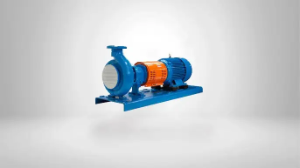
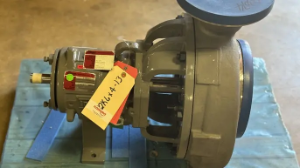
Centrifugal pumps are the most common pumps in industry. They move large volumes of water and low-viscosity liquids efficiently. Sealed centrifugal pumps in metallic and non-metallic construction handle everything from clean water to corrosive chemicals.
Centrifugal Pump Categories
- Chemical centrifugal pumps – plastic, lined and alloy construction for corrosive fluids
- Industrial centrifugal pumps – end suction, ANSI and inline designs
- Horizontal and vertical configurations – fit space and application
Choosing a Pump
Select by flow, head, fluid properties and NPSH available. Materials and seal type must suit the chemistry. Operating near the best efficiency point extends pump life.
Centro can help size centrifugal pumps for your system.
Shop by type: Industrial Centrifugal Pumps
Related categories: Pumps | Metering Pumps | Sealless Mag-Drive Pumps
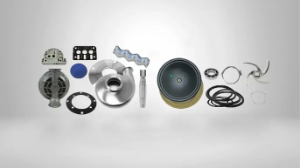
Keeping pumps in good repair costs far less than unplanned downtime. Pump parts and servicing covers the seals, bearings, impellers and wear parts that wear out with normal use, along with the expertise to rebuild pumps to like-new condition.
Common Pump Parts
- Mechanical seals and packing – stop leaks at the shaft
- Bearings and bearing frames – restore smooth, quiet operation
- Impellers, casings and wear rings – recover lost flow and efficiency
- Diaphragms, valves and balls – rebuild kits for AODD and metering pumps
- Couplings and baseplates – keep pump and motor aligned
When to Service a Pump
Warning signs include leaking seals, rising vibration or noise, higher motor amps, falling discharge pressure and overheating bearings. Keeping the pump's model and serial number on record makes ordering parts much faster. Planned rebuilds during shutdowns keep surprises to a minimum.
Centro supplies pump parts and repair services for many pump brands, from small metering pumps to large process pumps.
Related categories: Pumps | Pump Repair | Peristaltic/Hose Pumps

Metallic sealless mag-drive centrifugal pumps use a magnetic coupling to drive the impeller through a sealed containment shell, so there's no mechanical seal to leak. They're ideal for hazardous, toxic, flammable and expensive fluids where leaks are unacceptable.
Key Features
- Leak-free design – eliminates seal leaks and emissions
- Stainless and alloy construction – higher pressures and temperatures than plastic
- ANSI and ISO dimensions – drop-in replacement for sealed pumps
- Low maintenance – no seal flush systems or seal replacements
Application Considerations
Mag-drive pumps don't tolerate dry running or large solids, so protect them with power monitors and strainers. Size for viscosity, temperature and specific gravity, which affect magnet coupling torque.
Centro can help you select metallic mag-drive pumps for safe, leak-free chemical transfer.
Related categories: Sealless Mag-Drive Pumps | Non-Metallic Centrifugal | Metallic Mag-Drive Gear Pumps
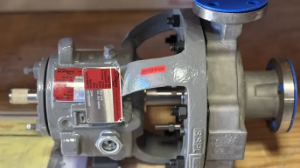
ANSI pumps are centrifugal pumps that adhere to the American National Standards Institute (ANSI) standards. Key features of ANSI pumps are standardized dimensions, high reliability, ease of maintenance, and the ability to handle a wide range of fluids, including corrosive and abrasive liquids. The primary standard for ANSI pumps is ANSI B73.1, which specifies the dimensions, design, and operational criteria for horizontal end suction single-stage centrifugal pumps.
Are there different types of ANSI pumps?
ANSI pumps come in various types, including standard end suction pumps, magnetically driven pumps, and self-priming pumps, each designed for specific applications and fluid handling requirements.
What industries commonly use ANSI pumps?
ANSI pumps are widely used in chemical processing, oil and gas, pharmaceuticals, pulp and paper, and food and beverage processing.
What materials are ANSI pumps typically made from?
ANSI pumps are often constructed from stainless steel, cast iron, and various alloys to withstand chemical and temperature environments.
Can ANSI pumps be customized?
While ANSI pumps adhere to strict dimensional standards, they can be customized with different materials, impeller designs, and sealing options to meet specific application requirements.
How do ANSI pumps compare to ISO pumps?
ANSI pumps are standardized according to American standards (ANSI B73.1), while ISO pumps follow international standards (ISO 2858). The choice between the two depends on regional preferences and specific industry requirements.
How are ANSI pumps maintained?
Maintenance of ANSI pumps typically involves regular inspections, replacing worn parts, ensuring proper lubrication, and checking for leaks or other signs of wear and tear. The standardized design makes it easy to find and replace parts.
Why should you buy ANSI pumps from us?
We are a trusted supplier known for high-quality ANSI pumps that meet stringent industry standards. We offer a wide range of pump models, providing compatibility with various applications and industries. We offer excellent customer service, technical support, and competitive pricing, making us a reliable partner for your pumping needs. Our expertise and commitment to customer satisfaction make them a preferred choice for many businesses.
Contact us to speak with a product expert if you need help with your product selection or questions about installation.
Related categories: Pumps | Trash Pumps | Pump Control System Applications | Sealless Mag-Drive Pumps
Non-metallic mag-drive centrifugal pumps handle corrosive chemicals with no seal and no metal in contact with the fluid. Plastic and fluoropolymer construction resists acids, caustics and plating solutions.
Features
- Leak-free magnetic coupling – no seal to fail
- Polypropylene, PVDF and ETFE – broad chemical resistance
- Compact designs – OEM and process systems
- Low maintenance – no seal flush required
Choosing a Pump
Provide chemical, temperature, flow and head. Protect from dry running and solids. Non-metallic pumps have temperature limits, so verify for hot fluids.
Centro supplies non-metallic mag-drive pumps for corrosive chemicals.
Related categories: Sealless Mag-Drive Pumps | Metallic Mag-Drive Gear Pumps | Metallic Centrifugal
Metallic mag-drive gear pumps combine the precise flow of gear pumps with leak-free magnetic drives. They're used for metering, transfer and circulation of viscous or hazardous liquids.
Features
- Precise, pulseless flow – metering and dosing
- Stainless and alloy construction – high pressures and temperatures
- Leak-free design – hazardous fluids
- Handles viscosity – oils, polymers and resins
Choosing a Pump
Provide flow, pressure, viscosity, temperature and fluid. Clean fluids are required, since solids damage gears. Pair with VFDs for flow control.
Centro supplies metallic mag-drive gear pumps.
Related categories: Sealless Mag-Drive Pumps | Non-Metallic Centrifugal | Metallic Centrifugal
$9,755.40
Subject to factory lead times
$11,069.02
Subject to factory lead times
$12,739.59
Subject to factory lead times
$16,758.53
Subject to factory lead times
$15,092.68
Subject to factory lead times
$19,480.00
Subject to factory lead times

$24,439.02
Subject to factory lead times
$26,675.61
Subject to factory lead times
$20.31
$31.75
$23.42
$20.83
Subject to factory lead times
$37.48
Subject to factory lead times
$68.73
$35.58$42.48
$94.89$113.29
$291.68$348.27
$559.63$668.21
$14.07$16.78
$11.20$13.37
$12.24
$15.82$18.88
Subject to factory lead times
$123.88$147.91
$9,755.40
Subject to factory lead times
$11,069.02
Subject to factory lead times
$12,739.59
Subject to factory lead times
$16,758.53
Subject to factory lead times
$15,092.68
Subject to factory lead times
$19,480.00
Subject to factory lead times
$24,439.02
Subject to factory lead times
$26,675.61
Subject to factory lead times
$20.31
$31.75
$23.42
$20.83
Subject to factory lead times
$37.48
Subject to factory lead times
$68.73
$35.58$42.48
$94.89$113.29
$291.68$348.27
$559.63$668.21
$14.07$16.78
$11.20$13.37
$12.24
$15.82$18.88
Subject to factory lead times
$123.88$147.91
- Flow (GPM) + total dynamic head (TDH), fluid details (chemistry, temp, solids/viscosity), suction conditions (NPSHa), desired materials, seal type, driver/voltage, connection sizes, and duty cycle.
- The total head the pump must overcome: static lift + discharge head + pressure requirements + friction losses in pipe/fittings/valves/filters, adjusted for fluid density.
- Centrifugal for higher flow/low–moderate viscosity and smoother operation; positive displacement for high viscosity, accurate metering, higher pressures, or when flow must stay steady as pressure changes.
- ANSI process pumps are for clean/process fluids and standard chemical-duty applications; self-priming trash pumps are built to handle air entrainment and larger solids for dewatering/wastewater.
- Match wetted materials to the fluid chemistry, temperature, and abrasiveness (e.g., 316 SS for corrosion resistance; ductile iron for general service; hardened materials/coatings for abrasion).
- Often yes on the discharge side to control flow (within limits), but avoid deadheading too long (heat buildup); never throttle suction, use a valve only for isolation.
- VFD speed control is usually most efficient; throttling works but wastes energy; bypass recirculation may be needed to maintain minimum flow.
- Use viscosity-corrected curves or consider positive displacement; expect reduced flow/increased power and ensure suction piping supports high-viscosity feeding.
- Define solids size, concentration, hardness, and shape; choose solids-handling hydraulics, slower speeds, abrasion-resistant materials, and appropriate clearances.
- Select compatible metallurgy/coatings, control pH/chemistry, reduce velocity in corrosive service, manage solids, and use wear parts designed for abrasion.
- Alignment, lubrication, seal support/flush checks, strainer cleaning, vibration/temperature monitoring, and verifying operation near BEP and above minimum flow.
- Best Efficiency Point is where the pump runs most efficiently with lowest vibration; aim to operate near BEP to improve seal/bearing life and reduce energy cost.