
Seals and Accessories - Hyett
Centro is proud to offer a wide selection of industrial seals and accessories for various applications. Our seals are from leading manufacturers with high-quality materials designed to provide long-lasting, reliabl...
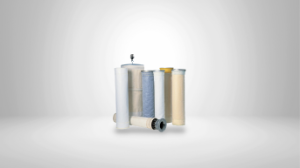
Diaphragm seals provides accurate and reliable readings in industrial applications. Diaphragm seals are protective barriers, shielding pressure sensors from harsh or corrosive substances like chemicals or high temperatures. By maintaining the integrity of pressure instruments, diaphragm seals ensure precise monitoring and control for maintaining operational safety and efficiency. Browse our selection below or contact us to speak to a product expert.

$306.36
Subject to factory lead times
$268.63$292.00
Subject to factory lead times
$474.29
Subject to factory lead times
$306.36
Subject to factory lead times
$268.63$292.00
Subject to factory lead times
$474.29
Subject to factory lead times
- O-ring material selection depends on the fluid being sealed, the temperature range, and the pressure. Buna-N (Nitrile/NBR) is the most widely used general-purpose elastomer — it works well with petroleum products, hydraulic oils, water, and air at temperatures from –40°F to 250°F. EPDM is the choice for water, steam, and polar solvents (ketones, alcohols) but is not compatible with petroleum products. Viton (FKM) handles a wide range of chemicals, fuels, and oils at high temperatures up to 400°F — it's the premium general-purpose seal material. Silicone offers an extremely wide temperature range (–100°F to 450°F) but has poor abrasion resistance and is not suitable for petroleum or dynamic applications. PTFE (Teflon) provides universal chemical resistance but is rigid and requires higher sealing force — often used as backup rings or in combination with elastomer energizers. Kalrez (FFKM) offers near-universal chemical resistance with high-temperature capability up to 600°F but at a significantly higher cost. Always verify compatibility using the seal manufacturer's chemical resistance chart before selecting.
- A diaphragm seal is a flexible membrane assembly that mounts between the process connection and the pressure instrument (gauge or transmitter), physically separating the instrument's sensing element from direct contact with the process fluid. The space between the diaphragm and the instrument is filled with a compatible fill fluid (typically silicone oil) that hydraulically transmits the process pressure to the instrument. This protects the instrument from corrosive chemicals that would attack the sensor, viscous fluids that would clog the sensing port, hot media that would exceed the instrument's temperature rating, slurries or solidifying media that would plug the instrument cavity, and sanitary processes that require cleanable, crevice-free surfaces. Diaphragm seals are available in direct-mount (bolted directly to the instrument) and remote-mount (connected via capillary tubing for high-temperature or hard-to-reach installations) configurations, in materials ranging from 316SS to Hastelloy, tantalum, and PTFE-lined options.
- The difference is in how the diaphragm seal connects to the process piping or vessel. A threaded diaphragm seal has an NPT or BSP threaded connection that screws into a threaded process tap — it is easy to install and remove, commonly used in general industrial applications, and available in sizes from 1/4" to 2". A welded (or flanged/sanitary) diaphragm seal is permanently welded or bolted to the process vessel or pipe — it provides a stronger, more secure connection that can handle higher pressures and temperatures, and it eliminates the potential leak path of threaded connections. Welded seals are used in critical or high-pressure applications. Flanged diaphragm seals bolt to flanged process connections (ASME 150, 300, 600, etc.) and are standard for larger pipe sizes and higher pressure ratings. Sanitary (tri-clamp) diaphragm seals are used in food, beverage, and pharmaceutical applications where the seal must be easily removed for cleaning and must have no crevices where bacteria can grow.
- Seal replacement frequency depends on the seal material, the process conditions, and the type of service. Static seals (O-rings and gaskets in flanged connections that don't move) can last many years if the material is compatible with the fluid and temperature — inspect them whenever a connection is disassembled for maintenance and replace if they show hardening, cracking, swelling, or deformation. Dynamic seals (valve packing, pump seals, and seals in rotating equipment) wear from friction and typically need replacement more frequently — every 1–3 years depending on cycle count and severity of service. Diaphragm seals should be inspected annually and the fill fluid condition checked — if the instrument readings drift or become sluggish, the diaphragm may have developed a leak or the fill fluid may have degraded. Best practice is to include seal inspection in your preventive maintenance program, keep spare seal kits on hand for critical instruments, and replace seals proactively during scheduled shutdowns rather than waiting for failure.