
Solenoid Valves - Numatics
Solenoid valves provide fast, reliable on/off control of liquids and gases by utilizing an electric coil to actuate the valve. Compact and efficient, they integrate seamlessly into automated systems for applications such as cooling, lubrication, chemical dosing, and process isolation. Available in a variety of materials and designs to handle different pressures, temperatures, and media.
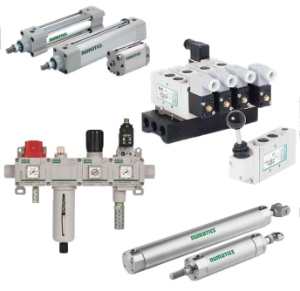
Subject to factory lead times
Subject to factory lead times
Subject to factory lead times
Subject to factory lead times
Subject to factory lead times
Subject to factory lead times
Subject to factory lead times
Subject to factory lead times
Subject to factory lead times
Subject to factory lead times
Subject to factory lead times
Subject to factory lead times
Subject to factory lead times
Subject to factory lead times
Subject to factory lead times
Subject to factory lead times
- A solenoid valve is an electrically operated valve that controls the flow of liquids or gases. It uses an electromagnetic coil to open or close the valve automatically when energized.
- When electrical current flows through the solenoid coil, it creates a magnetic field that moves an internal plunger. This movement opens or closes the valve, allowing or stopping flow.
- Common types include normally closed (NC), normally open (NO), direct acting, pilot operated, two way, three way, and four way solenoid valves.
- Solenoid valves are commonly made with brass or stainless-steel bodies, and sometimes plastic (PVC, PP, PVDF) for chemical service. Internal parts are typically stainless steel, and the seals are usually NBR (Buna-N), EPDM, FKM (Viton), or PTFE (Teflon) depending on the fluid and temperature.
- Solenoid valves can handle water, air, steam, oil, fuels, and many chemicals. Fluid compatibility depends on valve body material and seal selection.