
Electrical Accessories - SICK
At Centro, we carry a complete selection of electrical accessories available online. Our products include control lighting, electrical sounders, thermal management, and wiring accessories. We only have products fro...
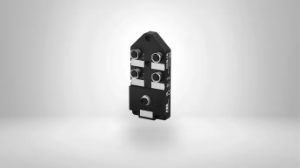
Electrical networking refers to the process of interconnecting and integrating electrical devices, systems, and components within a network infrastructure. It involves the establishment of communication pathways, protocols, and standards to enable the exchange of data, signals, or control information. Electrical networking encompasses various technologies and systems, including Ethernet, Modbus, Profibus, and CAN bus, among others. These networks facilitate efficient data transfer, remote monitoring, control, and automation in diverse industries such as industrial automation, building automation, and smart grid systems. Electrical networking plays a critical role in enabling seamless connectivity, data exchange, and interoperability between electrical devices and systems.

$483.54
Subject to factory lead times
$608.56
Subject to factory lead times
$540.95
Subject to factory lead times
$729.77
Subject to factory lead times
$770.60
Subject to factory lead times
$1,224.78
Subject to factory lead times
$253.89
Subject to factory lead times
$858.63
Subject to factory lead times
$253.89
Subject to factory lead times
$352.12
Subject to factory lead times
$292.16
Subject to factory lead times
$1,931.73
Subject to factory lead times
$483.54
Subject to factory lead times
$608.56
Subject to factory lead times
$540.95
Subject to factory lead times
$729.77
Subject to factory lead times
$770.60
Subject to factory lead times
$1,224.78
Subject to factory lead times
$253.89
Subject to factory lead times
$858.63
Subject to factory lead times
$253.89
Subject to factory lead times
$352.12
Subject to factory lead times
$292.16
Subject to factory lead times
$1,931.73
Subject to factory lead times
- Industrial control panels rely on a range of electrical accessories to organize wiring, provide operator input, and indicate system status. Common categories include push buttons and selector switches for operator control, pilot lights and indicator lights for visual status feedback, terminal blocks for organizing and connecting field wiring, wire duct (also called wiring trunking) for routing and managing cables within the enclosure, DIN rail for mounting components, and cable glands and cord grips for securing cables entering the enclosure. These accessories may seem secondary to the main control devices, but they are essential for building a panel that is safe, organized, and maintainable.
- The 22mm and 30mm designations refer to the panel cutout diameter — the size of the hole required to mount the device. 22mm is the current IEC standard and is the most widely used size in new industrial panel designs worldwide. 30mm is the traditional NEMA standard, still common in North American heavy-industrial and legacy panels. Functionally, both sizes offer the same types of operators — flush, extended, mushroom head, illuminated, and emergency stop — but 22mm devices are more compact, allowing more operators in a smaller panel footprint. When designing a new panel, 22mm is the standard choice unless the application requires the larger 30mm format for gloved-hand operation or compatibility with an existing panel cutout.
- Terminal blocks are modular, insulated connectors mounted on DIN rail inside a control panel that provide a secure, organized connection point between field wiring and internal panel wiring. Instead of splicing wires together or landing every field wire directly on a device terminal, terminal blocks create a clean interface — field wires land on one side, and internal panel wires connect on the other. This makes troubleshooting, testing, and future modifications far easier because individual circuits can be disconnected and tested at the terminal block without disturbing the device wiring. Terminal blocks are available in screw-clamp, spring-clamp, and push-in styles, and in configurations for signal wiring, power distribution, grounding, fused circuits, and sensor connections.
- Wire duct (also called wiring trunking or cable raceway) is a slotted plastic channel mounted inside a control panel to route and organize wiring between components. The slots along the sides allow wires to exit the duct at any point along its length, providing clean access to terminal blocks, contactors, circuit breakers, and other devices. To select the correct size, the general rule is that wires should fill no more than 40–50% of the duct's cross-sectional area — this allows room for adding wires in the future and prevents excessive heat buildup. Duct is available in various widths and depths, and in standard slotted, narrow-slot, and solid-wall versions depending on the wire gauge and density of the application.
- An emergency stop push button is a safety device that immediately de-energizes a machine or process when pressed by an operator. E-stops are typically large, red, mushroom-head buttons on a yellow background for high visibility, and they use a latching mechanism — once pressed, they stay locked in the off position until manually released by twisting, pulling, or using a key. This prevents accidental restart. OSHA and machine safety standards (such as NEMA ICS 6 and ISO 13850) require emergency stop devices on machinery where a hazard to personnel exists. E-stops must be wired into the safety circuit so that pressing the button removes power from all hazardous motion. They should be mounted in a location that is immediately accessible to the operator, and every machine should have at least one.