
Solenoid Valves - SICK
Solenoid valves provide fast, reliable on/off control of liquids and gases by utilizing an electric coil to actuate the valve. Compact and efficient, they integrate seamlessly into automated systems for application...
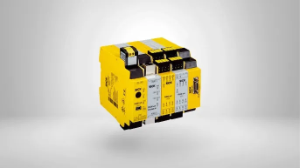
Safety controllers and relays are crucial pillars in industrial safety, offering advanced risk mitigation and equipment protection solutions. These specialized components are meticulously designed to monitor and manage safety-related processes, ensuring compliance with industry standards and regulations. Safety controllers oversee complex safety functions, while safety relays serve as trusted interfaces between safety devices and control systems. These controllers and relays contribute significantly to accident prevention and worker protection by swiftly detecting unsafe conditions and initiating appropriate responses. Their integration into safety-critical systems provides the foundation for safe operations across industries. With a focus on reliability, precision, and adherence to safety norms, safety controllers and relays create secure and productive environments, elevating workplace safety to new heights.

$171.07$179.00
Subject to factory lead times
$171.07$179.00
Subject to factory lead times
- A solenoid valve is an electrically operated valve that controls the flow of liquids or gases. It uses an electromagnetic coil to open or close the valve automatically when energized.
- When electrical current flows through the solenoid coil, it creates a magnetic field that moves an internal plunger. This movement opens or closes the valve, allowing or stopping flow.
- Common types include normally closed (NC), normally open (NO), direct acting, pilot operated, two way, three way, and four way solenoid valves.
- Solenoid valves are commonly made with brass or stainless-steel bodies, and sometimes plastic (PVC, PP, PVDF) for chemical service. Internal parts are typically stainless steel, and the seals are usually NBR (Buna-N), EPDM, FKM (Viton), or PTFE (Teflon) depending on the fluid and temperature.
- Solenoid valves can handle water, air, steam, oil, fuels, and many chemicals. Fluid compatibility depends on valve body material and seal selection.