
Safety Equipment
Safety equipment offers a comprehensive suite of solutions dedicated to enhancing workplace safety and equipment protection. This lineup includes vital components such as safety switches, sensors, pull cords, emerg...
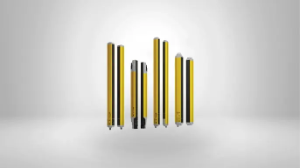
Light curtains are advanced safety devices that provide a protective shield for workers and equipment in industrial settings. Composed of an array of light beams, light curtains act as an invisible barrier, instantly detecting any intrusion or obstruction within their field. In situations where human-machine interaction is common, such as manufacturing and material handling, light curtains are crucial in preventing accidents and ensuring operator safety. These devices are designed to stop machinery or trigger alarms when they detect any breach in their protective zone. Light curtains are essential in creating safer work environments, reducing accidents, and increasing productivity by maintaining a harmonious balance between human workers and automated equipment.
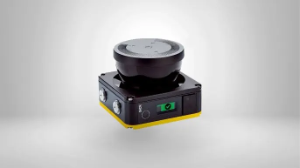
Laser scanners are high-precision devices that utilize laser beams to capture detailed 3D spatial data of objects and environments. These scanners have many applications, from construction and surveying to industrial automation and archaeological documentation. Laser scanners generate accurate point clouds by emitting laser beams and measuring their reflection, creating detailed digital models. This data is invaluable for quality control, reverse engineering, and site mapping, making laser scanners indispensable tools in industries that demand precision and data-rich insights.
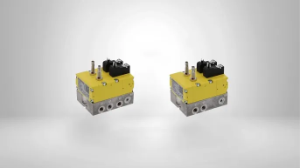
Safety pneumatic valves are critical components in industrial settings that ensure equipment and personnel safety. These valves have features such as emergency shutdown and quick exhaust, allowing for rapid depressurization and averting potential hazards. In environments where the release of compressed air poses safety risks, such as in the event of a malfunction, safety pneumatic valves play a pivotal role in preventing accidents and damage. They are indispensable in manufacturing, energy, and other industrial sectors, enhancing safety measures and ensuring a secure working environment.
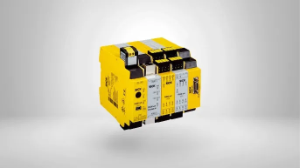
Safety controllers and relays are crucial pillars in industrial safety, offering advanced risk mitigation and equipment protection solutions. These specialized components are meticulously designed to monitor and manage safety-related processes, ensuring compliance with industry standards and regulations. Safety controllers oversee complex safety functions, while safety relays serve as trusted interfaces between safety devices and control systems. These controllers and relays contribute significantly to accident prevention and worker protection by swiftly detecting unsafe conditions and initiating appropriate responses. Their integration into safety-critical systems provides the foundation for safe operations across industries. With a focus on reliability, precision, and adherence to safety norms, safety controllers and relays create secure and productive environments, elevating workplace safety to new heights.
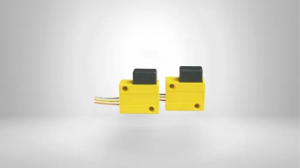
Safety switches are essential components within industrial safety systems, designed to prevent accidents and protect workers and equipment. These switches provide a reliable means of instantly interrupting power or triggering safety functions in response to hazardous conditions. Available in various configurations like limit switches, interlock switches, and emergency stop switches, they cater to a wide range of applications. Safety switches serve as critical control points, ensuring machinery halts promptly during emergencies or when unsafe conditions arise. Safety switches play a pivotal role in safeguarding workplaces and adhering to safety standards by offering fail-safe operation and compatibility with diverse environments. Their integration enhances operational safety, minimizes risks, and fosters secure industrial environments.

Safety sensors form the backbone of industrial safety, providing a proactive approach to accident prevention and worker protection. These sensors are meticulously engineered to detect potentially hazardous conditions, such as motion, presence, or environmental changes. Employed in applications from automated machinery to conveyor systems, safety sensors swiftly identify unsafe situations and trigger appropriate responses, such as stopping equipment or initiating alarms. With their advanced technology and diverse configurations, including light curtains, area scanners, and proximity sensors, safety sensors ensure compliance with safety standards and regulations. By seamlessly integrating into industrial processes, safety sensors foster a secure environment, minimize risks, and empower industries to prioritize the well-being of workers and equipment.
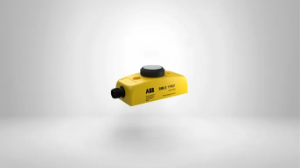
Pull cords and emergency stops are critical components in industrial safety, providing direct and immediate means to halt machinery and prevent accidents. Pull cords are strategically placed along equipment or conveyors, allowing workers to quickly trigger a shutdown in emergencies. Emergency stops, often in the form of large buttons or switches, offer an instant way to halt operations if unsafe conditions arise. These safety mechanisms are designed for intuitive and rapid use, ensuring workers can react promptly to potential hazards. Pull cords and emergency stops are essential in creating a safe work environment, empowering workers to take control and prevent accidents. Their integration enhances workplace safety, reduces risks, and underscores the commitment to worker well-being and equipment protection.
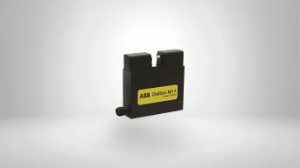
Safety accessories are crucial elements within industrial safety systems, enhancing the effectiveness of safety equipment and processes. These accessories include mounting brackets, enclosures, indicator lights, and reset keys. Safety accessories are designed to complement safety devices like switches, sensors, and controllers ensure proper installation, visibility, and ease of use. They support creating a comprehensive safety ecosystem that aligns with industry regulations and standards. By simplifying maintenance, improving visibility, and facilitating quick response actions, safety accessories contribute significantly to overall safety. Their integration elevates safety measures, minimizes risks, and fosters a secure industrial environment that prioritizes worker protection and equipment integrity.
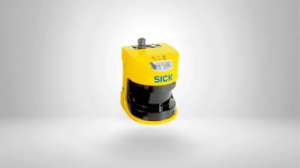
Safety control devices are safeguards in industrial settings, designed to protect both personnel and equipment from potential hazards. Discover our range of safety control devices or contact us to speak with a product expert.
Subject to factory lead times
Subject to factory lead times
$322.95$400.46
Subject to factory lead times
$373.77$463.47
Subject to factory lead times
$348.05$431.58
Subject to factory lead times
$499.25$619.07
Subject to factory lead times
$474.15$587.95
Subject to factory lead times
$277.33$343.89
Subject to factory lead times
Subject to factory lead times
$302.43$375.01
Subject to factory lead times
Subject to factory lead times

$301.70
Subject to factory lead times
$301.70
Subject to factory lead times
$301.70
Subject to factory lead times
$301.70
Subject to factory lead times
$316.70
Subject to factory lead times
$316.70
Subject to factory lead times
$371.54
Subject to factory lead times
$468.78
Subject to factory lead times
$468.78
Subject to factory lead times
$488.74
Subject to factory lead times
$488.74
Subject to factory lead times
$533.62
Subject to factory lead times
$533.62
Subject to factory lead times
Subject to factory lead times
Subject to factory lead times
$322.95$400.46
Subject to factory lead times
$373.77$463.47
Subject to factory lead times
$348.05$431.58
Subject to factory lead times
$499.25$619.07
Subject to factory lead times
$474.15$587.95
Subject to factory lead times
$277.33$343.89
Subject to factory lead times
Subject to factory lead times
$302.43$375.01
Subject to factory lead times
Subject to factory lead times
$301.70
Subject to factory lead times
$301.70
Subject to factory lead times
$301.70
Subject to factory lead times
$301.70
Subject to factory lead times
$316.70
Subject to factory lead times
$316.70
Subject to factory lead times
$371.54
Subject to factory lead times
$468.78
Subject to factory lead times
$468.78
Subject to factory lead times
$488.74
Subject to factory lead times
$488.74
Subject to factory lead times
$533.62
Subject to factory lead times
$533.62
Subject to factory lead times
- Industrial safety equipment protects personnel from hazards created by automated machinery — moving parts, robots, conveyors, presses, and other equipment. Key categories include safety light curtains (create an invisible infrared detection field that stops the machine if any object breaks the beam), safety laser scanners (monitor floor-level zones and trigger a warning or stop when a person enters the area), safety interlock switches (detect when a guard door or gate is opened and cut power to hazardous motion), emergency stop buttons (provide immediate manual shutdown), safety relays and safety PLCs (monitor all safety inputs and ensure the machine reaches a safe state), and safety mats and bumpers (detect physical contact or pressure). The specific equipment required is determined by a risk assessment of the machine.
- A risk assessment is a systematic evaluation of a machine or work cell to identify all potential hazards, estimate the severity and likelihood of harm, and determine the safety measures needed to reduce risk to an acceptable level. It is required by OSHA regulations and machine safety standards including ANSI/RIA 15.06 (for robots), ANSI/NFPA 79 (electrical standard for industrial machinery), and ISO 12100 (general principles for machine safety design). The risk assessment examines every mode of operation — normal production, setup, maintenance, cleaning, fault recovery — and identifies hazards such as pinch points, entanglement, crushing, ejection of parts, and electrical contact. Based on the assessed risk level, appropriate safeguarding measures are selected — guarding, safety-rated sensors, interlocks, and control system safety functions. The risk assessment must be documented and updated whenever the machine or process changes.
- Both safety relays and safety PLCs monitor safety inputs (e-stops, light curtains, interlocks) and control safety outputs (contactors, brakes) to ensure the machine reaches a safe state when a safety event occurs. Safety relays are standalone, hardwired devices designed for simple safety circuits — typically one or two safety functions (e.g., an e-stop circuit and a guard door interlock). They are simple to wire, require no programming, and are cost-effective for small machines with few safety devices. Safety PLCs (or safety controllers) are programmable devices that manage complex safety logic for machines with many safety inputs and outputs, multiple safety zones, and conditional safety functions (e.g., reduced speed when a guard is open for setup mode). Safety PLCs offer flexibility, diagnostics, and scalability — and they can be integrated into the same network as the standard automation PLC. For machines with more than a few safety devices or where safety logic involves conditional behavior, a safety PLC is the more practical and maintainable solution.
- Safety light curtains are optoelectronic devices that create a curtain of infrared light beams between a transmitter and receiver. If any beam is interrupted — by a hand, arm, or body entering the hazardous area — the light curtain sends a stop signal to the machine's safety circuit, halting hazardous motion before the person can reach the danger zone. Light curtains are used to protect access points to machines where physical guarding would impede the workflow — for example, press brake operations, palletizer infeed areas, and robotic cell access points where operators frequently load or unload parts. The beam spacing (resolution) determines the smallest object that will be detected: 14mm resolution detects fingers, 30mm detects hands, and 40mm+ detects arms and bodies. Light curtains must be mounted at the correct distance from the hazard — calculated using the machine's stopping time and the hand approach speed per ISO 13855 — to ensure the machine stops before the person can reach the danger point.
- Intrinsically safe (IS) barriers are interface devices that limit the electrical energy (voltage, current, and power) entering a hazardous area to levels too low to ignite flammable gases, vapors, or dust. They are required when sensors, instruments, or other electrical devices are installed in classified hazardous locations — areas designated as Class I (flammable gases/vapors) or Class II (combustible dusts) under the NEC, or Zone 0/1/2 under ATEX/IECEx standards. The barrier sits between the field device in the hazardous area and the control system in the safe area, ensuring that even under fault conditions, the energy reaching the hazardous area cannot cause ignition. This allows standard low-power sensors and instruments to be used safely in explosive atmospheres without the need for explosion-proof enclosures. IS barriers are commonly used in oil and gas, chemical processing, grain handling, pharmaceutical, and paint/coating facilities.