
PVF - Stauff USA
When it comes to instrumentation systems, precision and reliability are key. Pipes, valves, and fittings (PVF) are critical in maintaining accurate measurements, controlling pressure,...
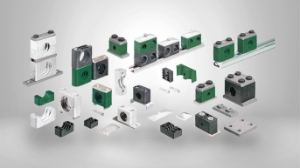
Clamps and piping support products play a fundamental role in maintaining the stability and integrity of piping systems in diverse applications. These essential components ensure that pipes are securely placed, preventing unintended movement, vibration, and potential damage. Providing proper support, clamps, and piping support products contributes to pipelines' longevity and prevents leaks and stress fractures. From simple pipe clamps to more specialized supports, these products offer a range of solutions tailored to different pipe sizes, materials, and installation requirements. Whether in industrial settings, construction projects, or plumbing applications, reliable clamps and piping support products are crucial for fluid transport systems' smooth and safe operation.
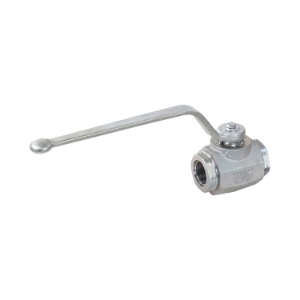
Centro offers a reliable selection of ball valves or flow control valves designed for smooth operation and long-lasting performance in a wide range of applications. These quarter-turn valves provide tight shutoff capabilities, making them ideal for use in fluid systems requiring low torque and minimal leakage.
Ball Valves are available in a variety of materials including brass, stainless steel, and PVC, our solutions support industrial needs. Whether you're managing water, oil, gas, or chemical flow, Centro's valve options ensure durability and precise control.
With configurations ranging from full port to reduced port and options for 1-piece, 2-piece, and 3-piece designs, we provide flexibility for everything from general plumbing to high-pressure industrial systems.
Explore our complete range of ball valves to find the right fit for your application or contact our experts for personalized guidance.
Check valves are mechanical devices designed to allow fluid—whether liquid or gas—to flow in only one direction, preventing backflow that can damage equipment or disrupt system performance. Commonly used in industrial, plumbing, and MRO (maintenance, repair, and operations) systems, they automatically open with forward flow and close when flow reverses. Available in various types like swing, ball, and inline designs, check valves are essential for ensuring system integrity, protecting pumps and compressors, and maintaining operational safety.
Types of Check Valves We Offer:
- Swing Check Valves – Ideal for irrigation and low-pressure systems
- Ball Check Valves – Reliable for wastewater and slurry applications
- Piston Check Valves – Designed for precise flow control in hydraulic systems
Centro partners with leading manufacturers to provide top-quality materials and engineering in every check valve we supply. Browse our extensive selection and find the perfect check valve for your needs. Order online today or contact our experts for assistance!
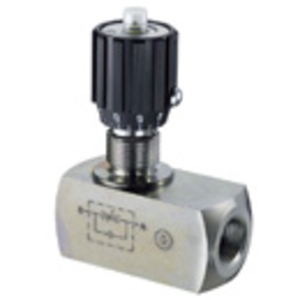
Flow control valves are essential devices used in fluid control systems to regulate the flow rate within a pipeline or system. These valves allow for precise adjustment of flow rates, ensuring optimal performance and efficiency. By controlling the opening or closing of the valve or by using throttling mechanisms, flow control valves can increase or decrease the flow rate as desired. This enables operators to maintain stable flow conditions, prevent fluid overload, and achieve accurate flow control for various applications. Flow control valves are commonly used in manufacturing, oil and gas, water treatment, and HVAC systems, where precise flow management is critical for operational success.
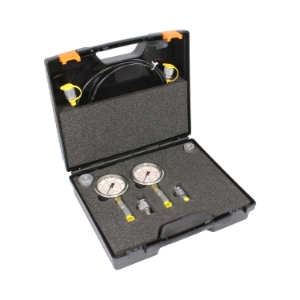
Gauge parts and accessories are essential components that complement pressure and temperature gauges, enhancing their functionality and extending their lifespan. They play a vital role in various industries, such as manufacturing, automotive, and aerospace, where accurate and reliable pressure and temperature measurements are crucial for safe and efficient operations. With a diverse range of gauge parts and accessories available, businesses can customize and optimize their gauge setups to meet specific application requirements, ensuring precision and performance in their monitoring and control processes.
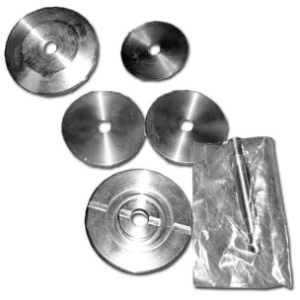
Hydraulic Accessories like O-rings and filters help maintain the performance and reliability of hydraulic systems. O-rings provide a secure seal to prevent fluid leaks, ensuring the system operates efficiently and safely under high-pressure conditions. Filters are essential for removing contaminants from hydraulic fluid, protecting sensitive components from wear and extending the system’s lifespan. At Centro, we offer a wide range of high-quality O-rings and filters to meet the demands of various industrial applications. Contact us to find the right hydraulic accessories for your needs.
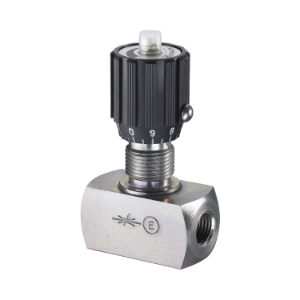
Needle valves are essential for controlling fluid flow with high precision in industrial and commercial applications. These valves feature a small, tapered stem that allows for fine adjustments, making them ideal for systems that require accurate flow regulation. Commonly used in industries such as chemical processing, oil and gas, water treatment, and instrumentation, needle valves help maintain efficiency and process stability.
Types of Needle Valves
Centro offers a variety of needle valves designed to meet different application requirements, including:
- Standard needle valves for general-purpose flow control in low- to medium-pressure systems.
- High-pressure needle valves built for demanding applications with extreme pressure conditions.
- Instrumentation needle valves for precise flow adjustments in analytical and laboratory settings.
Choosing the Right Needle Valve
Selecting the appropriate needle valve depends on factors such as system pressure, temperature, fluid type, and required flow control precision. Consider whether the valve needs to handle gases or liquids, as well as the level of adjustability required for your application.
Browse our selection of needle valves online or contact our team for expert assistance in choosing the right solution for your system.
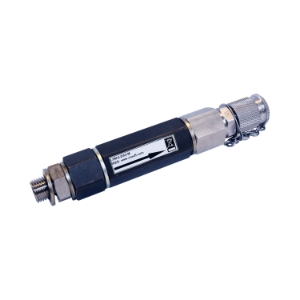
Valve accessories are additional components that enhance the functionality and performance of valves in fluid control systems. These accessories are designed to provide other features, improve safety, or simplify maintenance of the valves. Valve accessories enhance the reliability, efficiency, and safety of valve operations, making them essential for various industries such as oil and gas, chemical processing, water treatment, and power generation.
$92.17$100.18
Subject to factory lead times

Subject to factory lead times
$2,895.88$3,147.69
Subject to factory lead times
$5,346.63$5,811.55
Subject to factory lead times
Subject to factory lead times
Subject to factory lead times
$156.57$170.18
Subject to factory lead times

$50.99$55.42
Subject to factory lead times
$145.14$157.76
Subject to factory lead times
$307.63$334.37
Subject to factory lead times
$179.79$195.42
Subject to factory lead times
$307.63$334.37
Subject to factory lead times
$92.17$100.18
Subject to factory lead times
Subject to factory lead times
$2,895.88$3,147.69
Subject to factory lead times
$5,346.63$5,811.55
Subject to factory lead times
Subject to factory lead times
Subject to factory lead times
$156.57$170.18
Subject to factory lead times
$50.99$55.42
Subject to factory lead times
$145.14$157.76
Subject to factory lead times
$307.63$334.37
Subject to factory lead times
$179.79$195.42
Subject to factory lead times
$307.63$334.37
Subject to factory lead times
- PVF stands for Pipes, Valves, and Fittings — the fundamental piping components that make up the physical infrastructure of any instrumentation and process control system. Pipes transport fluids (liquids, gases, steam) between equipment, valves control and isolate the flow, and fittings connect everything together with leak-tight joints. In instrumentation systems specifically, PVF components connect sensors, transmitters, gauges, and analyzers to the process — every pressure gauge needs a pipe connection, every flow meter sits in a pipeline, and every level transmitter connects through fittings. Proper PVF selection ensures system integrity, accurate measurements, and safe operation. Material selection (carbon steel, stainless steel, PVC, CPVC, brass) must match the process fluid, temperature, and pressure to prevent corrosion, leaks, and failures.
- Pipe material selection depends on the fluid being transported, the operating temperature and pressure, corrosion considerations, and code requirements. Carbon steel is the workhorse for general industrial service — steam, compressed air, water, and non-corrosive process fluids at moderate to high temperatures and pressures. Stainless steel (304 and 316) handles corrosive chemicals, food-grade and pharmaceutical applications, and high-temperature service where carbon steel would corrode. PVC and CPVC are lightweight, corrosion-resistant options for water treatment, chemical processing, and plumbing applications at lower temperatures and pressures (PVC up to about 140°F, CPVC up to about 200°F). Brass is used for potable water, compressed air, and general low-pressure applications. For highly corrosive environments, specialty plastics like PVDF or lined pipe (PTFE-lined steel) may be required. Always verify that the pipe's pressure and temperature ratings meet your process conditions with an appropriate safety margin, and ensure the material is compatible with all chemicals it will contact.
- Pipe fittings connect, redirect, branch, and transition pipe runs to create complete piping systems. Common types include elbows (90° and 45° — change the direction of the pipe run), tees (create a branch connection from the main line), reducers (transition between two different pipe sizes — concentric for vertical runs, eccentric to maintain a flat bottom in horizontal runs), couplings and unions (join two pipes together — unions allow easy disconnection for maintenance), caps and plugs (close off open pipe ends), bushings (reduce the size of a threaded connection), and flanges (bolted connections that allow pipes, valves, and equipment to be connected and disconnected for maintenance). Fittings come in threaded (NPT — screwed together), socket weld (inserted and welded), butt weld (welded end-to-end for the strongest, most leak-proof joint), and grooved (mechanically coupled) configurations, each suited to different pressure ratings, pipe sizes, and maintenance requirements.
- Threaded (NPT) connections use tapered pipe threads sealed with thread sealant tape or compound. They are easy to assemble and disassemble without special tools, making them the standard for small-bore piping (typically 2" and under) in low-to-moderate pressure applications. Limitations include potential leak paths at the thread joint and reduced strength compared to welded connections. Socket weld connections use a fitting with a recessed socket — the pipe is inserted into the socket and a fillet weld is applied around the outside. Socket welds are stronger than threaded connections and are used for small-bore, high-pressure applications (instrument tubing, steam piping, hydraulic lines). Butt weld connections join two pipe ends directly together with a full-penetration weld — this is the strongest and most leak-proof joint type, used for larger pipe sizes and critical high-pressure, high-temperature applications. Butt weld joints require more skill and time to install but provide the best structural integrity and are required by most piping codes for high-pressure service.
- Leak prevention starts with proper specification and installation practices. For threaded connections, use the correct thread sealant (PTFE tape or pipe dope rated for the fluid and temperature), apply it properly (wrap tape in the direction of the threads, use the right number of wraps), and tighten to the correct engagement depth without overtightening (which can crack fittings). For flanged connections, select the correct gasket material for the fluid and temperature (spiral wound for high-pressure/high-temperature, PTFE for chemical service, rubber for water), ensure the flange faces are clean and undamaged, and torque the bolts evenly in a star pattern to the specified values to achieve uniform gasket compression. For compression fittings on instrument tubing, follow the manufacturer's exact assembly instructions — the number of turns past finger-tight is critical. For welded joints, ensure qualified welders and proper weld procedures are used. After assembly, pressure test the system per the applicable piping code before putting it into service. Implement a regular inspection program — walking the lines and checking for drips, stains, or corrosion at connection points.