
Level Control
Level control is essential for many industrial and commercial applications, ranging from simple water tanks to complex chemical processing systems. Industrial applications often require control to maintain safe and...
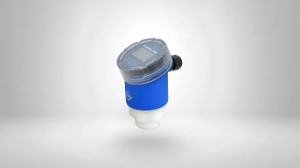
A liquid level controller is a device used to monitor and control the level of liquids in tanks, vessels, or process systems. It utilizes sensors or probes to detect the liquid level and actuates valves, pumps, or alarms based on predefined level thresholds. Liquid level controllers find applications in industries such as water treatment, wastewater management, food and beverage, or chemical processing. They enable precise level control, preventing overflow or dry run situations and ensuring efficient and safe liquid handling processes.
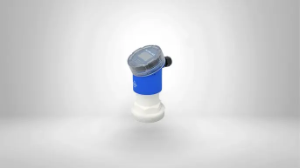
Bulk solids refer to dry, granular, or powdered materials handled in large volumes across industries like agriculture, mining, food processing, and chemical manufacturing. Managing these materials efficiently requires specialized equipment for conveying, storage, feeding, and processing to ensure flow consistency, prevent blockages, and maintain product quality.

$348.13
Subject to factory lead times

$95.54
Subject to factory lead times

$115.99
Subject to factory lead times

$69.02
Subject to factory lead times

$314.98
Subject to factory lead times
$70.67
Subject to factory lead times

$106.25
Subject to factory lead times
$68.96
Subject to factory lead times
$118.39
Subject to factory lead times

$58.82
Subject to factory lead times
$237.66
Subject to factory lead times
$159.27
Subject to factory lead times

$626.54
Subject to factory lead times
$313.03
Subject to factory lead times
$93.45
Subject to factory lead times
$149.13
Subject to factory lead times
$144.19
Subject to factory lead times

$627.22
Subject to factory lead times

$525.68
Subject to factory lead times

$203.10
Subject to factory lead times

$628.18
Subject to factory lead times

$800.67
Subject to factory lead times
$128.86
Subject to factory lead times

$430.59
Subject to factory lead times
$348.13
Subject to factory lead times
$95.54
Subject to factory lead times
$115.99
Subject to factory lead times
$69.02
Subject to factory lead times
$314.98
Subject to factory lead times
$70.67
Subject to factory lead times
$106.25
Subject to factory lead times
$68.96
Subject to factory lead times
$118.39
Subject to factory lead times
$58.82
Subject to factory lead times
$237.66
Subject to factory lead times
$159.27
Subject to factory lead times
$626.54
Subject to factory lead times
$313.03
Subject to factory lead times
$93.45
Subject to factory lead times
$149.13
Subject to factory lead times
$144.19
Subject to factory lead times
$627.22
Subject to factory lead times
$525.68
Subject to factory lead times
$203.10
Subject to factory lead times
$628.18
Subject to factory lead times
$800.67
Subject to factory lead times
$128.86
Subject to factory lead times
$430.59
Subject to factory lead times
- Monitoring and controlling liquid level in a tank requires a level sensor or transmitter paired with a controller, PLC, or alarm system. The first decision is whether you need point level detection (knowing when the level hits a specific high or low threshold — for alarms or pump control) or continuous level measurement (knowing the actual level height at all times — for inventory tracking or closed-loop control). For point level, float switches are the simplest and most cost-effective option — a buoyant float actuates a switch when the liquid reaches a set point. Vibrating fork switches are a good alternative when the liquid is viscous or foaming. For continuous measurement, ultrasonic transmitters work well in open atmospheric tanks with clean liquids, radar transmitters handle pressurized vessels, vapors, and foam, and differential pressure transmitters are the traditional choice for high-pressure or high-temperature vessels. The level signal is sent to a PLC or controller that operates inlet/outlet valves or pump starts/stops to keep the level within the desired range.
- Level measurement technologies fall into two categories: point level (detecting when the level reaches a specific threshold — high, low, or intermediate) and continuous level (measuring the actual level height across the full range). Common point level technologies include float switches (a buoyant float actuates a switch at a set level — simple, reliable, and low-cost), vibrating fork switches (a tuning fork vibrates at its natural frequency in air and dampens when immersed in liquid), and capacitance point switches. Common continuous level technologies include ultrasonic (measures distance to the liquid surface using sound waves — non-contact, works well for open tanks), radar and guided wave radar (uses microwave pulses — handles high temperatures, pressures, and vapors), differential pressure transmitters (infer level from hydrostatic pressure — the traditional workhorse for pressurized vessels), magnetostrictive float-based systems, and capacitance/admittance transmitters. The right choice depends on the media (clean liquid, slurry, foam, solids), vessel conditions (temperature, pressure, agitation), accuracy requirements, and budget.
- A float switch uses a buoyant float attached to or enclosing a mechanical or magnetic switch mechanism. As the liquid level rises, the float rises with it; when it reaches the switch actuation point, the switch changes state (opens or closes a circuit), sending a discrete signal to the control system. Float switches are the simplest and most widely used point-level devices — they are reliable, inexpensive, require no power supply for mechanical types, and work in a wide range of liquids. Common applications include high-level and low-level alarms on storage tanks, sump pump control (turning the pump on when level rises and off when it falls), coolant reservoir monitoring, and condensate tank level switching. Limitations include susceptibility to fouling in viscous or coating liquids, and they are not suitable for applications with heavy turbulence or foam. For these challenging conditions, vibrating fork or capacitance-based switches are more appropriate.
- Both ultrasonic and radar are non-contact continuous level measurement technologies, but they perform differently in various conditions. Ultrasonic level transmitters are cost-effective and work well in atmospheric tanks with clean liquids and moderate temperatures — they are the standard choice for water and wastewater tanks, chemical storage, and open vessels. However, ultrasonic performance degrades in heavy vapor, dust, foam, and extreme temperatures because sound waves are affected by the medium they travel through. Radar (non-contact and guided wave) uses electromagnetic waves that are unaffected by temperature, pressure, vapor, or dust — making radar the better choice for pressurized vessels, high-temperature processes, tanks with heavy vapor blankets, and media that produce foam or surface turbulence. Guided wave radar (a probe that contacts the media) provides excellent accuracy and reliability in narrow vessels, still wells, and applications with low dielectric liquids. Radar instruments are typically more expensive than ultrasonic, so ultrasonic remains the preferred choice where conditions allow.
- Differential pressure (DP) level measurement uses a DP transmitter to infer the liquid level in a tank based on the hydrostatic pressure exerted by the liquid column. The transmitter measures the pressure difference between the bottom of the tank (where the liquid column creates pressure proportional to its height) and the top of the tank (the reference or vapor space pressure). Since pressure increases linearly with liquid height (P = ρ × g × h), the DP reading is directly proportional to level. DP level measurement is the traditional workhorse for pressurized and vacuum vessels where non-contact technologies may not perform well, and it remains widely used in oil and gas, chemical, pharmaceutical, and power generation applications. It is well-suited for high-temperature, high-pressure vessels and can handle a wide range of media. Limitations include the need for impulse piping (or remote diaphragm seals for corrosive or viscous media), and it requires the specific gravity of the liquid to remain relatively constant for accurate measurement.