
Valves - Strahman
Industrial valves control, regulate, isolate, and direct the flow of liquids, gases, steam, slurries, and other process media. From simple shutoff applications to precise flow control and pressure protection, selec...
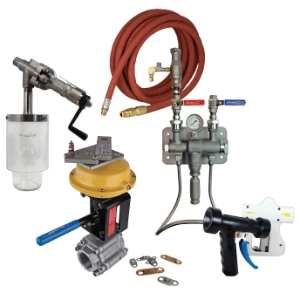
Sampling valves are essential equipment for many industries, from food and beverage to oil and gas. Centro carries a complete selection of sampling valves, including sanitary sampling valves, oil sampling valves, and water sampling valves. Each type of valve is designed to meet the specific needs of a particular industry. For example, our sanitary sampling valves are perfect for use in the food and beverage industry, as they are made from 316L stainless steel and have a tri-clamp connection.Our oil sampling valves are ideal for use in the oil and gas industry, as they are made from carbon steel with an NPT connection. And our water sampling valves are perfect for use in the water treatment industry, as they are made from PVC with a socket connection. No matter what your needs are, Centro has a sampling valve that will fit the bill.
Valve accessories are additional components that enhance the functionality and performance of valves in fluid control systems. These accessories are designed to provide other features, improve safety, or simplify maintenance of the valves. Valve accessories enhance the reliability, efficiency, and safety of valve operations, making them essential for various industries such as oil and gas, chemical processing, water treatment, and power generation.
Drain valves are essential components in fluid management systems, designed to control the flow and drainage of liquids and gases. These valves play a crucial role in various industries, ensuring the safe and efficient removal of unwanted fluids from pipelines, tanks, and other equipment. Whether it's for industrial, commercial, or residential applications, reliable drain valves help prevent leaks, maintain optimal system performance, and safeguard against potential hazards. With a wide range of materials, sizes, and configurations available, finding the perfect drain valve to suit specific needs has never been easier. Choose high-quality drain valves to enhance fluid control and maintain the integrity of your operations.
$163.93
Subject to factory lead times
$3,041.95
Subject to factory lead times
$3,088.64
Subject to factory lead times
$3,239.08
Subject to factory lead times
$3,343.87
Subject to factory lead times
$2,767.02
Subject to factory lead times
$2,830.30
Subject to factory lead times
$2,994.23
Subject to factory lead times
$3,088.64
Subject to factory lead times
$3,041.95
Subject to factory lead times
$3,088.64
Subject to factory lead times
$3,239.08
Subject to factory lead times
$163.93
Subject to factory lead times
$3,041.95
Subject to factory lead times
$3,088.64
Subject to factory lead times
$3,239.08
Subject to factory lead times
$3,343.87
Subject to factory lead times
$2,767.02
Subject to factory lead times
$2,830.30
Subject to factory lead times
$2,994.23
Subject to factory lead times
$3,088.64
Subject to factory lead times
$3,041.95
Subject to factory lead times
$3,088.64
Subject to factory lead times
$3,239.08
Subject to factory lead times
- Use a ball valve for simple on/off shutoff, a control valve when you need to regulate flow rate or pressure, and a check valve to prevent backflow. The choice comes down to whether you need to stop flow, control it, or protect against reverse flow.
- Cv is the flow coefficient — how much water a valve passes at a given pressure drop. Full port means the valve opening matches the pipe diameter for unrestricted flow; regular port is slightly smaller. End connections describe how the valve connects to pipe (NPT threads, flanges, etc.). Body material determines compatibility with your media and environment — brass, stainless, and PVC are the most common.
- Start with your required Cv based on flow rate and pressure drop. Then confirm the valve's pressure and temperature ratings exceed your system's maximums. Undersizing causes excessive pressure drop; oversizing reduces control precision. Always size for your actual operating conditions, not system maximums.
- Fail-open means the valve opens if power or signal is lost; fail-closed means it closes — critical for safety applications. NPT is a threaded connection best for smaller pipes and lower pressures. Flanged connections bolt between pipe flanges and are preferred for larger pipes, high pressure, or applications requiring frequent removal.
- Ball valves use a rotating ball for fast quarter-turn shutoff and are ideal for frequent operation. Gate valves use a rising gate for full open/close and are better for infrequent operation where minimal flow restriction matters. Ball valves are generally more reliable, longer lasting, and easier to operate.
- Because no single valve works well in every application. Pressure, temperature, media type, flow control needs, pipe size, and safety requirements all vary dramatically across industries. Each valve type is engineered to solve a specific set of those problems efficiently.
- Ball valves offer tighter shutoff and are better for smaller lines or where zero leakage matters. Butterfly valves are lighter, more compact, and more cost-effective for larger diameter pipes. For high-volume water flow in large lines, butterfly valves are typically the practical choice.
- Look for stainless steel or carbon steel body construction, graphite or metal seat materials, and valves rated for your specific pressure-temperature combination. Globe valves and ball valves with metal seats are commonly used in high-temp applications. Always verify the valve's published P-T rating before specifying.
- Match the valve type to your application (shutoff, control, or check). Verify body material compatibility with your media. Confirm pressure and temperature ratings exceed operating conditions. Consider end connection type, actuation method, and maintenance requirements. When in doubt, over-specify on pressure rating rather than under.