
Steam Products - Watson McDaniel
Steam traps are automatic valves that filter out condensate and non-condensable gases such as air without allowing steam to escape. In the industry, steam is utilized regularly for heating or as driving energy for ...
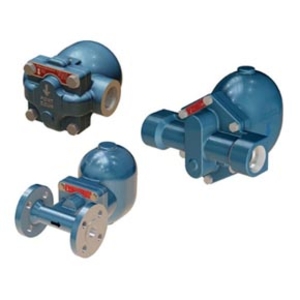
Steam traps are essential for any business that uses steam to power its machinery. They are responsible for removing condensate from the piping, which can build up and cause damage if left unchecked. Steam traps come in a variety of different designs, each with its advantages and disadvantages. The most common types are thermostatic, inverted buckets, and mechanical traps. Thermostatic traps are the most common type of steam trap, and they use a sensing element to open and close the valve in response to changes in temperature. Inverted bucket traps use a float to control the valve and are well-suited for applications where large volumes of condensate need to be removed. Mechanical traps use a diaphragm or piston to open and close the valve and are often used in high-pressure applications. No matter what type of steam trap you need, Centro has a complete selection available online.
$326.94
Subject to factory lead times
$354.68
Subject to factory lead times
$399.26
Subject to factory lead times
$528.05
Subject to factory lead times
$528.05
Subject to factory lead times
$768.80
Subject to factory lead times
$1,354.31
Subject to factory lead times
$386.38
Subject to factory lead times
$465.64
Subject to factory lead times
$3,017.71
Subject to factory lead times
$3,193.06
Subject to factory lead times
$3,394.18
Subject to factory lead times
$326.94
Subject to factory lead times
$354.68
Subject to factory lead times
$399.26
Subject to factory lead times
$528.05
Subject to factory lead times
$528.05
Subject to factory lead times
$768.80
Subject to factory lead times
$1,354.31
Subject to factory lead times
$386.38
Subject to factory lead times
$465.64
Subject to factory lead times
$3,017.71
Subject to factory lead times
$3,193.06
Subject to factory lead times
$3,394.18
Subject to factory lead times
- Steam products encompass the equipment and components used to generate, distribute, control, and recover steam in industrial and commercial facilities. Steam is one of the most widely used energy transfer media in industry — powering heat exchangers, sterilizers, dryers, turbines, humidification systems, and process heating across food and beverage, pharmaceutical, chemical, hospital, and manufacturing operations. Properly specified and maintained steam system components — including steam traps, pressure reducing valves, control valves, strainers, separators, and condensate recovery equipment — ensure that steam energy is delivered efficiently, condensate is removed promptly, and the system operates safely. Poorly maintained steam systems waste enormous amounts of energy and water, making steam system management a high-impact area for operational efficiency.
- A steam system begins at the boiler, which heats water to produce steam at a controlled pressure. The steam is distributed through insulated piping to points of use — heat exchangers, jacketed vessels, coils, sterilizers, and other process equipment — where it transfers its latent heat energy to the product or process. As steam releases its heat energy, it condenses back into hot water (condensate). Steam traps at each point of use automatically remove this condensate and any non-condensable gases (primarily air and CO2) while preventing live steam from escaping. The condensate is then returned to the boiler feedwater system through condensate return piping and a receiver tank, recovering both water and heat energy. Pressure reducing valves step the steam pressure down from the high-pressure distribution main to the lower pressure required by individual equipment. The efficiency of the entire system depends on every component working correctly — particularly the steam traps, which are the most failure-prone element.
- Condensate is hot, purified water that has already been chemically treated for boiler use — returning it to the boiler feedwater system recovers both its heat energy and its water treatment value, significantly reducing fuel, water, and chemical treatment costs. Every gallon of condensate that is dumped to drain instead of returned must be replaced with cold makeup water that must be heated from ambient temperature and chemically treated from scratch. In a typical plant, recovering condensate can reduce fuel costs by 10–20% and water treatment costs by a similar margin. Condensate recovery also reduces the thermal and chemical load on the boiler, extending its service life. A well-designed condensate return system includes properly functioning steam traps (to ensure only condensate enters the return line, not live steam), condensate return piping, a vented or pressurized receiver tank, and a condensate pump to push the return water back to the boiler.
- A pressure reducing valve (PRV) automatically reduces steam pressure from a higher upstream supply pressure to a lower, controlled downstream pressure required by the process equipment. Most steam boilers generate steam at a single high pressure for efficient distribution through the plant, but individual pieces of equipment — heat exchangers, sterilizers, humidifiers, jacketed kettles — each require steam at a specific lower pressure matched to their design temperature. PRVs are installed at each pressure transition point in the distribution system. They maintain a constant downstream pressure regardless of fluctuations in upstream supply pressure or downstream demand. Correct PRV selection requires matching the valve to the required downstream pressure, the steam flow rate (capacity), and the pressure ratio between inlet and outlet. Pilot-operated PRVs offer tighter pressure control than direct-acting types and are preferred for critical process applications.
- The highest-impact efficiency improvements in most steam systems involve three areas: steam trap maintenance, insulation, and condensate recovery. Failed steam traps — particularly those that have failed open and are blowing live steam to the condensate return or atmosphere — are the single largest source of energy waste; a regular steam trap survey and replacement program typically delivers rapid payback. Uninsulated or poorly insulated steam piping, valves, and fittings radiate heat continuously — insulating bare surfaces with properly rated pipe insulation and removable insulation jackets for valves and fittings reduces heat loss dramatically. Maximizing condensate return (as discussed above) recovers heat and water. Additional measures include repairing steam leaks, optimizing boiler combustion, installing flash steam recovery vessels, right-sizing pressure reducing valves, and implementing steam system monitoring to detect problems early. Many facilities recover 10–30% of their steam energy costs through a systematic efficiency improvement program.