
Steam Traps - Watson McDaniel
Steam traps are essential for any business that uses steam to power its machinery. They are responsible for removing condensate from the piping, which can build up and cause damage if left unchecked. Steam traps come in a variety of different designs, each with its advantages and disadvantages. The most common types are thermostatic, inverted buckets, and mechanical traps. Thermostatic traps are the most common type of steam trap, and they use a sensing element to open and close the valve in response to changes in temperature. Inverted bucket traps use a float to control the valve and are well-suited for applications where large volumes of condensate need to be removed. Mechanical traps use a diaphragm or piston to open and close the valve and are often used in high-pressure applications. No matter what type of steam trap you need, Centro has a complete selection available online.
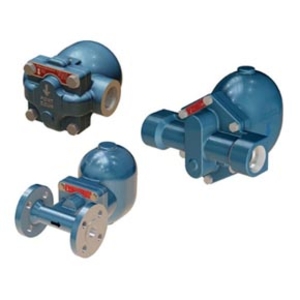
$326.94
Subject to factory lead times
$354.68
Subject to factory lead times
$399.26
Subject to factory lead times
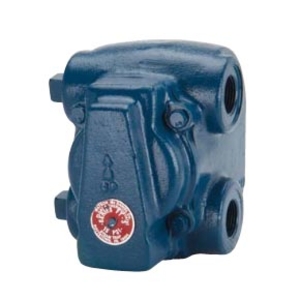
$528.05
Subject to factory lead times
$528.05
Subject to factory lead times
$768.80
Subject to factory lead times
$1,354.31
Subject to factory lead times
$386.38
Subject to factory lead times
$465.64
Subject to factory lead times
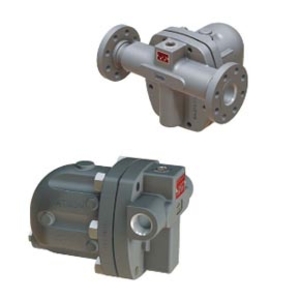
$3,017.71
Subject to factory lead times
$3,193.06
Subject to factory lead times
$3,394.18
Subject to factory lead times
$326.94
Subject to factory lead times
$354.68
Subject to factory lead times
$399.26
Subject to factory lead times
$528.05
Subject to factory lead times
$528.05
Subject to factory lead times
$768.80
Subject to factory lead times
$1,354.31
Subject to factory lead times
$386.38
Subject to factory lead times
$465.64
Subject to factory lead times
$3,017.71
Subject to factory lead times
$3,193.06
Subject to factory lead times
$3,394.18
Subject to factory lead times
- A steam trap is an automatic valve that sits at the outlet of steam-using equipment (heat exchangers, tracer lines, drip legs, coils) and performs three critical functions: it removes condensate as it forms, it removes non-condensable gases (air and CO2) that reduce heat transfer efficiency, and it prevents live steam from escaping the equipment. By holding steam inside the equipment until it has released its latent heat energy and condensed, the steam trap ensures maximum energy transfer to the process. When condensate accumulates and is not removed, it causes water hammer (dangerous pressure surges), reduces heating surface efficiency, and can physically damage equipment. When a trap fails open, live steam blows through to the condensate return, wasting energy. When a trap fails closed, condensate backs up into the equipment, causing all the problems of poor drainage.
- Steam traps fall into three categories based on their operating principle. Mechanical traps (float and inverted bucket types) operate based on the density difference between condensate and steam. Float traps use a buoyant float that rises with condensate level to open a valve — they provide continuous, modulating discharge proportional to condensate load, making them ideal for process equipment with variable and heavy loads. Inverted bucket traps use a bucket that sinks when condensate fills it and floats (closes) when steam enters — they are rugged, resistant to water hammer, and well-suited for steam mains and drip legs. Thermostatic traps operate based on the temperature difference between steam and cooled condensate — they hold condensate until it cools slightly below steam temperature, then open. They are compact and excellent for air venting and light condensate loads. Thermodynamic (disc) traps operate based on the velocity and pressure differences between steam and condensate — they are simple, compact, and widely used on steam mains and tracer lines.
- Selecting the correct steam trap requires matching the trap type to the application characteristics. Key factors include the type of equipment being drained (process heat exchanger, steam main drip leg, tracer line, jacketed vessel), the condensate load (pounds per hour at startup and running conditions), the steam pressure and differential pressure across the trap, the presence of water hammer or backpressure in the condensate return system, and the need for air venting. Float traps are the first choice for process applications with variable, heavy condensate loads and where continuous drainage and good air venting are required. Inverted bucket traps are preferred for steam main drip legs, high-pressure applications, and environments subject to water hammer. Thermostatic traps are ideal for tracer lines, air venting, and light-load applications. Thermodynamic disc traps suit steam main drip legs and superheated steam applications where compact size is needed. Always size the trap's discharge capacity with a safety factor (typically 2:1 to 3:1) above the calculated maximum condensate load.
- Steam traps fail in one of two modes — failed open (blowing steam through to the condensate return) or failed closed (blocking condensate drainage). Both conditions waste energy and can damage equipment. Common diagnostic methods include visual inspection of the condensate discharge (if visible — live steam blowing from a trap outlet indicates a failed-open condition), temperature measurement upstream and downstream of the trap (both sides at steam temperature suggests blow-through; cold downstream suggests a blocked trap), ultrasonic testing (listens for the acoustic signature of steam passing through the trap orifice — the most reliable non-invasive method), and conductivity testing for traps discharging to atmosphere. A regular steam trap survey — typically annually, using ultrasonic and temperature testing — is the industry best practice. Facilities with hundreds or thousands of traps commonly find 15–30% failure rates, representing significant energy and cost recovery opportunity through replacement.
- Steam traps are wear items that require periodic inspection and replacement to maintain steam system efficiency. The primary maintenance activity is a regular trap survey — testing every trap in the system at least annually (more frequently for critical applications) using ultrasonic and temperature diagnostic tools to identify traps that have failed open or closed. Failed traps should be replaced or repaired promptly — a single failed-open trap can waste thousands of dollars per year in lost steam energy. Between surveys, watch for symptoms of trap failure: water hammer in equipment (indicating condensate backup from a failed-closed trap), higher-than-expected fuel consumption (indicating blow-through from failed-open traps), and poor heating performance. Many traps are designed for in-line repair — the internals (mechanism assembly, seat, float, or bucket) can be replaced without removing the trap body from the piping, reducing downtime and labor. Installing isolation valves and test connections on both sides of the trap simplifies future testing and replacement.