
Motion Control - Yaskawa
Motion control is the process of managing the movement of objects through the use of Machinery. Motion Control products are used in various industries and applications, from automotive to aerospace. Centro carries ...
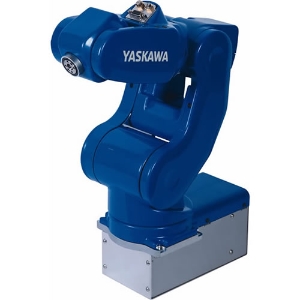
Servo accessories enhance the functionality, precision, and integration of servo motor systems, supporting optimal motion control in automation, robotics, and CNC applications. These components include encoder cables, mounting brackets, gearboxes, couplings, and connectors, each designed to improve connectivity, simplify installation, and ensure accurate, reliable performance.
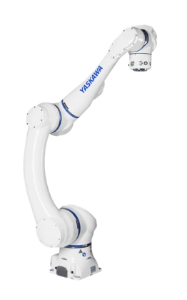
Industrial robots are programmable, automated machines designed to handle repetitive or complex tasks with precision and speed in manufacturing and production settings. They can weld, assemble, paint, pick and place items, or inspect products, all with consistent quality and minimal human error. Used in industries like automotive, electronics, metalworking, and packaging, industrial robots improve efficiency, reduce labor costs, and enhance workplace safety by taking on dangerous or demanding jobs. Their flexibility and reliability make them essential tools for modern factories aiming to boost productivity and maintain high standards of quality.
$20,515.77$45,428.57
$48,773.34$51,666.67
$6,774.08$7,142.68
Subject to factory lead times
$7,116.01$7,373.39
Subject to factory lead times
$3,096.72$4,000.00
$244.14$344.00
Subject to factory lead times
$385.80$398.67
$3,522.52$3,781.18
Subject to factory lead times
$20,515.77$45,428.57
$48,773.34$51,666.67
$6,774.08$7,142.68
Subject to factory lead times
$7,116.01$7,373.39
Subject to factory lead times
$3,096.72$4,000.00
$244.14$344.00
Subject to factory lead times
$385.80$398.67
$3,522.52$3,781.18
Subject to factory lead times
- Motion control is the technology used to precisely manage the movement, speed, position, and torque of machinery and mechanical systems. It encompasses the complete drive system — from the controller and amplifier to the motor and mechanical actuator — working together to achieve accurate, repeatable, and programmable motion. In industrial automation, motion control systems drive everything from CNC machine axes and robotic arms to conveyor indexing, web tensioning, and precision assembly equipment. The fundamental advantage of electronic motion control over pneumatic or mechanical alternatives is programmability: speeds, positions, acceleration profiles, and motion sequences can be changed in software without modifying hardware.
- A typical motion control system consists of four core components. The controller is the brain — a PLC, motion controller, or PC-based system that generates the motion profile (target position, speed, and acceleration). The drive (amplifier) receives commands from the controller and converts them into the electrical power signals needed to move the motor. The motor converts electrical energy into mechanical motion — common types include servo motors (for high-precision, variable-speed applications), stepper motors (for open-loop positioning at lower cost), and linear motors (for direct linear motion without mechanical conversion). The feedback device — typically an encoder or resolver mounted on the motor shaft — reports the actual position and speed back to the controller, closing the loop and enabling real-time correction. Mechanical transmission components like ball screws, linear guides, belt drives, and gearboxes transfer motor motion to the load.
- Both servo motors and stepper motors are used for precision positioning, but they differ in control method, performance, and cost. A stepper motor moves in fixed angular increments (steps) and is typically operated in open-loop mode — the controller sends a set number of step pulses, and the motor is assumed to have reached the target position. Steppers are simple, affordable, and well-suited for low-to-moderate speed, low-to-moderate torque applications where load conditions are predictable. A servo motor is a closed-loop system — an encoder on the motor shaft continuously reports position back to the drive, which adjusts power in real time to maintain the commanded trajectory. Servos deliver higher speeds, faster acceleration, better dynamic response, and more consistent performance under varying loads. For applications requiring high speed, high precision, rapid acceleration, or variable loading — such as robotic axes or high-speed packaging — servo motors are the better choice.
- A linear actuator converts rotary or electrical energy directly into straight-line (linear) motion. Electric linear actuators — powered by a motor driving a ball screw, lead screw, or belt mechanism — provide precise, programmable, and repeatable linear positioning without requiring compressed air or hydraulic fluid. They are the right choice when an application requires accurate position control along a straight path, such as pressing, clamping, dispensing, pick-and-place, or adjusting machine tooling positions. Compared to pneumatic cylinders, electric linear actuators offer programmable intermediate positions (not just full-extend/retract), variable speed and force profiles, and quieter operation. Compared to hydraulic cylinders, they are cleaner, simpler to install, and require no fluid power unit. For simple extend/retract motion where speed and force requirements match pneumatic capabilities, pneumatic cylinders remain the more cost-effective option.
- The choice depends on the motion requirements and application priorities. Pneumatic motion (cylinders and rotary actuators) is the best fit for applications requiring simple, fast, two-position (extend/retract) motion with high force — such as clamping, ejecting, and transferring. Pneumatics is lower cost, inherently compliant (cushioning), and well-suited to high-cycle, fixed-stroke operations where precise intermediate positioning is not needed. Electric motion (servo or stepper-driven actuators) is the right choice when the application requires programmable positioning, variable speeds, precise force control, multiple stop positions, or coordinated multi-axis motion. Electric systems also eliminate the cost of compressed air — which is significant over time — and produce less noise. As a general guideline: if the motion is a simple back-and-forth at fixed endpoints, pneumatic is usually the most economical solution; if the motion requires programmability, precision, or flexibility, electric is the better investment.