
Configured Drives
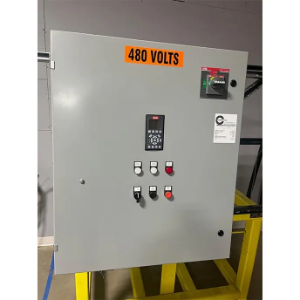
Configured drives are tailored drive systems designed to meet specific application needs in industrial settings. Configured Drives combine motors, variable frequency drives (VFDs), and control components into a single package, simplifying installation and operation. By pre-configuring the drive parameters, they save time on setup and provide optimal performance right out of the box. Configured drives are particularly valuable in applications where precise speed control, energy efficiency, and seamless integration with existing systems are critical. They also often include advanced features like remote monitoring and diagnostics, making them a reliable choice for demanding environments like manufacturing, HVAC, or material handling. Browse Centro's product offerings below or contact us to speak with a product expert to help you with your selection, and possible make customizations for you.
Subject to factory lead times
Subject to factory lead times
Subject to factory lead times
Subject to factory lead times
Subject to factory lead times
Subject to factory lead times
Subject to factory lead times
Subject to factory lead times
Subject to factory lead times
Subject to factory lead times
Subject to factory lead times
Subject to factory lead times
Subject to factory lead times
Subject to factory lead times
Subject to factory lead times
Subject to factory lead times
Subject to factory lead times
Subject to factory lead times
Subject to factory lead times
Subject to factory lead times
Subject to factory lead times
Subject to factory lead times
- Configured drives (also called packaged or pre-engineered drive systems) are variable frequency drives (VFDs) or motor controllers that have been pre-selected, assembled, and configured for a specific application — typically mounted in an enclosure with all necessary wiring, circuit protection, operator controls, and ventilation already in place. They are ready to install and connect to power and motor wiring without requiring the end user to design and build a custom drive panel from scratch. Configured drives save significant engineering and assembly time, reduce the risk of wiring errors, and ensure that the drive, circuit protection, and enclosure are properly matched and meet applicable electrical codes.
- A standalone VFD is an open-chassis or enclosed drive unit that must be mounted inside a user-designed panel, wired to circuit protection, connected to an operator interface, and programmed for the specific motor and application. This approach offers maximum flexibility for custom panel layouts and complex multi-drive systems, but requires electrical engineering, panel fabrication, and commissioning expertise. A configured drive is a complete, pre-assembled solution — the VFD, input protection (fuses or breaker), line reactor or filter (if needed), operator interface, enclosure, and wiring are all integrated and tested before delivery. It arrives as a turnkey unit that connects to incoming power, the motor, and the control network. Configured drives are the faster, lower-risk option for single-motor applications — conveyors, fans, pumps, mixers — where the user wants a proven, code-compliant drive solution without the cost and lead time of custom panel engineering.
- Configured drives support the most common motor types used in industrial applications — three-phase AC induction motors (the workhorse of industrial drive applications) and, increasingly, permanent magnet synchronous motors for higher efficiency. Typical applications include conveyors (speed control for product handling and throughput adjustment), centrifugal pumps and fans (speed reduction for energy savings — reducing pump or fan speed by even 20% yields dramatic energy cost reductions due to the affinity laws), mixers and agitators (precise speed control for process consistency), compressors (load matching), and material handling equipment. The drive is configured at the factory with the correct motor parameters (voltage, current, horsepower), acceleration/deceleration ramps, and any application-specific settings (PID control for pumps, speed presets for conveyors), so it is ready to run upon installation.
- Configured drives are available in enclosures rated for the specific installation environment. NEMA 1 enclosures provide general indoor protection against dust and light contact and are the standard for clean, climate-controlled environments such as electrical rooms and indoor production areas. NEMA 12 enclosures offer enhanced protection against dust, dirt, and dripping liquids — suited for typical factory floor conditions. NEMA 4/4X enclosures are sealed against washdown, hose-directed water, and corrosion — required for food and beverage, pharmaceutical, and outdoor installations. NEMA 3R enclosures provide outdoor rain protection for equipment mounted outside. The enclosure must also provide adequate ventilation or cooling for the drive's heat dissipation — options include filtered fans, air-to-air heat exchangers, and air conditioning units for high-ambient-temperature installations. Selecting the right enclosure rating ensures the drive operates reliably and meets code requirements for its installed location.
- Variable frequency drives deliver substantial energy savings when applied to centrifugal pumps and fans because these loads follow the affinity laws — power consumption is proportional to the cube of speed. This means reducing a fan or pump speed by just 20% reduces power consumption by approximately 50%. In many facilities, pumps and fans are the largest consumers of electrical energy, and they often run at full speed even when the process requires less flow — using throttling valves or dampers to reduce output, which wastes energy as heat and pressure drop. Replacing the throttling device with a VFD that reduces motor speed to match actual demand eliminates this waste. Payback periods of 6 to 18 months are common, and the energy savings continue for the life of the equipment. VFDs also reduce mechanical stress on motors, bearings, seals, and piping by eliminating the shock of across-the-line motor starting, further reducing maintenance costs and extending equipment life.