
Grippers/End of Arm Tooling
Grippers and end-of-arm tooling (EOAT) are vital in robotic and automated systems due to their versatility and customization. They handle tasks from simple pick-and-place to complex assembly and packaging, making t...
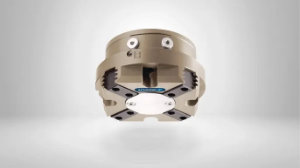
Pneumatic grippers are essential to grasp, hold, and manipulate objects in automation systems. These grippers utilize compressed air to generate mechanical force and close or open their jaws, allowing them to securely grip and release things of various sizes and shapes. Pneumatic grippers come in multiple configurations, including parallel, angular, and three-finger grippers, each designed for specific application requirements. They are commonly used in manufacturing, robotics, packaging, and assembly, where precise and reliable object manipulation is crucial. Pneumatic grippers offer advantages such as fast response times, high gripping forces, and adjustable gripping pressure. They are typically lightweight, durable, and require minimal maintenance. By enabling efficient and accurate handling of objects, pneumatic grippers contribute to increased productivity, reduced manual labor, and improved overall automation efficiency. With their reliable gripping and release capabilities, pneumatic grippers are vital in achieving precise and effective automation in various industrial processes.
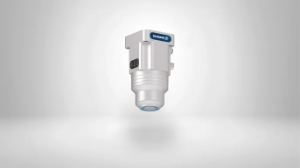
Magnetic grippers are versatile tools for handling and manipulating ferrous objects in industrial automation and material handling applications. These grippers utilize magnetic forces to securely hold and release workpieces without mechanical clamping or gripping mechanisms. Magnetic grippers offer quick and efficient operation, providing reliable holding power and easy integration with robotic systems. They are suitable for applications requiring non-contact gripping, enabling safe and precise handling of metal parts in various industries.
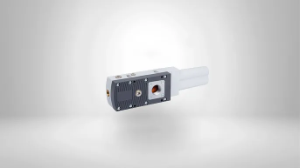
Vacuum grippers are specialized robotic end-of-arm tools used in automation and material handling applications to grasp and manipulate objects with the power of suction securely. These grippers employ a vacuum system to create negative pressure, adhering to the surface of an object and allowing it to be lifted, moved, and precisely positioned. Vacuum grippers are widely used in manufacturing, logistics, and packaging industries, where they excel in handling a diverse range of items, from delicate and irregularly shaped objects to heavy and flat materials. Their adaptability, quick response times, and ability to securely hold objects without causing damage make vacuum grippers valuable assets in achieving efficient and flexible automation solutions, improving productivity, and reducing manual labor in various industrial processes.

Gripper and end-of-arm tooling accessories complement and enhance the functionality of robotic grippers and end-of-arm tooling systems. These accessories include fingers, jaws, pads, adapters, and mounting brackets, among others, designed to optimize gripping performance and adapt to specific workpiece requirements. Gripper accessories offer versatility in grip style, size adjustment, and material compatibility, enabling precise and efficient handling of various objects. They play a crucial role in enhancing robotic systems' flexibility, adaptability, and gripping capabilities in diverse industrial applications.
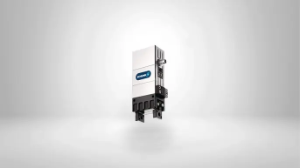
Electrical grippers are advanced robotic end-effector devices designed for precise and programmable object manipulation in automation and robotics applications. Unlike traditional mechanical grippers, which rely on physical force and motion, electrical grippers use motors and sensors to grasp, lift, and manipulate objects with exceptional control and precision. These grippers often incorporate servo motors, encoders, and feedback systems to enable fine-tuned movements and force adjustment. Electrical grippers find applications in manufacturing, electronics, and logistics, where they are utilized for pick-and-place operations, assembly, and material handling. Their programmable nature and adaptability to various object sizes and shapes make electrical grippers invaluable in achieving high automation efficiency, flexibility, and accuracy, contributing to improved production processes and reduced labor costs.
$1,828.04
Subject to factory lead times
$1,257.22
Subject to factory lead times

$1,096.79
Subject to factory lead times

$2,173.89
Subject to factory lead times
$467.26
Subject to factory lead times
$580.02
Subject to factory lead times
$733.00
Subject to factory lead times
$681.84
Subject to factory lead times
$656.00
Subject to factory lead times
$761.75
Subject to factory lead times
$608.77
Subject to factory lead times

$756.41
Subject to factory lead times
$370.98
Subject to factory lead times
$185.50
Subject to factory lead times
$165.00
Subject to factory lead times
$165.00
Subject to factory lead times
$165.00
Subject to factory lead times
$342.73
Subject to factory lead times
$154.40
Subject to factory lead times
$423.76
Subject to factory lead times
$489.46
Subject to factory lead times
$423.76
Subject to factory lead times
$489.46
Subject to factory lead times
$246.37
Subject to factory lead times
$1,828.04
Subject to factory lead times
$1,257.22
Subject to factory lead times
$1,096.79
Subject to factory lead times
$2,173.89
Subject to factory lead times
$467.26
Subject to factory lead times
$580.02
Subject to factory lead times
$733.00
Subject to factory lead times
$681.84
Subject to factory lead times
$656.00
Subject to factory lead times
$761.75
Subject to factory lead times
$608.77
Subject to factory lead times
$756.41
Subject to factory lead times
$370.98
Subject to factory lead times
$185.50
Subject to factory lead times
$165.00
Subject to factory lead times
$165.00
Subject to factory lead times
$165.00
Subject to factory lead times
$342.73
Subject to factory lead times
$154.40
Subject to factory lead times
$423.76
Subject to factory lead times
$489.46
Subject to factory lead times
$423.76
Subject to factory lead times
$489.46
Subject to factory lead times
$246.37
Subject to factory lead times
- End-of-arm tooling (EOAT) is any device mounted to the end of a robot arm that enables the robot to interact with its environment — gripping, holding, moving, and placing parts. Grippers are the most common EOAT type, and they come in several technologies suited to different applications. Pneumatic grippers use compressed air to open and close jaws and are the workhorse for general-purpose pick-and-place — available in parallel (jaws move in/out), angular (jaws pivot), and three-finger configurations. Electric grippers use servo motors for programmable grip force and position, ideal for delicate or variable parts. Vacuum grippers use suction cups to handle flat, smooth, or flexible items like sheets, boxes, and bags. Magnetic grippers handle ferrous metal parts without mechanical contact.
- The choice depends on the application's requirements for force control, speed, flexibility, and environment. Pneumatic grippers are faster, simpler, and less expensive — they open and close quickly with high grip force relative to their size, making them ideal for high-cycle pick-and-place of consistent parts where grip force does not need to vary. Electric grippers offer programmable grip force, adjustable jaw position, and the ability to handle parts of varying sizes without changing tooling — making them the better choice for delicate parts (electronics, glass, food), mixed-product lines, and applications requiring force feedback to verify a part is gripped correctly. Electric grippers also eliminate the need for compressed air at the robot, simplifying installation for cobots and mobile platforms. If the application involves a single consistent part at high speed, pneumatic is typically the most cost-effective. If flexibility, precision, or gentle handling is needed, electric is the better investment.
- Quick-change systems (also called automatic tool changers) allow a robot to rapidly swap between different end-of-arm tools — grippers, suction cups, deburring tools, screwdrivers, dispensing nozzles — without manual intervention. The system consists of a master plate (mounted permanently on the robot wrist) and a tool plate (mounted on each EOAT). When the robot needs to change tools, it docks with the appropriate tool plate, locks it mechanically and connects pneumatic, electrical, and signal lines through integrated pass-throughs — all in seconds. Quick-change systems are critical for flexible manufacturing where a single robot performs multiple tasks, for reducing changeover time when switching between product variants, and for maximizing robot utilization by enabling one robot to do the work of several dedicated machines.
- Gripper and EOAT accessories extend functionality and adapt the tooling to specific workpiece requirements. Finger kits and custom jaws allow standard grippers to be tailored to grip specific part geometries — flat, round, irregular, or delicate surfaces. Sensors integrated into grippers provide feedback on grip status, part presence, and grip force, enabling the robot to verify it has securely grasped the part before moving. Rotary gripper modules combine a gripper with a rotary actuator, allowing the robot to grip and orient parts in a single tool. Mounting brackets and adapters interface the EOAT with different robot wrist standards. Protective covers and bellows shield the gripper from dust, coolant, and debris in harsh environments. Having the right accessories ensures the EOAT performs reliably across varying part types and environmental conditions.
- Vacuum gripping uses suction cups connected to a vacuum generator to pick up and hold objects by creating negative pressure against the object's surface. It is the best choice for handling flat, smooth, or lightly textured items — cardboard boxes, plastic sheets, glass panels, metal plates, bags, and food packaging — where mechanical jaws would be impractical, too slow, or could damage the product. Vacuum grippers handle a wide range of sizes with a single tool by using multiple suction cups arranged in a pattern that matches the product footprint. They are fast (grip and release in milliseconds), gentle (no clamping force on the product), and simple to maintain. Limitations include difficulty gripping porous or highly irregular surfaces that prevent a seal, and reduced holding force at high acceleration. For porous materials, foam or bellows-style cups improve the seal; for heavy loads, larger cups or higher vacuum levels increase holding capacity.