
Fans & Blowers
Keep your operations running smoothly with our selection of Fans and Blowers, designed to meet industrial environments' airflow and ventilation needs.
Designed for performance and efficiency, our fans and blowers are perfect for cooling machinery, managing air quality, and venting hazardous fumes. Whether you need compact designs for tight spaces or heavy-duty options for demanding environments, our products deliver reliable performance, energy efficiency, and long-lasting durability.
Enhance air circulation, and worker safety, and improve your facility's environment with our ventilation solutions. Browse our product selection or contact us to speak with a product expert to help you with your selection.
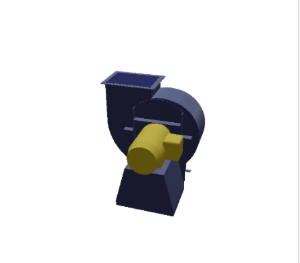
$8,331.13
Subject to factory lead times
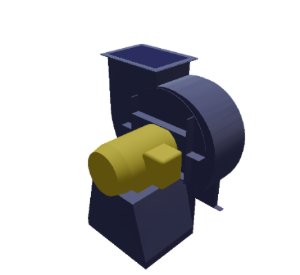
$9,417.38
Subject to factory lead times
$12,387.11
Subject to factory lead times
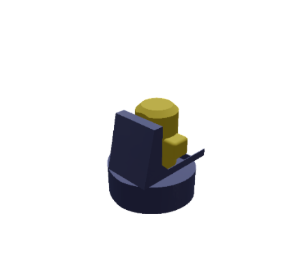
$11,004.98
Subject to factory lead times
$8,331.13
Subject to factory lead times
$9,417.38
Subject to factory lead times
$12,387.11
Subject to factory lead times
$11,004.98
Subject to factory lead times
- A centrifugal fan is a mechanical device that moves air or gas by drawing it into a rapidly spinning impeller and discharging it at a right angle to the inlet, generating higher pressure than axial fans. In bulk material handling, centrifugal fans are the primary air movers behind pneumatic conveying systems, dust collection systems, and process ventilation. Material handling centrifugal fans are built with specialized wheel designs — radial blade (paddle wheel) configurations are the most common because their flat, open blades resist clogging and handle abrasive, fibrous, or bulky materials passing through the airstream. Shrouded radial designs add an outer shroud to the wheel for increased efficiency while still handling material-laden air. These fans are used to convey product through ductwork to dust collectors, move materials from process discharge points to bins or silos, and exhaust contaminated air from work areas. Proper fan selection requires matching the airflow volume (CFM), static pressure, material characteristics, and operating temperature to the specific application.
- While the terms are often used interchangeably, fans and blowers differ primarily in the pressure ratio they produce. Fans generate lower pressure increases and are typically used for general ventilation, cooling, and moving large volumes of air at relatively low resistance — such as exhausting air from a building or moving air across a heat exchanger. Blowers produce higher pressure output and are designed to push or pull air through systems with greater resistance, such as pneumatic conveying pipelines, dense filtration media, or long runs of ductwork. In bulk material handling, high-pressure blowers are used to generate the airflow needed to transport dry bulk materials (powders, pellets, granules) through enclosed pipelines from one location to another. Centrifugal fans designed for material handling fall somewhere in between — they handle moderate pressures while also allowing solid material to pass through the fan wheel itself without clogging. The right choice depends on the system's airflow requirements, static pressure demands, and whether material will pass through the air mover or only through the connected ductwork.
- Selecting the right fan for a dust collection system requires matching several key parameters to the system design. First, determine the required airflow volume in cubic feet per minute (CFM) — this is based on the capture velocities needed at each dust pickup point and the total number of hoods, enclosures, or pickup points connected to the system. Second, calculate the total static pressure the fan must overcome, which includes resistance from the ductwork (length, diameter, elbows, and transitions), the dust collector itself (filter media resistance, both clean and loaded), and any inlet or outlet accessories. Third, consider the material in the airstream — if dust-laden air passes through the fan (common in many configurations), the fan wheel must be a material handling design (radial or paddle wheel) built to resist abrasion and prevent buildup. If the fan is on the clean-air side of the collector, a more efficient backward-inclined or airfoil design may be appropriate. Finally, factor in motor horsepower, fan speed (RPM), operating temperature, and any spark-resistance requirements if handling combustible dust. An improperly sized fan will result in poor capture velocity, inadequate filtration, excessive energy use, or premature equipment failure.
- Fan arrangement refers to how the motor is mounted to and drives the fan, and it directly affects performance, maintenance access, and suitability for material handling. The most common arrangements in bulk material handling include Arrangement 1 (belt-drive with bearings on a separate pedestal base), which provides speed flexibility through sheave and belt changes and protects the motor from the airstream — this is a popular choice for material handling fans because the belt drive allows RPM adjustments if the system requirements change. Arrangement 4 (direct-drive with the fan wheel mounted directly on the motor shaft) eliminates belts and reduces maintenance, but the motor is fixed-speed and the motor bearings are exposed to the airstream loads. Arrangement 9 (belt-drive with a motor mounted on the fan pedestal base) is common for heavier-duty material handling fans because it keeps everything compact on one base while still providing belt-drive flexibility. Heavier material handling fans typically use Arrangement 9 or Arrangement 1 belt-drive configurations to provide more control — if the system gets jammed, a belt drive is less likely to burn out the motor compared to a direct-drive setup.
- Industrial fans and blowers can be configured with a range of accessories to match specific application requirements. Inlet dampers and outlet dampers allow operators to regulate airflow volume without changing fan speed, which is useful for balancing multi-branch duct systems or adjusting to varying process conditions. Vibration isolators (spring or rubber mounts) are installed between the fan base and the foundation to reduce vibration transmission to the building structure, which is especially important when the fan is mounted on an elevated platform or mezzanine. Inlet silencers and outlet silencers reduce noise levels on the open side of the fan, helping facilities meet OSHA noise exposure limits and community noise ordinances. For material handling applications, fans may include internal no-snag finishes (completely smooth welds inside the housing so material doesn't get caught), no-snag nose cones to cover the wheel hub, and fully open wheels with no outer grid to prevent material from hanging up. Abrasion-resistant liners (AR400 carbon steel or ceramic) extend fan life in applications conveying highly abrasive materials likeite,ite, or mineral dust. Spark-resistant construction (AMCA Types A, B, or C) is required when handling combustible dust to prevent ignition from metal-to-metal contact inside the fan.