
Filtration
Centro’s Filtration division helps businesses run smoothly by providing high-quality filtration solutions that remove contaminants, protect equipment, and improve product quality. Whether air or liquid filtr...
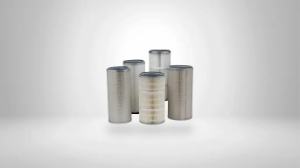
Industrial filtration protects equipment, workers, and customers from harmful contaminants, purifies air, gas, and water, and separates and isolates products. It is used in various processes, including membrane filtration, centrifugal filtration, gravity filtration, vacuum filtration, chill/cold filtration, hot filtration, multi-layer filtration, mechanical filtration, surface filtration, and depth filtration. Filters used in industrial applications include air filters, electronic filters, EMI/FRI filters, fluid filters, fuel filters, hydraulic filters, water filters, and carbon filters.
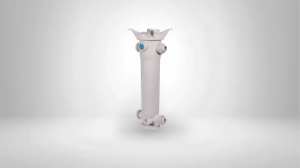
Commercial filtration solutions prioritize ease of use, reliable performance, and regulatory compliance while handling moderate flow rates and contaminant loads. By removing impurities, odors, particulates, and harmful substances, commercial filtration improves health, protects equipment, and ensures a consistently pleasant environment for staff and customers.

$165.00
Subject to factory lead times

$100.01

$118.00
Subject to factory lead times

$82.00
Subject to factory lead times

$9.70
Subject to factory lead times
$151.00
Subject to factory lead times

$1,074.98
Subject to factory lead times

$129.00

$780.00
Subject to factory lead times

$1,349.00

Configure product to see pricing
Configure product to see pricing

Configure product to see pricing
Configure product to see pricing
$165.00
Subject to factory lead times
$100.01
$118.00
Subject to factory lead times
$82.00
Subject to factory lead times
$9.70
Subject to factory lead times
$151.00
Subject to factory lead times
$1,074.98
Subject to factory lead times
$129.00
$780.00
Subject to factory lead times
$1,349.00
Configure product to see pricing
Configure product to see pricing
Configure product to see pricing
Configure product to see pricing
- Industrial filtration is the process of removing unwanted contaminants — solid particles, liquids, gases, and biological material — from air, water, process fluids, and gas streams in manufacturing and processing facilities. It is important because contamination directly impacts product quality, equipment life, worker safety, and regulatory compliance. Without effective filtration, particulates damage pumps, valves, heat exchangers, and instrumentation; airborne dust creates explosion hazards and respiratory risks; and product contamination leads to batch rejection, customer complaints, and regulatory violations. Filtration technologies span a wide range — from simple Y-strainers that catch pipe debris to sub-micron cartridge filters that purify pharmaceutical-grade liquids, from bag filters handling high-volume process streams to coalescing filters that remove oil aerosols from compressed air. The right filtration strategy protects capital equipment, ensures product meets specification, keeps workers safe, and helps facilities comply with EPA, OSHA, FDA, and other regulatory requirements.
- Choosing the right filter starts with four questions: what are you filtering (liquid, gas, air, or steam), what contaminants are you removing (particles, oil, water, biological material), what particle size must be captured (measured in microns), and what flow rate and pressure does the system require? For liquid filtration, bag filters and cartridge filters are the primary options — bag filters handle higher flow rates and larger particle loads cost-effectively, while cartridge filters provide finer filtration down to sub-micron levels. For gas and compressed air filtration, particulate filters remove solid particles, coalescing filters remove oil and water aerosols, and adsorption filters remove oil vapor and odors. For pipeline protection, strainers (Y-strainers and basket strainers) are installed upstream of pumps, valves, and instruments to catch large debris. For airborne dust and particulate, dust collectors with cartridge or bag filtration media capture contaminants at the source. The operating environment, chemical compatibility, temperature, and regulatory requirements further narrow the selection to the correct filter type, media material, and housing configuration.
- A micron rating indicates the size of the smallest particles a filter is designed to capture, measured in micrometers (µm). One micron is one-millionth of a meter — for reference, a human hair is roughly 70 microns in diameter, and bacteria are typically 0.5 to 5 microns. Filters are available from coarse ratings (100–200 microns for large debris) down to sub-micron ratings (0.01–1 micron for fine particulate, oil aerosols, and biological contaminants). Selecting the right micron rating depends on what you are protecting downstream and the quality specification your process requires. A coarse strainer (40–100 microns) upstream of a pump protects the pump from pipe scale and debris. A 5–25 micron bag or cartridge filter in a process line removes visible particulates. A 1 micron or finer cartridge filter is needed for pharmaceutical, food and beverage, or electronics manufacturing applications where product purity standards are stringent. Also consider whether you need a nominal rating (captures a percentage of particles at the stated size) or an absolute rating (captures virtually all particles at the stated size) — absolute-rated filters provide higher assurance for critical applications.
- Filter replacement or cleaning frequency depends on the contaminant load, flow rate, filter type, and how you monitor filter condition. The most reliable indicator is differential pressure — the pressure drop across the filter measured between the inlet and outlet. A clean filter has a low differential pressure; as the filter captures contaminants, the media becomes increasingly restricted and the differential pressure rises. Most filter housings include differential pressure gauges or ports for gauges. When the differential pressure reaches the manufacturer's recommended maximum (typically 15–35 psi for liquid filters, 2–10 psi for gas filters), the filter element should be replaced or cleaned. Operating beyond the maximum differential pressure risks filter bypass, media collapse, or contaminant breakthrough. In practice, many facilities establish a time-based replacement schedule as a baseline (monthly, quarterly, or semi-annually depending on conditions) and supplement it with differential pressure monitoring. Applications with highly variable contaminant loads benefit most from continuous differential pressure monitoring with alarms set at warning and change-out thresholds.