
Industrial Filtration
Industrial filtration protects equipment, workers, and customers from harmful contaminants, purifies air, gas, and water, and separates and isolates products. It is used in various processes, including membrane fil...

Centro offers a comprehensive online selection of liquid filtration products, including industrial strainers, bag filters, and cartridges. Our range of cartridges covers diverse needs and industries, and we also provide a wide variety of filter media, such as Polypropylene, Nylon, and stainless steel. In Liquid Filtration, cartridges are indispensable tools for effectively removing contaminants from liquids in industrial liquid filtration and separation. Cartridges that Centro can provide customers are essential in various industries, including chemical processing, refineries, industrial, food and beverage production, pharmaceuticals, and water treatment.
Whether you require a straightforward solution or a custom-engineered system, Centro combines top-quality liquid filtration products with expert guidance to meet your unique fluid filtration needs. Explore our website today to discover more about our extensive line of liquid filtration solutions and how we can enhance your industrial processes.
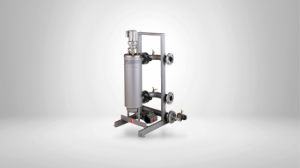
Centro carries a wide range of mechanical cleansing products to suit industrial or commercial needs. Mechanical cleaning uses physical force to remove dirt, debris, and other contaminants from surfaces. This can be done using various methods, including backwash cleaning and mechanical self-cleaning. Backwash cleaning is a type of mechanical cleansing that uses high-pressure water to remove contaminants from surfaces. This method is often used to clean industrial equipment and machinery. Mechanical self-cleaning refers to using physical tools and devices to remove contaminants from surfaces. This includes brushes, scrapers, and high-pressure air jets. Centro's selection of mechanical cleansing products is available online, making it easy to find the right product for your needs.

Centro carries a complete online selection of gas filtration products to meet your needs. Whether you're looking for compressed air filtration or FRLs, we have the right product. Our gas vessels and coalescers are designed to remove contaminants from your gas supply, ensuring that your equipment operates at peak efficiency. Whether you need a single component or a complete system, Centro has the gas filtration product you need for your application. Please browse our website today to learn more.
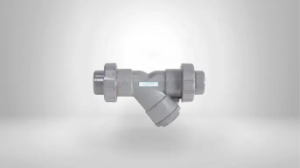
Strainers are filtration devices used to remove solid particles or debris from liquid or gas streams. They feature a perforated or mesh-lined screen that captures contaminants while allowing the fluid to pass through. Strainers are commonly used in pipelines, pumps, or process equipment to protect downstream equipment from damage or clogging. They find applications in industries such as chemical processing, water treatment, oil and gas, or power generation, providing effective filtration and ensuring smooth operation of systems.

Dust is a problem in many industrial and commercial settings. Inhaling dust can trigger several respiratory issues, and it can also damage equipment. That's why it's essential to have a sound dust filtration system in place. Centro offers a complete selection of dust filtration products, including dust collectors, dust cartridges, ducting, and vents. We carry products from leading manufacturers, so you can be sure you're getting the best possible quality. Dust filtration is an integral part of any business, and we're here to help you find the right products for your needs. Browse our website today to learn more about our products and how we can help you keep your workplace safe and clean.
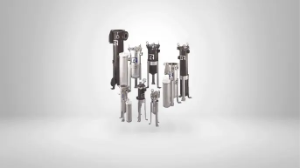
Filter housings are an important part of any filtration system, whether you're working with liquids or gases. They hold the filter elements in place, like cartridges or bags, and help ensure contaminants, particles, and other impurities are effectively removed. You’ll often find them in industries like water treatment, food processing, or manufacturing, where clean, filtered fluids or air are critical. These housings come in different materials, such as stainless steel or plastic, and are designed to handle high pressure and temperatures, keeping systems running smoothly and filters lasting longer.

Blast cleaning is a surface preparation process that uses high-speed abrasive media to remove rust, paint, scale, and other contaminants from metal, concrete, or other materials. By propelling abrasive particles under controlled pressure, it cleans and textures surfaces for improved coating adhesion and a uniform finish. Blast cleaning is widely used in industries like manufacturing, automotive, construction, and shipbuilding to restore parts, extend equipment life, and ensure high-quality finishes. It offers efficient, consistent results while reducing manual labor and improving overall process reliability.

Specialty Filters covers filter products designed for niche or non-standard applications that fall outside standard liquid, gas, and dust filtration lines, including custom media, unique housings, and application-specific designs. This category serves as a home for filtration solutions that don't fit neatly into the other Industrial Filtration categories, such as specialized chemical, food-grade, or OEM-specific filters.

$165.00
Subject to factory lead times

$100.01

$118.00
Subject to factory lead times

$82.00
Subject to factory lead times

$9.70
Subject to factory lead times
$151.00
Subject to factory lead times

$1,074.98
Subject to factory lead times

$129.00

$780.00
Subject to factory lead times

$1,349.00

Configure product to see pricing
Configure product to see pricing

Configure product to see pricing
Configure product to see pricing
$165.00
Subject to factory lead times
$100.01
$118.00
Subject to factory lead times
$82.00
Subject to factory lead times
$9.70
Subject to factory lead times
$151.00
Subject to factory lead times
$1,074.98
Subject to factory lead times
$129.00
$780.00
Subject to factory lead times
$1,349.00
Configure product to see pricing
Configure product to see pricing
Configure product to see pricing
Configure product to see pricing
- Manufacturing plants use a variety of filtration systems depending on the media being filtered and the contaminants being removed. Liquid filtration systems — including bag filters, cartridge filters, and automatic self-cleaning strainers — remove particulates from process water, chemicals, coatings, and other fluids to protect equipment and maintain product quality. Gas filtration and separation systems remove particulates, oil aerosols, water vapor, and other contaminants from compressed air and process gas streams to protect pneumatic equipment, instrumentation, and downstream products. Strainers (Y-strainers and basket strainers) are installed in pipelines to catch large debris that could damage pumps, valves, and control equipment. Dust filtration systems — including dust collectors with cartridge or bag media — capture airborne particulates generated by grinding, sanding, cutting, conveying, and material handling operations to protect workers and meet OSHA air quality standards. Filter housings hold the filter elements and provide the pressure containment needed for the application's flow rate and operating conditions.
- Bag filters and cartridge filters are both used for liquid filtration, but they differ in design, capacity, and application fit. A bag filter is a flexible fabric or felt pouch that sits inside a filter housing — liquid flows from outside the bag through the media to the inside, trapping particles on the outer surface and within the media. Bag filters handle high flow rates, are cost-effective per unit of filtration area, and are easy to change. They are the standard choice for applications with moderate to heavy particle loads where micron ratings of 1 to 200 microns are sufficient — such as water treatment, chemical processing, paints, and food and beverage production. A cartridge filter is a rigid or semi-rigid cylindrical element (pleated, wound, or melt-blown media) that typically provides finer filtration and higher efficiency than bag filters, with ratings available down to sub-micron levels. Cartridges offer more surface area in a smaller footprint, making them ideal for applications requiring tight particle control, lower volume flows, or polishing filtration after a coarser first-stage filter.
- Filter media material selection depends on the fluid chemistry, temperature, particle characteristics, and regulatory requirements. Polypropylene is the most widely used industrial filter media — it offers broad chemical compatibility (resistant to most acids, bases, and solvents), is FDA compliant for food and beverage applications, and is cost-effective. It is available in melt-blown, spun-bonded, and pleated configurations. Polyester provides higher temperature resistance than polypropylene (up to approximately 300°F) and excellent mechanical strength, making it well suited for higher-temperature liquid applications. Nylon (polyamide) offers good chemical resistance and is commonly used in monofilament woven mesh bag filters for applications requiring precise pore-size surface filtration and bag reusability. Stainless steel mesh and sintered metal media are specified for high-temperature, high-pressure, and aggressive chemical applications where polymer media would degrade. Nomex is used in high-temperature applications such as hot oil filtration and dust collection at elevated temperatures. PTFE media provides universal chemical resistance for the most aggressive acids and solvents. Always verify the media material's compatibility with your specific fluid and operating temperature.
- A filter housing is the pressure vessel that contains the filter element (bag or cartridge) and provides the connections for inlet and outlet piping. The housing seals the process fluid inside, directs flow through the filter media, and allows operators to access the element for replacement. Choosing the right housing involves several factors: the number and size of filter elements it holds (which determines flow capacity), the pressure rating (must exceed the maximum system pressure plus a safety margin), the material of construction (carbon steel for general industrial service, stainless steel 304 or 316 for corrosive fluids, food-grade, or pharmaceutical applications), the connection type and size (NPT threaded, flanged, or sanitary tri-clamp), and the element type it accepts (standard bag sizes #1 through #4, or specific cartridge lengths of 10, 20, 30, or 40 inches). Single-bag housings are the most common for moderate flow rates, while multi-bag housings handle higher flows. Multi-cartridge housings hold several cartridges in parallel for high-volume, fine-filtration applications. Always size the housing to handle peak flow without exceeding the recommended differential pressure.
- An automatic self-cleaning filter continuously removes captured contaminants from its filter element without shutting down the flow or requiring manual intervention. When the differential pressure across the element reaches a setpoint (indicating the element is loaded with contaminants), the system automatically initiates a backwash, scraper, or suction-scanning cycle that cleans the element and discharges the collected debris to drain. The filtered process flow continues uninterrupted during cleaning. Automatic self-cleaning filters are the right choice when the contaminant load is heavy and continuous — meaning manual filter bag or cartridge changes would be required so frequently that labor cost, downtime, and waste disposal become impractical. Common applications include cooling water systems, river or well water intake protection, wastewater reuse, industrial process water loops, and any high-volume, continuous-flow application where filter element changes multiple times per day would be operationally burdensome. The higher upfront cost of an automatic filter is offset by dramatically reduced labor, filter media consumption, and downtime compared to manually changed bag or cartridge systems in heavy-duty service.