
Strainers
Strainers are filtration devices used to remove solid particles or debris from liquid or gas streams. They feature a perforated or mesh-lined screen that captures contaminants while allowing the fluid to pass throu...

Basket strainers are essential in fluid handling systems, designed to remove solid particles and debris from liquids. These strainers consist of a perforated basket or screen that traps impurities while allowing the clean liquid to flow through. Basket strainers find application in various industries to ensure the protection and efficient operation of equipment and processes.
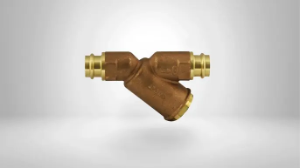
Y strainers are essential components in fluid systems, designed to remove solid particles and debris from the flow of liquids. They feature a Y-shaped body with a screen or mesh that traps impurities, ensuring that only clean fluids pass through. Y strainers are widely used in various industries to protect equipment, valves, and pipelines from potential damage caused by contaminants.

$324.94$464.00
Subject to factory lead times
$1,855.09$2,649.00
Subject to factory lead times
$1,050.45$1,500.00
Subject to factory lead times
$2,072.19$2,959.00
Subject to factory lead times
$3,486.79$4,979.00
Subject to factory lead times
$460.10$657.00
Subject to factory lead times
$1,194.01$1,705.00
Subject to factory lead times
$4,313.15$6,159.00
Subject to factory lead times
$7,725.71$11,032.00
Subject to factory lead times
$267.51$382.00
Subject to factory lead times
$1,014.03$1,448.00
Subject to factory lead times
$195.38$279.00
Subject to factory lead times
$324.94$464.00
Subject to factory lead times
$1,855.09$2,649.00
Subject to factory lead times
$1,050.45$1,500.00
Subject to factory lead times
$2,072.19$2,959.00
Subject to factory lead times
$3,486.79$4,979.00
Subject to factory lead times
$460.10$657.00
Subject to factory lead times
$1,194.01$1,705.00
Subject to factory lead times
$4,313.15$6,159.00
Subject to factory lead times
$7,725.71$11,032.00
Subject to factory lead times
$267.51$382.00
Subject to factory lead times
$1,014.03$1,448.00
Subject to factory lead times
$195.38$279.00
Subject to factory lead times
- Y-strainers and basket strainers both remove solid debris from pipelines to protect downstream equipment, but they differ in design, capacity, and application fit. A Y-strainer has a compact, angled body with a cylindrical screen element oriented at an angle to the flow path — debris collects in the screen leg, which has a blowdown valve or cap for cleaning. Y-strainers are the standard choice for steam, gas, and liquid applications where space is limited, the debris load is light to moderate, and the strainer can be cleaned during scheduled shutdowns. They can be installed horizontally or vertically and are widely used ahead of steam traps, control valves, and pressure regulators. A basket strainer has a larger housing with a removable basket screen that captures debris in a vertical or angled chamber. Basket strainers offer significantly more screen area and dirt-holding capacity than Y-strainers of the same pipe size, making them the better choice for applications with heavier debris loads, larger pipe sizes, or where longer intervals between cleaning are desired. Duplex basket strainers include two baskets in parallel with a diverter valve, allowing one basket to be cleaned while the other remains in service — providing continuous, uninterrupted flow.
- Strainers should be installed upstream of any equipment that is vulnerable to damage from solid debris in the pipeline. The most common and critical installation points are ahead of pumps (to prevent impeller damage and seal failure from pipe scale, welding slag, and foreign objects), ahead of control valves and pressure reducing valves (to protect precision seats and trim from scoring and blockage), ahead of steam traps (to keep debris from lodging in the trap orifice and causing it to fail open or closed), ahead of flow meters and instruments (to prevent fouling of sensing elements and blockage of small ports), and ahead of heat exchangers (to prevent tube fouling and blockage that reduces heat transfer efficiency). In new piping systems, temporary startup strainers with finer mesh screens are often installed during commissioning to capture construction debris, welding slag, and pipe scale that are loosened during initial flow — these are replaced with permanent operating strainers once the system has been flushed clean.
- Strainer screen selection depends on what you are protecting downstream and the size of the particles that could cause damage. Strainer screens are available as perforated plate (with round holes of a specific diameter) or as wire mesh (with openings defined by mesh count). Perforated screens are more rugged and handle higher pressure differentials — common perforation sizes range from 1/32 inch (approximately 800 microns) to 1/8 inch (approximately 3,200 microns). Wire mesh screens provide finer filtration — available from 20 mesh (approximately 840 microns) down to 325 mesh (approximately 44 microns). For general pipeline protection of pumps and valves, a 1/32-inch perforated screen is the standard starting point. For finer protection of instruments, small control valves, and steam traps, finer mesh screens may be needed. Always balance the mesh fineness against pressure drop and cleaning frequency — a finer screen captures smaller particles but loads up faster, creating higher differential pressure and requiring more frequent cleaning. The downstream equipment manufacturer's recommendations are the best guide for the maximum particle size their equipment can tolerate.
- Strainer body and screen material must match the process fluid, temperature, and pressure. Cast iron is the economical choice for general water, steam, and non-corrosive service at moderate pressures and temperatures — it is widely used in HVAC, building mechanical, and utility applications. Carbon steel handles higher pressures and temperatures than cast iron and is the standard for steam systems, oil and gas, and general industrial piping. Stainless steel (304 and 316) is specified for corrosive chemicals, food and beverage, pharmaceutical, and marine applications where carbon steel or cast iron would corrode. Bronze is common in smaller sizes for potable water, marine, and general-purpose applications. For the screen element, 304 stainless steel is the most common material regardless of body material — it provides good corrosion resistance and mechanical strength. For highly corrosive fluids, 316 stainless steel or Monel screens may be required. The strainer must also be rated for the line pressure and temperature — verify the ASME pressure class (150, 300, 600, etc.) matches your system requirements.
- The most reliable way to determine when a strainer needs cleaning is to monitor the differential pressure across it. Install a differential pressure gauge or transmitter that measures the pressure difference between the strainer inlet and outlet. When the strainer screen is clean, the differential pressure is low (typically less than 1–2 psi for liquids). As the screen captures debris, the openings become progressively blocked, restricting flow and increasing the differential pressure. When the differential pressure reaches the manufacturer's recommended maximum — or a facility-defined threshold based on the acceptable flow restriction — the strainer should be cleaned. Operating beyond the recommended maximum risks screen collapse or deformation, bypass of contaminants around the screen seal, and excessive pressure drop that starves downstream equipment. Some facilities install high differential pressure alarms that alert operators when cleaning is needed. For duplex basket strainers, the differential pressure reading triggers switching flow to the clean basket while the loaded basket is removed and cleaned. In the absence of instrumentation, establish a time-based inspection schedule and adjust the interval based on observed debris accumulation.