
Liquid Filtration
Centro offers a comprehensive online selection of liquid filtration products, including industrial strainers, bag filters, and cartridges. Our range of cartridges covers diverse needs and industries, and we also pr...

Bag filters and vessels are filtration systems used to remove particulate contaminants from gas or liquid streams. They employ specially designed bags or cartridges to capture solid particles, ensuring clean and purified fluids. Bag filters and vessels find applications in industries such as water treatment, oil and gas, chemical processing, or food and beverage. They provide effective filtration, protecting equipment, improving product quality, and maintaining environmental compliance.

Cartridge filters and vessels are filtration systems used to remove impurities and contaminants from liquid or gas streams. They employ replaceable cartridges with various filtration media to achieve specific filtration requirements. Cartridge filters and vessels are utilized in industries such as pharmaceuticals, food and beverage, water treatment, or industrial processes. They offer efficient and reliable filtration, ensuring product purity, equipment protection, and compliance with quality standards.

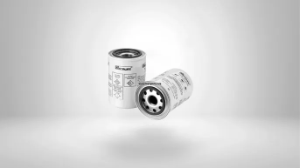
Hydraulic and lube oil systems are essential for the operation of machinery and equipment in various industries, including manufacturing, construction, or transportation. They provide lubrication, cooling, and hydraulic power transmission, ensuring smooth and efficient operation. Hydraulic and lube oil systems consist of pumps, reservoirs, filters, valves, and associated accessories. They offer reliable and precise control, enhancing equipment performance, and prolonging component lifespan.
$6.37
Subject to factory lead times
$13.42
Subject to factory lead times
$11.08
Subject to factory lead times
$20.60
Subject to factory lead times
$29.28
Subject to factory lead times

$1.10$1.40

$18.50
$2.08$4.75
$3.68

Subject to factory lead times
$617.59
Subject to factory lead times

$5.15$6.75
Subject to factory lead times
$6.37
Subject to factory lead times
$13.42
Subject to factory lead times
$11.08
Subject to factory lead times
$20.60
Subject to factory lead times
$29.28
Subject to factory lead times
$1.10$1.40
$18.50
$2.08$4.75
$3.68
Subject to factory lead times
$617.59
Subject to factory lead times
$5.15$6.75
Subject to factory lead times
- The choice depends on the contaminant load, required micron rating, flow volume, and cost sensitivity of your application. Bag filters are the better choice for applications with higher particulate concentrations, larger particle sizes (5–200 microns), and high flow rates where cost per gallon filtered is the priority — they handle heavy dirt loads, are quick and easy to change, and the consumable cost per bag is low. Common bag filter applications include water treatment, paint and coatings, chemical processing, and food and beverage pre-filtration. Cartridge filters are the better choice when finer filtration is required (sub-micron to 25 microns), when higher efficiency and tighter particle cut-off are needed, or when the application involves polishing filtration after a coarser upstream filter. Cartridges provide more filtration surface area per unit of housing space, resulting in longer service life between changes in applications with lighter contaminant loads. Many systems use both in series — a bag filter as a pre-filter to handle the bulk of the contaminants, followed by a cartridge filter for final polishing.
- Liquid filter bags come in standardized sizes designated #1 through #4, with each size corresponding to a specific diameter and length that fits into a matching filter housing. The most common sizes are: #2 bag (7 inches diameter by 32 inches long) — the most widely used general-purpose size, fitting into compact single-bag housings ideal for moderate flow rates; #1 bag (7 inches diameter by 16–18 inches long) — approximately half the length of a #2, used where headroom is limited or flow rates are lower; and #4 bag (4 inches diameter by 14 inches long) — the smallest standard size for low-flow applications. The correct size depends on the required flow rate, the available physical space for the housing, and the desired service life between bag changes. Larger bags hold more dirt and last longer between changes. Bag filter media options include felt (polypropylene, polyester, Nomex), woven mesh (nylon monofilament), and specialty materials, available in micron ratings from 1 to 1500 microns. Select the bag media based on chemical compatibility, temperature, and required particle capture efficiency.
- A coalescing filter separates emulsified oil, grease, and other immiscible liquids from water by forcing the contaminated stream through a specialized media that causes tiny, dispersed oil droplets to merge (coalesce) into larger droplets. The small oil droplets in an oil-water emulsion are too fine to separate by gravity alone — they remain suspended in the water. As the emulsion passes through the coalescing media (typically a fibrous or composite element with a specific pore structure), the oil droplets contact the media fibers and progressively combine into larger and larger droplets. Once the coalesced oil droplets exit the media, they are large enough to separate from the water by gravity and rise to the surface for skimming or collection. Coalescing filters are used in wastewater treatment, condensate polishing, process water recycling, and anywhere oily water must be cleaned before discharge or reuse. They are a cost-effective, chemical-free method for reducing oil-in-water concentrations to levels that meet discharge permits and equipment protection requirements.
- Filtering viscous liquids presents unique challenges because high viscosity dramatically increases the pressure drop across the filter media, reduces flow rate, and can make standard filter elements impractical. To successfully filter viscous fluids, use filter elements with larger pore openings and greater open area — woven mesh bag filters or coarse-rated depth cartridges allow the thick fluid to pass through while still capturing the target contaminants. Pleated cartridge filters are often preferred over wound or melt-blown cartridges for viscous service because the pleated design maximizes the media surface area within the housing, reducing the velocity through the media and lowering the pressure drop. Heating the fluid before filtration can reduce viscosity significantly — even a moderate temperature increase may halve the viscosity and dramatically improve flow through the filter. Select a filter housing with generous inlet and outlet connections to minimize flow restriction, and size the housing with additional capacity (extra bags or cartridges) to keep the differential pressure within acceptable limits. Always calculate the expected pressure drop at the actual fluid viscosity and operating temperature, not just at room temperature.
- Food and beverage processing requires liquid filtration that meets strict food safety, regulatory, and product quality standards. All filter media, housings, gaskets, and O-rings that contact the product must be made from FDA-compliant materials — polypropylene, polyester, silicone, and 316L stainless steel are the most common choices. Filter housings are typically 316L stainless steel with sanitary tri-clamp connections and electropolished surfaces to eliminate crevices where bacteria can grow and to facilitate clean-in-place (CIP) procedures. Common applications include ingredient water filtration (removing sediment, chlorine, and microorganisms), syrup and sugar solution clarification, beer and wine polishing and stabilization, cooking oil filtration, and final product filtration to remove any remaining particulates before packaging. Micron ratings depend on the application — coarse pre-filtration at 25–100 microns for incoming water, 1–5 micron cartridge filtration for final product polishing, and 0.2–0.45 micron membrane filtration for microbiological control. All filter systems in food and beverage plants should comply with 3-A Sanitary Standards and support HACCP and FSMA food safety plan documentation.