
Controllers
Centro carries a complete selection of controllers available to purchase online. This includes Process Meters, Panel Meters, and PID controllers. Process Meters measure and control process variables such as tempera...
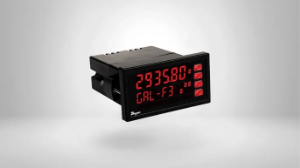
Panel meters and displays are instruments used to monitor and display various electrical or process parameters. They provide real-time measurement and visualization of parameters such as voltage, current, temperature, pressure, or flow rate. Panel meters and displays are available in different types, including analog meters, digital displays, or graphical interfaces, offering versatile options for different applications. They find extensive use in industrial control panels, machinery, electrical distribution systems, and monitoring stations, providing operators with crucial information for process control and troubleshooting.
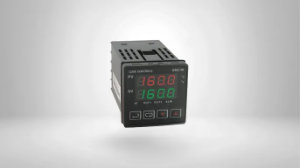
PID, which stands for Proportional-Integral-Derivative, refers to a control algorithm widely used in industrial automation and process control systems. PID controllers continuously analyze and adjust a system's control output based on feedback from sensors. They aim to minimize the error between the desired setpoint and the measured process variable by dynamically adjusting proportional, integral, and derivative terms. PID controllers are essential for maintaining stability, accuracy, and responsiveness in applications such as temperature control, pressure regulation, or speed control.

$53.84
Subject to factory lead times

$184.34
Subject to factory lead times

$439.94$477.17
Subject to factory lead times
$46.24
Subject to factory lead times
$523.64$567.96
Subject to factory lead times
$394.26$427.63
Subject to factory lead times

$494.12$535.94
Subject to factory lead times

$413.43$448.42
Subject to factory lead times
$289.75$314.27
Subject to factory lead times
$79.40
Subject to factory lead times

$109.83
Subject to factory lead times

$189.17
Subject to factory lead times
$53.84
Subject to factory lead times
$184.34
Subject to factory lead times
$439.94$477.17
Subject to factory lead times
$46.24
Subject to factory lead times
$523.64$567.96
Subject to factory lead times
$394.26$427.63
Subject to factory lead times
$494.12$535.94
Subject to factory lead times
$413.43$448.42
Subject to factory lead times
$289.75$314.27
Subject to factory lead times
$79.40
Subject to factory lead times
$109.83
Subject to factory lead times
$189.17
Subject to factory lead times
- Process controllers are devices that receive a measurement input from a sensor or transmitter, compare it to a setpoint, and generate an output signal to drive a final control element (valve, heater, pump, etc.). The main types include PID controllers (the industry standard for continuous process control — they use proportional, integral, and derivative algorithms to maintain the process variable at setpoint), process meters (display and monitor process variables with alarm outputs but may not have full PID control capability), and panel meters (display electrical signals — current, voltage, frequency — on a panel for operator visibility). Controllers are available as standalone DIN-rail or panel-mount units, or as software function blocks within a PLC or DCS.
- PID stands for Proportional-Integral-Derivative — three mathematical terms that together calculate the controller's output to minimize the error between the measured process variable and the desired setpoint. The Proportional term responds to the current error (how far the measurement is from setpoint), the Integral term responds to accumulated past error (correcting for persistent offset), and the Derivative term responds to the rate of change of error (dampening overshoot). PID control is the standard because it handles the vast majority of industrial process loops — temperature, pressure, flow, level — reliably and predictably. A well-tuned PID controller brings the process to setpoint quickly, with minimal overshoot, and holds it there despite disturbances. Most modern process controllers include auto-tuning features that automatically calculate optimal PID parameters for the specific loop.
- Start with the process requirements: what variable are you controlling (temperature, pressure, flow, level), what sensor type provides the input (thermocouple, RTD, 4–20 mA transmitter), and what type of output is needed to drive the final control element (4–20 mA analog, relay, SSR driver, pulse). Then consider the control mode — simple on/off control (sufficient for non-critical applications like tank heaters with wide deadbands), PID control (required for tight setpoint control), or more advanced control like cascade, ratio, or ramp/soak profiles (for complex processes like heat treatment or batch reactions). Physical format matters too — 1/16 DIN, 1/8 DIN, and 1/4 DIN sizes refer to the panel cutout dimensions and correspond to different display sizes and feature levels. Finally, verify communication options (RS-485, Modbus, Ethernet) if the controller needs to interface with a PLC, SCADA, or data logging system.
- A process meter measures, displays, and monitors a process variable — it accepts a sensor or transmitter input, shows the current value on a digital display, and can trigger alarm outputs when the value exceeds high or low thresholds. However, a process meter does not generate a modulating control output to drive a valve or heater — it is primarily an indicator and alarm device. A PID controller does everything a process meter does and adds closed-loop control — it continuously calculates and outputs a control signal (4–20 mA, relay, or SSR) to adjust the process and maintain the variable at setpoint. If your application only requires monitoring and alarming (e.g., displaying tank level with a high-level alarm), a process meter is sufficient and more cost-effective. If the application requires active control (e.g., maintaining furnace temperature at 350°F by modulating a gas valve), a PID controller is required.
- A ramp/soak profile is a programmed temperature (or other variable) trajectory that the controller follows over time — ramping the setpoint up or down at a defined rate, then holding (soaking) at a target value for a defined duration, then ramping to the next step. This is essential for processes where the rate of change matters as much as the final value — such as heat treatment (metallurgical tempering, annealing, stress relieving), ceramics firing, curing composites, pharmaceutical drying, and environmental test chambers. A controller with ramp/soak capability can store multi-step programs (e.g., ramp to 500°F at 5°F/minute, hold for 2 hours, ramp to 800°F at 3°F/minute, hold for 1 hour, cool to 200°F at 2°F/minute) and execute them automatically. Controllers vary in the number of steps and programs they can store — verify that the controller supports enough steps for your most complex process profile.