
Sanitary Fittings and Accessories
Sanitary pumps, valves, and accessories are specialized components designed for applications that require hygienic and sterile fluid handling, such as in the food and beverage, pharmaceutical, and biotech industrie...
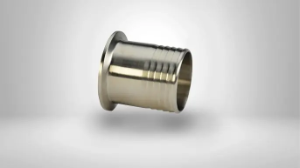
Sanitary fittings are specialized components used to connect, control, and direct the flow of fluids in hygienic process systems. Designed to meet strict cleanliness standards, these fittings are commonly used in industries such as food and beverage, pharmaceuticals, biotechnology, and cosmetics. Made from high-grade stainless steel, sanitary fittings feature smooth, crevice-free surfaces that prevent contamination and are easy to clean and sterilize.
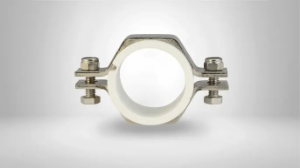
Sanitary fittings and heat exchangers are critical components in many industries where hygiene is a top priority. Food and beverage processing, pharmaceutical manufacturing, and biomedical research are just a few of the areas where these products are essential. Sanitary fittings help to ensure that there is no contamination between different parts of the system, and heat exchangers help to keep product temperatures consistent, preventing the growth of bacteria. Sanitary fittings are available in various materials, including stainless steel, brass, and plastic. At Centro, we carry a wide range of sanitary accessories available online. We also offer a range of sanitary heat exchangers, including shell, tube, plate, and frame models. Whether you're looking for a new fitting for your business or a replacement heat exchanger for your existing system, we have what you need. Please browse our website today.
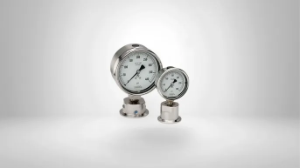
Sanitary gauges are specialized pressure measurement devices designed for use in hygienic or sanitary applications. They are commonly employed in industries such as food and beverage, pharmaceuticals, biotechnology, or dairy processing. Sanitary gauges feature a hygienic design with smooth surfaces, sanitary seals, and materials that meet stringent cleanliness and regulatory requirements. They provide accurate and reliable pressure measurements, ensuring process safety, product quality, and compliance with industry standards.
$8.43
Subject to factory lead times
$12.78
Subject to factory lead times
$17.67
Subject to factory lead times
$24.20
Subject to factory lead times
$30.15
Subject to factory lead times
$42.43
Subject to factory lead times
$7.95
Subject to factory lead times
$10.47
Subject to factory lead times
$13.82
Subject to factory lead times
$21.91
Subject to factory lead times
$29.16
Subject to factory lead times
$39.70
Subject to factory lead times
$6.42
Subject to factory lead times
$6.30
Subject to factory lead times
$7.91
Subject to factory lead times
$10.50
Subject to factory lead times
$13.67
Subject to factory lead times
$20.18
Subject to factory lead times
$5.11
Subject to factory lead times
$5.07
Subject to factory lead times
$4.98
Subject to factory lead times
$150.67
Subject to factory lead times
$194.67
Subject to factory lead times
$4.98
Subject to factory lead times
$8.43
Subject to factory lead times
$12.78
Subject to factory lead times
$17.67
Subject to factory lead times
$24.20
Subject to factory lead times
$30.15
Subject to factory lead times
$42.43
Subject to factory lead times
$7.95
Subject to factory lead times
$10.47
Subject to factory lead times
$13.82
Subject to factory lead times
$21.91
Subject to factory lead times
$29.16
Subject to factory lead times
$39.70
Subject to factory lead times
$6.42
Subject to factory lead times
$6.30
Subject to factory lead times
$7.91
Subject to factory lead times
$10.50
Subject to factory lead times
$13.67
Subject to factory lead times
$20.18
Subject to factory lead times
$5.11
Subject to factory lead times
$5.07
Subject to factory lead times
$4.98
Subject to factory lead times
$150.67
Subject to factory lead times
$194.67
Subject to factory lead times
$4.98
Subject to factory lead times
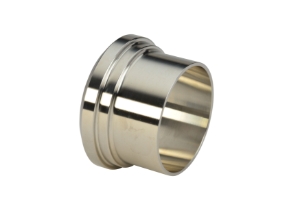
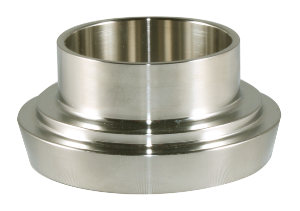
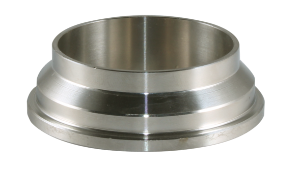
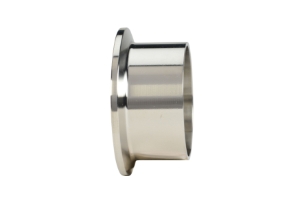
- Sanitary piping systems use a range of specialized fittings to connect, redirect, transition, and terminate pipe runs while maintaining the hygienic integrity of the system. Common types include sanitary elbows (45° and 90° bends to change pipe direction), sanitary tees (T-shaped fittings that create a branch off the main pipe run), sanitary reducers (concentric and eccentric styles that transition between different pipe sizes — eccentric reducers are preferred in sanitary systems because they maintain a flat bottom for complete drainage), sanitary ferrules (short tube sections with a flared end that forms the sealing surface for tri-clamp connections), sanitary caps and end plugs (to seal off unused pipe ends), and sanitary crosses (four-way fittings for complex routing). All sanitary fittings are made from 304 or 316L stainless steel with polished interior surfaces (typically 32 microinch Ra or better for product-contact surfaces) to prevent product buildup and ensure effective CIP cleaning. They are joined using tri-clamp connections with appropriate gaskets, or by orbital welding for permanent joints. Proper fitting selection ensures smooth flow paths, complete drainability, and no dead legs where product residue or bacteria can accumulate.
- A tri-clamp (also called tri-clover) connection is the most widely used joining method in sanitary process piping. It consists of three components: two ferrules (one welded to each pipe or component end, each with a flat, polished sealing face and a lip), a gasket placed between the ferrule faces to create the seal, and a clamp that wraps around the outside of both ferrule lips and is tightened with a single nut or knob to compress the joint. Tri-clamp connections became the sanitary industry standard because they offer several critical advantages over threaded, flanged, or welded connections. They can be assembled and disassembled quickly by hand without special tools, which is essential for frequent cleaning, inspection, and maintenance. The smooth, flat sealing surfaces and the gasket create a crevice-free, hygienic seal with no threads or gaps where product can accumulate and harbor bacteria. The system is self-aligning and provides consistent, repeatable sealing pressure. Tri-clamp connections are available in standard sizes from 1/2 inch to 12 inches and are rated for the pressures and temperatures typical of food, dairy, pharmaceutical, and biotech processing. Different clamp styles are available for different pressure ratings, including standard, high-pressure, and bolted designs.
- The gasket material in a tri-clamp or other sanitary connection is critical because it directly contacts the product and must withstand the temperatures, chemicals, and cleaning agents used in the process without degrading, leaching, or harboring bacteria. EPDM (ethylene propylene diene monomer) is the most common general-purpose sanitary gasket material — it offers excellent resistance to hot water, steam, CIP cleaning chemicals (caustic and acid solutions), and a temperature range from approximately -40°F to 300°F, making it ideal for most food, dairy, and beverage applications. Silicone gaskets handle higher temperatures (up to about 400°F) and are commonly specified in pharmaceutical and biotech applications where steam sterilization (SIP) is performed. Viton (FKM) gaskets provide superior chemical resistance to aggressive solvents, oils, and concentrated acids, and are used in chemical processing and applications involving fats and oils that would degrade EPDM. PTFE (Teflon) gaskets offer the broadest chemical compatibility of any sanitary gasket material and are virtually inert, but they are less compressible and may not seal as readily on worn or imperfect ferrule surfaces. Buna-N (nitrile) gaskets are used in applications involving petroleum-based products and oils. All sanitary gaskets should be FDA-compliant and meet USP Class VI or 3-A standards as required by the specific industry and application.
- While the terms are sometimes used interchangeably, sanitary fittings and sanitary accessories serve different roles in a hygienic process system. Sanitary fittings are the core structural components of the piping system itself — elbows, tees, reducers, ferrules, crosses, and caps that physically connect and route the pipes and tubes. They define the layout and flow path of the system. Sanitary accessories are the additional components that support the operation, monitoring, cleaning, and maintenance of the system. These include sanitary clamps and clamp hardware (that hold fittings together), gaskets (that seal the connections), sanitary pressure gauges (that monitor process pressure), sight glasses (that provide visual inspection of flow and product), spray balls and CIP devices (that clean the interior of tanks and vessels), sample valves (that allow operators to draw product samples for quality testing), and hangers and supports (that hold the piping in place). Heat exchangers, while technically standalone process equipment, are also grouped with sanitary accessories on some catalogs because they integrate directly into the sanitary piping system using the same fittings and connection standards. Together, fittings and accessories form a complete, hygienic, and functional process piping system.
- Surface finish is one of the most important specifications for sanitary fittings because it directly affects cleanability, corrosion resistance, and the ability of the system to meet hygiene standards. Surface finish is measured in microinch Ra (roughness average) — the lower the number, the smoother the surface. For most food, dairy, and beverage applications, 3-A Sanitary Standards require a product-contact surface finish of 32 microinch Ra (0.8 µm Ra) or better, which is achieved through mechanical polishing. This level of finish produces a smooth surface with minimal microscopic peaks and valleys where product residue and bacteria could lodge. Pharmaceutical and biotech applications often require even finer finishes — 20 microinch Ra (0.5 µm Ra) or 15 microinch Ra (0.38 µm Ra) — typically achieved through electropolishing, which uses an electrochemical process to remove a thin layer of surface metal, further smoothing the surface and creating a passive chromium-rich oxide layer that enhances corrosion resistance. The exterior surfaces of sanitary fittings are also polished for appearance and to facilitate external cleaning, though exterior finish requirements are typically less stringent than product-contact surfaces. When specifying sanitary fittings, always confirm the surface finish meets the requirements for your specific industry, product, and regulatory environment.