
Sanitary Equipment
Industrial sanitary equipment refers to products used in food, pharmaceutical, and other industries that require strict cleanliness and hygiene standards. This equipment includes hygienic valves, pumps, fittings, c...
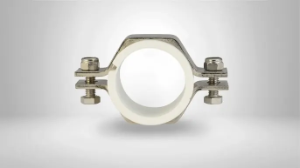
Sanitary pumps, valves, and accessories are specialized components designed for applications that require hygienic and sterile fluid handling, such as in the food and beverage, pharmaceutical, and biotech industries. These products are constructed with materials and designs that meet stringent sanitary standards to ensure contamination-free processes. Sanitary pumps transfer liquids or viscous products without compromising product integrity. Sanitary valves control and regulate fluid flow in sanitary systems, while accessories such as sanitary fittings, clamps, gaskets, and seals ensure proper connections and leak-free operations. These products maintain product purity, prevent cross-contamination, and comply with industry regulations, making them essential in sanitary processing environments.
$8.43
Subject to factory lead times
$12.78
Subject to factory lead times
$17.67
Subject to factory lead times
$24.20
Subject to factory lead times
$30.15
Subject to factory lead times
$42.43
Subject to factory lead times
$7.95
Subject to factory lead times
$10.47
Subject to factory lead times
$13.82
Subject to factory lead times
$21.91
Subject to factory lead times
$29.16
Subject to factory lead times
$39.70
Subject to factory lead times
$8.43
Subject to factory lead times
$12.78
Subject to factory lead times
$17.67
Subject to factory lead times
$24.20
Subject to factory lead times
$30.15
Subject to factory lead times
$42.43
Subject to factory lead times
$7.95
Subject to factory lead times
$10.47
Subject to factory lead times
$13.82
Subject to factory lead times
$21.91
Subject to factory lead times
$29.16
Subject to factory lead times
$39.70
Subject to factory lead times
- Sanitary equipment refers to hygienic valves, pumps, fittings, clamps, gaskets, gauges, heat exchangers, and other components specifically designed and manufactured for industries that require strict cleanliness and hygiene standards. These products are constructed with materials and surface finishes that prevent contamination, resist bacteria growth, and are easy to clean and sterilize — making them essential for processes where product purity and consumer safety are non-negotiable. The primary industries that require sanitary equipment include food and beverage processing (dairy, brewing, juice, bakery, meat processing), pharmaceutical manufacturing, biotechnology and biopharmaceutical production, cosmetics and personal care manufacturing, and medical device production. What sets sanitary equipment apart from standard industrial components is adherence to regulatory standards such as 3-A Sanitary Standards (which define hygienic design criteria for dairy and food equipment), FDA requirements for food-contact surfaces, and ASME BPE standards for bioprocessing equipment. Sanitary components are typically made from high-grade stainless steel (304 or 316L) with electropolished surfaces that minimize crevices, dead legs, and rough spots where product residue or bacteria could accumulate.
- Sanitary valves control and regulate fluid flow in hygienic process systems while maintaining the sterility and purity of the product being handled. Common types include sanitary butterfly valves (used for on/off and throttling applications in large-diameter pipelines — they feature a disc that rotates inside the flow path and are popular in food and beverage for their compact design and ease of cleaning), sanitary ball valves (provide tight shutoff with a full-bore or reduced-bore design — commonly used for isolation and diverting applications), sanitary diaphragm valves (isolate the fluid from all moving valve parts using a flexible diaphragm — these are the standard in pharmaceutical and biotech applications because there are no crevices or dead spaces for product to accumulate), and sanitary check valves (prevent backflow to protect upstream equipment and prevent cross-contamination between process stages). Sanitary valves use tri-clamp (tri-clover) connections for quick disassembly and cleaning, and are available in manual or automated configurations using pneumatic or electric actuators. The right valve type depends on the fluid properties, pressure and temperature requirements, cleaning protocol (CIP or COP), and regulatory standards for the specific industry.
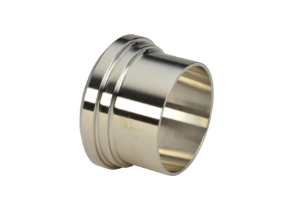
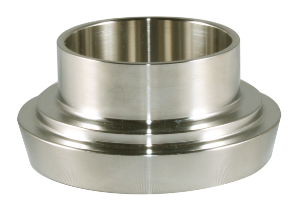
- Sanitary fittings are the connectors, adapters, and transition pieces used to join pipes, tubes, valves, pumps, and other components in a hygienic process piping system. They include elbows, tees, reducers, ferrules, caps, and cross fittings — all designed with smooth, crevice-free interior surfaces that prevent product buildup and contamination. Made from high-grade stainless steel (typically 304 or 316L), sanitary fittings feature polished interior and exterior surfaces to meet hygiene requirements in food and beverage, pharmaceutical, biotech, and cosmetics manufacturing. The most common connection style in sanitary systems is the tri-clamp (tri-clover) connection, which uses a ferrule welded to each pipe end, a gasket between the ferrules, and a clamp that holds the joint together. Tri-clamp connections allow fast, tool-free disassembly for cleaning, inspection, and maintenance — which is critical in facilities that perform frequent changeovers or Clean-in-Place (CIP) and Sterilize-in-Place (SIP) procedures. Other sanitary connection types include bevel seat fittings, John Perry fittings, and I-line connections. Properly selected and installed sanitary fittings ensure leak-free operation, product purity, and compliance with 3-A Sanitary Standards and FDA regulations.
- A sanitary gauge is a pressure measurement instrument specifically designed for use in hygienic processing applications where the gauge must come into direct contact with food, beverage, pharmaceutical, or biotech products. Unlike standard industrial pressure gauges, sanitary gauges are built with electropolished stainless steel housings and wetted parts, sanitary process connections (typically tri-clamp), and smooth, crevice-free surfaces that can be thoroughly cleaned and sterilized. Sanitary gauges that carry 3-A approval have been independently verified to meet the sanitary design criteria established by 3-A Sanitary Standards, Inc. — this means the materials, surface finish, and construction meet the requirements for dairy, food, and beverage processing where hygiene is critical. These gauges are essential anywhere in a sanitary process system where operators need to monitor pressure — such as on the inlet or discharge side of a pump, across a heat exchanger, at filter housings to track differential pressure and filter condition, or on process vessels and tanks. Using a non-sanitary gauge in a hygienic system creates a contamination risk because standard gauges have crevices, threads, and materials that cannot be adequately cleaned and may harbor bacteria or product residue.
- Sanitary heat exchangers are equipment used to transfer heat between two fluids without direct contact, designed to meet the strict hygiene requirements of food and beverage, pharmaceutical, dairy, and biotech processing. They are used for pasteurization (heating product to a specific temperature for a set time to kill harmful organisms), product cooling (bringing hot product down to safe or desired temperatures quickly), and process heating (raising product temperature for mixing, dissolving, or reaction purposes). The most common types in sanitary applications are plate-and-frame heat exchangers (which use a series of corrugated stainless steel plates with gaskets to create alternating channels for the product and heating/cooling media — they offer high heat transfer efficiency in a compact footprint and are easy to disassemble for inspection and cleaning) and shell-and-tube heat exchangers (which pass one fluid through a bundle of tubes while the other fluid flows around the outside of the tubes — these are better suited for higher pressures, higher temperatures, or products with particulates that could clog a plate exchanger). Sanitary heat exchangers are constructed from 316L stainless steel with polished product-contact surfaces and are designed for CIP (Clean-in-Place) compatibility to ensure thorough cleaning between production runs without disassembly.