
Level Control - ICON Process Controls
Level control is essential for many industrial and commercial applications, ranging from simple water tanks to complex chemical processing systems. Industrial applications often require control to maintain safe and...

Liquid level control measures and manages the level of liquids in tanks, sumps and vessels. Reliable level control prevents overflows, protects pumps and keeps inventory and processes running smoothly.
Liquid Level Products
- Float switches – simple point level control
- Level switches and sensors – vibrating, optical and capacitive
- Level transmitters – continuous measurement
- Radar level – non-contact continuous level
- Differential pressure level – pressurized vessels
Choosing a Solution
Decide between point and continuous measurement, then consider liquid properties, tank conditions and mounting. Many tanks use a transmitter for control plus a separate high-level switch for safety.
Centro supplies liquid level control instruments for water, wastewater and process tanks.
Shop by type: Float Switches | Level Transmitters | Float Switch | Radar | Differential Pressure Control | Level Switches | Level Sensors | Water Gauges
Related categories: Level Control | Bulk Solids

Liquid level radar products are devices that use radar technology to provide accurate and reliable measurements, even in challenging conditions such as high temperatures, pressures, and with corrosive or volatile liquids. Unlike traditional methods, radar level sensors are non-contact, meaning they do not touch the liquid, reducing the risk of contamination and wear. They are widely used in industries like oil and gas, water treatment, and chemical processing for their precision and durability. With real-time data and minimal maintenance requirements, liquid level radar products help optimize operations, improve safety, and ensure efficient inventory management. Share your tank height, media and process conditions, and our team will recommend a radar transmitter and antenna that gives a stable reading in your vessel.
Related categories: Liquid Level | Differential Pressure Control | Float Switch | Level Switches | Level Transmitters

Liquid level sensors detect or measure liquid in tanks and containers. They support pump control, inventory tracking and overfill protection.
Sensor Types
- Ultrasonic sensors – non-contact continuous level
- Capacitive sensors – point and continuous level
- Optical sensors – compact point detection
- Submersible pressure sensors – hydrostatic level
- Float sensors – simple, dependable
Choosing a Sensor
Consider liquid type, tank size, mounting and the output you need. Foam, vapor and buildup affect some technologies.
Centro supplies liquid level sensors.
Related categories: Liquid Level | Water Gauges | Level Switches | Differential Pressure Control | Radar
A float switch is a simple, dependable way to monitor liquid level and automate pumps and alarms. As the liquid rises or falls, the float moves and opens or closes a circuit at the set point, with no complex setup or programming.
Common Uses
- Pump control – start and stop sump, lift station and transfer pumps
- High and low alarms – prevent overflows and dry running
- Tank filling – control solenoid valves and fill pumps
- Leak detection – sense water in pans and basements
Choosing a Float Switch
Select the mounting style that fits your tank (top, side or cable-suspended) and a float material compatible with the liquid, such as polypropylene, stainless or PVDF. Check the switch rating against your load and use a relay for larger pumps. Specific gravity affects how well the float works.
Centro offers float switches in many materials and styles for water, wastewater and chemical tanks.
Related categories: Liquid Level | Radar | Level Transmitters | Differential Pressure Control | Float Switches

Level transmitters give a continuous reading of how full a tank, vessel or silo is, usually as a 4-20 mA or digital signal sent to your PLC, display or SCADA system. That live reading supports inventory tracking, pump control, overfill prevention and batching.
Level Transmitter Technologies
- Radar – non-contact, unaffected by vapor, temperature or pressure
- Ultrasonic – economical non-contact measurement for water and wastewater
- Hydrostatic (submersible and flange-mount) – measure level from liquid head pressure
- Guided wave radar – reliable in foam, turbulence and interface applications
- Magnetostrictive and float – high-accuracy level for custody and inventory
Choosing a Transmitter
Look at the media, tank height, temperature, pressure and any foam, vapor, agitation or buildup. Non-contact radar and ultrasonic avoid wetted parts, while hydrostatic sensors are simple and cost-effective in open tanks. Check the process connection, output and hazardous area approvals.
Centro's instrumentation team can help you pick a level transmitter that handles your tank conditions reliably.
Related categories: Liquid Level | Float Switch | Float Switches | Radar | Differential Pressure Control
Configure product to see pricing
Configure product to see pricing

Configure product to see pricing
Configure product to see pricing

Configure product to see pricing
Configure product to see pricing

Configure product to see pricing
Configure product to see pricing

Configure product to see pricing
Configure product to see pricing

Configure product to see pricing
Configure product to see pricing
Configure product to see pricing
Configure product to see pricing

Configure product to see pricing
Configure product to see pricing

Configure product to see pricing
Configure product to see pricing

Configure product to see pricing
Configure product to see pricing
Configure product to see pricing
Configure product to see pricing
Subject to factory lead times
$535.35
Subject to factory lead times
$31.77
Subject to factory lead times
$856.79
Subject to factory lead times
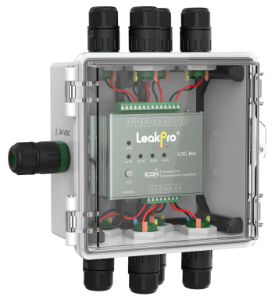
$1,199.71$1,299.65
Subject to factory lead times
Subject to factory lead times
$74.63
Subject to factory lead times
$267.81
Subject to factory lead times
$267.81
Subject to factory lead times
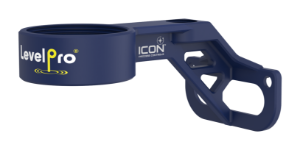
$119.96$129.95
Subject to factory lead times

$119.96$129.95
Subject to factory lead times

$119.96$129.95
Subject to factory lead times
$171.06
Subject to factory lead times
Configure product to see pricing
Configure product to see pricing
Configure product to see pricing
Configure product to see pricing
Configure product to see pricing
Configure product to see pricing
Configure product to see pricing
Configure product to see pricing
Configure product to see pricing
Configure product to see pricing
Configure product to see pricing
Configure product to see pricing
Configure product to see pricing
Configure product to see pricing
Configure product to see pricing
Configure product to see pricing
Configure product to see pricing
Configure product to see pricing
Configure product to see pricing
Configure product to see pricing
Configure product to see pricing
Configure product to see pricing
Subject to factory lead times
$535.35
Subject to factory lead times
$31.77
Subject to factory lead times
$856.79
Subject to factory lead times
$1,199.71$1,299.65
Subject to factory lead times
Subject to factory lead times
$74.63
Subject to factory lead times
$267.81
Subject to factory lead times
$267.81
Subject to factory lead times
$119.96$129.95
Subject to factory lead times
$119.96$129.95
Subject to factory lead times
$119.96$129.95
Subject to factory lead times
$171.06
Subject to factory lead times
- Monitoring and controlling liquid level in a tank requires a level sensor or transmitter paired with a controller, PLC, or alarm system. The first decision is whether you need point level detection (knowing when the level hits a specific high or low threshold — for alarms or pump control) or continuous level measurement (knowing the actual level height at all times — for inventory tracking or closed-loop control). For point level, float switches are the simplest and most cost-effective option — a buoyant float actuates a switch when the liquid reaches a set point. Vibrating fork switches are a good alternative when the liquid is viscous or foaming. For continuous measurement, ultrasonic transmitters work well in open atmospheric tanks with clean liquids, radar transmitters handle pressurized vessels, vapors, and foam, and differential pressure transmitters are the traditional choice for high-pressure or high-temperature vessels. The level signal is sent to a PLC or controller that operates inlet/outlet valves or pump starts/stops to keep the level within the desired range.
- Level measurement technologies fall into two categories: point level (detecting when the level reaches a specific threshold — high, low, or intermediate) and continuous level (measuring the actual level height across the full range). Common point level technologies include float switches (a buoyant float actuates a switch at a set level — simple, reliable, and low-cost), vibrating fork switches (a tuning fork vibrates at its natural frequency in air and dampens when immersed in liquid), and capacitance point switches. Common continuous level technologies include ultrasonic (measures distance to the liquid surface using sound waves — non-contact, works well for open tanks), radar and guided wave radar (uses microwave pulses — handles high temperatures, pressures, and vapors), differential pressure transmitters (infer level from hydrostatic pressure — the traditional workhorse for pressurized vessels), magnetostrictive float-based systems, and capacitance/admittance transmitters. The right choice depends on the media (clean liquid, slurry, foam, solids), vessel conditions (temperature, pressure, agitation), accuracy requirements, and budget.
- A float switch uses a buoyant float attached to or enclosing a mechanical or magnetic switch mechanism. As the liquid level rises, the float rises with it; when it reaches the switch actuation point, the switch changes state (opens or closes a circuit), sending a discrete signal to the control system. Float switches are the simplest and most widely used point-level devices — they are reliable, inexpensive, require no power supply for mechanical types, and work in a wide range of liquids. Common applications include high-level and low-level alarms on storage tanks, sump pump control (turning the pump on when level rises and off when it falls), coolant reservoir monitoring, and condensate tank level switching. Limitations include susceptibility to fouling in viscous or coating liquids, and they are not suitable for applications with heavy turbulence or foam. For these challenging conditions, vibrating fork or capacitance-based switches are more appropriate.
- Both ultrasonic and radar are non-contact continuous level measurement technologies, but they perform differently in various conditions. Ultrasonic level transmitters are cost-effective and work well in atmospheric tanks with clean liquids and moderate temperatures — they are the standard choice for water and wastewater tanks, chemical storage, and open vessels. However, ultrasonic performance degrades in heavy vapor, dust, foam, and extreme temperatures because sound waves are affected by the medium they travel through. Radar (non-contact and guided wave) uses electromagnetic waves that are unaffected by temperature, pressure, vapor, or dust — making radar the better choice for pressurized vessels, high-temperature processes, tanks with heavy vapor blankets, and media that produce foam or surface turbulence. Guided wave radar (a probe that contacts the media) provides excellent accuracy and reliability in narrow vessels, still wells, and applications with low dielectric liquids. Radar instruments are typically more expensive than ultrasonic, so ultrasonic remains the preferred choice where conditions allow.
- Differential pressure (DP) level measurement uses a DP transmitter to infer the liquid level in a tank based on the hydrostatic pressure exerted by the liquid column. The transmitter measures the pressure difference between the bottom of the tank (where the liquid column creates pressure proportional to its height) and the top of the tank (the reference or vapor space pressure). Since pressure increases linearly with liquid height (P = ρ × g × h), the DP reading is directly proportional to level. DP level measurement is the traditional workhorse for pressurized and vacuum vessels where non-contact technologies may not perform well, and it remains widely used in oil and gas, chemical, pharmaceutical, and power generation applications. It is well-suited for high-temperature, high-pressure vessels and can handle a wide range of media. Limitations include the need for impulse piping (or remote diaphragm seals for corrosive or viscous media), and it requires the specific gravity of the liquid to remain relatively constant for accurate measurement.