
Pumps - Innomag/Flowserve
Industrial pumps move liquids from one place to another, whether you’re handling water, chemicals, or thick, heavy fluids. Most pumps fall into one of two main categories: positive-displacement pumps and cen...

Non-metallic mag-drive centrifugal pumps handle corrosive chemicals with no seal and no metal in contact with the fluid. Plastic and fluoropolymer construction resists acids, caustics and plating solutions.
Features
- Leak-free magnetic coupling – no seal to fail
- Polypropylene, PVDF and ETFE – broad chemical resistance
- Compact designs – OEM and process systems
- Low maintenance – no seal flush required
Choosing a Pump
Provide chemical, temperature, flow and head. Protect from dry running and solids. Non-metallic pumps have temperature limits, so verify for hot fluids.
Centro supplies non-metallic mag-drive pumps for corrosive chemicals.
Related categories: Sealless Mag-Drive Pumps | Metallic Mag-Drive Gear Pumps | Metallic Centrifugal

Sealless magnetic drive pumps transfer fluids without a mechanical seal, so there are no leaks. A magnetic coupling transmits torque through a sealed containment shell, keeping hazardous fluids fully contained.
Mag-Drive Pump Types
- Metallic centrifugal – stainless and alloy for higher pressures
- Non-metallic centrifugal – plastic and lined for corrosive chemicals
- Metallic and non-metallic gear pumps – precise transfer and metering
Choosing a Pump
Provide fluid, flow, head, temperature, viscosity and specific gravity. Protect against dry running with power monitors. Avoid large solids unless the pump is designed for them.
Centro supplies sealless mag-drive pumps for leak-free chemical handling.
Shop by type: Metallic Centrifugal | Non-Metallic Centrifugal | Metallic Mag-Drive Gear Pumps
Related categories: Pumps | Pump Control System Applications | Trash Pumps | Centrifugal Metallic/Non-Metallic Sealed Pumps
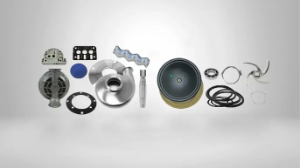
Keeping pumps in good repair costs far less than unplanned downtime. Pump parts and servicing covers the seals, bearings, impellers and wear parts that wear out with normal use, along with the expertise to rebuild pumps to like-new condition.
Common Pump Parts
- Mechanical seals and packing – stop leaks at the shaft
- Bearings and bearing frames – restore smooth, quiet operation
- Impellers, casings and wear rings – recover lost flow and efficiency
- Diaphragms, valves and balls – rebuild kits for AODD and metering pumps
- Couplings and baseplates – keep pump and motor aligned
When to Service a Pump
Warning signs include leaking seals, rising vibration or noise, higher motor amps, falling discharge pressure and overheating bearings. Keeping the pump's model and serial number on record makes ordering parts much faster. Planned rebuilds during shutdowns keep surprises to a minimum.
Centro supplies pump parts and repair services for many pump brands, from small metering pumps to large process pumps.
Related categories: Pumps | Pump Repair | Peristaltic/Hose Pumps
$4,626.76
Subject to factory lead times

$10,924.07
Subject to factory lead times
$12,953.91
$22,358.93
$21,035.39
$250.25$308.00
$2,151.65
$5,005.50
$3,514.88$4,326.00
$10,924.07
Subject to factory lead times
$7,631.09
$11,047.93
$18,407.76
$19,722.09
Subject to factory lead times
$9,210.53
Subject to factory lead times
$24,981.45
Subject to factory lead times
$22,352.79
Subject to factory lead times
$6,104.87
Subject to factory lead times
$7,870.61
$9,396.83
$9,396.83
Subject to factory lead times
$9,396.83
$10,081.63
$9,767.38
Subject to factory lead times
$4,626.76
Subject to factory lead times
$10,924.07
Subject to factory lead times
$12,953.91
$22,358.93
$21,035.39
$250.25$308.00
$2,151.65
$5,005.50
$3,514.88$4,326.00
$10,924.07
Subject to factory lead times
$7,631.09
$11,047.93
$18,407.76
$19,722.09
Subject to factory lead times
$9,210.53
Subject to factory lead times
$24,981.45
Subject to factory lead times
$22,352.79
Subject to factory lead times
$6,104.87
Subject to factory lead times
$7,870.61
$9,396.83
$9,396.83
Subject to factory lead times
$9,396.83
$10,081.63
$9,767.38
Subject to factory lead times
- Flow (GPM) + total dynamic head (TDH), fluid details (chemistry, temp, solids/viscosity), suction conditions (NPSHa), desired materials, seal type, driver/voltage, connection sizes, and duty cycle.
- The total head the pump must overcome: static lift + discharge head + pressure requirements + friction losses in pipe/fittings/valves/filters, adjusted for fluid density.
- Centrifugal for higher flow/low–moderate viscosity and smoother operation; positive displacement for high viscosity, accurate metering, higher pressures, or when flow must stay steady as pressure changes.
- ANSI process pumps are for clean/process fluids and standard chemical-duty applications; self-priming trash pumps are built to handle air entrainment and larger solids for dewatering/wastewater.
- Match wetted materials to the fluid chemistry, temperature, and abrasiveness (e.g., 316 SS for corrosion resistance; ductile iron for general service; hardened materials/coatings for abrasion).
- Often yes on the discharge side to control flow (within limits), but avoid deadheading too long (heat buildup); never throttle suction, use a valve only for isolation.
- VFD speed control is usually most efficient; throttling works but wastes energy; bypass recirculation may be needed to maintain minimum flow.
- Use viscosity-corrected curves or consider positive displacement; expect reduced flow/increased power and ensure suction piping supports high-viscosity feeding.
- Define solids size, concentration, hardness, and shape; choose solids-handling hydraulics, slower speeds, abrasion-resistant materials, and appropriate clearances.
- Select compatible metallurgy/coatings, control pH/chemistry, reduce velocity in corrosive service, manage solids, and use wear parts designed for abrasion.
- Alignment, lubrication, seal support/flush checks, strainer cleaning, vibration/temperature monitoring, and verifying operation near BEP and above minimum flow.
- Best Efficiency Point is where the pump runs most efficiently with lowest vibration; aim to operate near BEP to improve seal/bearing life and reduce energy cost.