
Instrumentation, Measurement and Control - Georg Fischer Signet
Instrumentation refers to devices that measure or control physical variables such as temperature, level, flow, or pressure. These products are essential in the industry because they allow for maximum output with mi...

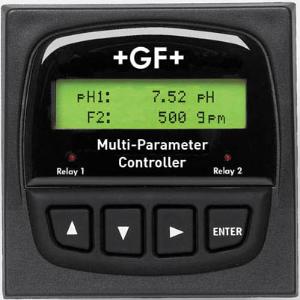
Centro offers a wide range of flow, pH, and conductivity meters, transmitters, and controllers to meet the demands of various industrial and commercial applications. From monitoring flow rates and maintaining chemical balance for fluid quality and consistency, our solutions are engineered for precision, reliability, and seamless integration. We provide products such as magnetic and ultrasonic flow meters, pH controllers, and conductivity transmitters designed to optimize performance in industries like water treatment, food and beverage, chemical processing, and pharmaceuticals.
Whether you need accurate measurements, durable equipment, or easy system integration, Centro has the expertise and products to support your operations. Explore our selection online or contact our team to find the right solution for your application and ensure peak system efficiency.
Explore our comprehensive range of Flow Control products, featuring precision instruments such as flow meters, flow switches, flow transmitters, and flow sensors. Our offerings cater to diverse applications, ensuring accurate and efficient monitoring of fluid flow. Whether you require precise measurement, reliable switching, or advanced sensing capabilities, our Flow Control products provide the necessary solutions. Enhance your system's performance and maintain optimal fluid dynamics with our high-quality and versatile flow control solutions.
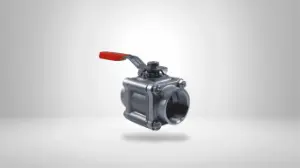
Centro offers a reliable selection of ball valves or flow control valves designed for smooth operation and long-lasting performance in a wide range of applications. These quarter-turn valves provide tight shutoff capabilities, making them ideal for use in fluid systems requiring low torque and minimal leakage.
Ball Valves are available in a variety of materials including brass, stainless steel, and PVC, our solutions support industrial needs. Whether you're managing water, oil, gas, or chemical flow, Centro's valve options ensure durability and precise control.
With configurations ranging from full port to reduced port and options for 1-piece, 2-piece, and 3-piece designs, we provide flexibility for everything from general plumbing to high-pressure industrial systems.
Explore our complete range of ball valves to find the right fit for your application or contact our experts for personalized guidance.
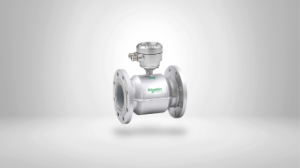
Flow meters are a piece of essential equipment for many industries, as they allow for accurately measuring fluid flow rates. At Centro, we carry a complete online selection of flow meters, including magnetic flow meters, turbine flow meters, and positive displacement flow meters. We also offer a variety of accessories and replacement parts to ensure that your flow meter always operates at peak efficiency. Whether you're looking for a new flow meter or need to restock your supplies, Centro has everything you need to keep your operation running smoothly.
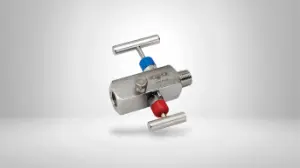
Valve accessories are additional components that enhance the functionality and performance of valves in fluid control systems. These accessories are designed to provide other features, improve safety, or simplify maintenance of the valves. Valve accessories enhance the reliability, efficiency, and safety of valve operations, making them essential for various industries such as oil and gas, chemical processing, water treatment, and power generation.

$1,937.59$2,183.00
Subject to factory lead times

$454.45$512.00
Subject to factory lead times
$513.03$578.00
Subject to factory lead times
$915.99$1,032.00
Subject to factory lead times
$1,622.50$1,828.00
Subject to factory lead times
$903.56$1,018.00
Subject to factory lead times
$458.00$516.00
Subject to factory lead times
$513.03$578.00
Subject to factory lead times
$954.15$1,075.00
Subject to factory lead times
$869.83$980.00
Subject to factory lead times
$51.48$58.00
Subject to factory lead times
$1,271.97
Subject to factory lead times
$24.86$28.00
Subject to factory lead times
$87.88$99.00
Subject to factory lead times
$36.40$41.00
Subject to factory lead times
$36.40$41.00
Subject to factory lead times

$821.90$926.00
Subject to factory lead times

$1,626.94$1,833.00
Subject to factory lead times
$821.90$926.00
Subject to factory lead times

$2,599.73$2,929.00
Subject to factory lead times
$2,802.98$3,158.00
Subject to factory lead times
$2,309.49$2,602.00
Subject to factory lead times
$2,575.76$2,902.00
Subject to factory lead times
$2,491.44$2,807.00
Subject to factory lead times
$1,937.59$2,183.00
Subject to factory lead times
$454.45$512.00
Subject to factory lead times
$513.03$578.00
Subject to factory lead times
$915.99$1,032.00
Subject to factory lead times
$1,622.50$1,828.00
Subject to factory lead times
$903.56$1,018.00
Subject to factory lead times
$458.00$516.00
Subject to factory lead times
$513.03$578.00
Subject to factory lead times
$954.15$1,075.00
Subject to factory lead times
$869.83$980.00
Subject to factory lead times
$51.48$58.00
Subject to factory lead times
$1,271.97
Subject to factory lead times
$24.86$28.00
Subject to factory lead times
$87.88$99.00
Subject to factory lead times
$36.40$41.00
Subject to factory lead times
$36.40$41.00
Subject to factory lead times
$821.90$926.00
Subject to factory lead times
$1,626.94$1,833.00
Subject to factory lead times
$821.90$926.00
Subject to factory lead times
$2,599.73$2,929.00
Subject to factory lead times
$2,802.98$3,158.00
Subject to factory lead times
$2,309.49$2,602.00
Subject to factory lead times
$2,575.76$2,902.00
Subject to factory lead times
$2,491.44$2,807.00
Subject to factory lead times
- Selecting the right process instrument starts with defining four things: what variable you need to measure (temperature, pressure, flow, or level), the process conditions the instrument will face (media type, temperature range, pressure range, corrosiveness, and whether the environment is hazardous), the accuracy and response time your application requires, and how the measurement data needs to be communicated (local display only, 4–20 mA signal to a PLC/DCS, or digital protocol like HART or Modbus). For temperature, the choice between thermocouples, RTDs, and infrared sensors depends on the temperature range and accuracy needed. For pressure, gauge type, range, wetted materials, and whether you need local indication or a remote transmitter signal are the key decisions. For flow, the fluid properties (conductive liquid, gas, steam, slurry) determine whether a magnetic, ultrasonic, Coriolis, vortex, or variable-area meter is the best fit. For level, vessel conditions (open vs. pressurized, clean liquid vs. foam/solids) guide the choice between float switches, ultrasonic, radar, or differential pressure technologies. Centro's instrumentation specialists can help you match the right technology to your specific process conditions and budget.
- Accurate process instrumentation is the foundation of safe, efficient, and compliant operations. Every control loop — whether it manages boiler pressure, reactor temperature, tank level, or pipeline flow — depends on instruments that provide reliable, real-time measurements. If a temperature sensor reads inaccurately, a heater may overshoot and damage the product or create a safety hazard. If a level transmitter drifts, a tank may overflow or run dry. If a flow meter is undersized, the control system cannot maintain the correct feed rate. Beyond safety and quality, accurate instrumentation directly impacts energy consumption, raw material usage, and regulatory compliance. Calibrated, properly specified instruments reduce waste, prevent unplanned shutdowns, and provide the data required for regulatory reporting and quality documentation.
- A process control loop is a system that continuously measures a process variable, compares it to a desired setpoint, and adjusts an output to keep the variable at the setpoint. The loop consists of three elements: the sensor/transmitter (measures the variable — e.g., a thermocouple measuring temperature), the controller (compares the measurement to the setpoint and calculates a corrective output — typically a PID controller), and the final control element (adjusts the process — e.g., a control valve that opens or closes to change steam flow). Instruments are the eyes and ears of the loop — without accurate, responsive sensors and transmitters, the controller cannot make correct decisions, and the process drifts out of specification. The entire loop must be properly engineered as a system — sensor accuracy, transmitter range, controller tuning, and valve sizing must all be matched to the process requirements.
- Industrial instruments communicate with controllers and PLCs using standardized electrical signals. The 4–20 mA analog current loop is the most widely used signal in process instrumentation — it transmits a variable measurement as a proportional current (4 mA = zero/low range, 20 mA = full scale), and the current-based signal is resistant to voltage drop and electrical noise over long cable runs. The 0–10 V DC voltage signal is used in some HVAC and building automation applications but is more susceptible to noise and cable length limitations. Discrete (on/off) signals — from switches, relays, and transmitter alarm contacts — indicate threshold conditions like high level, low pressure, or flow/no-flow. Digital communication protocols — HART (layered on top of 4–20 mA for configuration and diagnostics), Foundation Fieldbus, PROFIBUS PA, and IO-Link — enable bidirectional communication between the instrument and the control system for advanced diagnostics, remote configuration, and multi-variable data.
- When instruments are installed in locations classified as hazardous (areas where flammable gases, vapors, or combustible dusts may be present), they must be approved for that classification to prevent ignition. Key considerations include the area classification (Class I for gases/vapors, Class II for dusts, with Division 1 for normally present hazards and Division 2 for abnormal conditions — or Zone 0/1/2 under ATEX/IECEx), the protection method (intrinsic safety, explosion-proof, non-incendive, or purged/pressurized), and the specific gas group and temperature class. Intrinsically safe (IS) instruments — used with IS barriers in the safe area — limit energy to levels too low to cause ignition and are the most common and practical approach for low-power sensors and transmitters. Explosion-proof enclosures contain any internal explosion and are used for higher-power devices. Always verify the instrument's certification (FM, CSA, ATEX, IECEx) matches the area classification before installation.