
Instrumentation, Measurement and Control - Georg Fischer Signet
Instrumentation refers to devices that measure or control physical variables such as temperature, level, flow, or pressure. These products are essential in the industry because they allow for maximum output with mi...
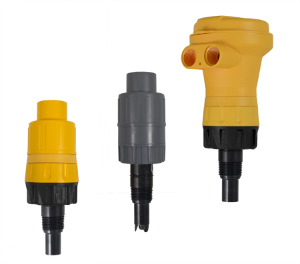
We offer a wide range of flow, pH, and conductivity meters, transmitters, and controllers to meet the demands of various industrial and commercial applications. From monitoring flow rates and maintaining chemical balance for fluid quality and consistency, our solutions are engineered for precision, reliability, and seamless integration. We provide products such as magnetic and ultrasonic flow meters, pH controllers, and conductivity transmitters designed to optimize performance in industries like water treatment, food and beverage, chemical processing, and pharmaceuticals.
Whether you need accurate measurements, durable equipment, or easy system integration, we have the expertise and products to support your operations. Explore our selection online or contact our team to find the right solution for your application and ensure peak system efficiency.
Related categories: Flow Control | Flow Control Accessories | Flow Sensors | Flow Meters | Flow Transmitters
Flow control products measure, monitor and regulate the movement of liquids and gases through a process. Accurate flow data helps you control dosing, track usage, protect pumps from running dry and confirm that cooling, lubrication and treatment systems are working.
Flow Control Products
- Flow meters – magnetic, turbine, positive displacement, thermal and variable area
- Flow switches – alarm or shut down when flow drops too low or rises too high
- Flow sensors and transmitters – send continuous flow signals to your control system
- pH and conductivity instruments – monitor water quality along with flow
- Flow control accessories – fittings, displays and mounting hardware
Choosing a Technology
The fluid decides the technology. Magnetic meters need a conductive liquid, thermal meters are built for gases, and positive displacement meters handle viscous oils. Consider accuracy, pipe size, pressure drop, straight-run requirements and the output your controller needs.
Centro's instrumentation team can help you select flow control products that match your fluid, line size and accuracy needs.
Shop by type: Flow, pH & Conductivity Meters, Transmitters & Controllers | Flow Control Accessories | Flow Sensors | Flow Meters | Flow Transmitters | Flow Switches
Related categories: Instrumentation, Measurement and Control | Pressure Control | Seals and Accessories | Controllers
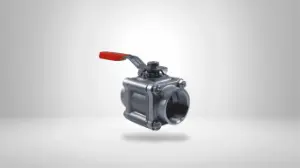
We offer a reliable selection of ball valves or flow control valves designed for smooth operation and long-lasting performance in a wide range of applications. These quarter-turn valves provide tight shutoff capabilities, making them ideal for use in fluid systems requiring low torque and minimal leakage.
Ball Valves are available in a variety of materials including brass, stainless steel, and PVC, our solutions support industrial needs. Whether you're managing water, oil, gas, or chemical flow, our valve options ensure durability and precise control.
With configurations ranging from full port to reduced port and options for 1-piece, 2-piece, and 3-piece designs, we provide flexibility for everything from general plumbing to high-pressure industrial systems.
Explore our complete range of ball valves to find the right fit for your application or contact our experts for personalized guidance.
Related categories: Valves | Valve Accessories | Gate Valves | Pneumatic Safety Valves
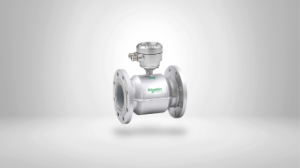
Flow meters measure the rate and total volume of liquids and gases moving through pipes and channels. Accurate flow data supports billing, batching, process control and efficiency improvements.
Flow Meter Types
- Magnetic flow meters – conductive liquids with no moving parts
- Turbine flow meters – clean, low-viscosity liquids
- Positive displacement meters – viscous fluids
- Thermal mass meters – gas flow
- Rotameters – simple visual indication
- Open channel and anemometer meters – water channels and airflow
Choosing a Flow Meter
The fluid, flow range, accuracy, pipe size and installation constraints decide the technology. Consider pressure drop, straight-run needs and output signals.
Centro can help you select flow meters for your fluid and application.
Shop by type: Anemometer Flow Meters | Magnetic Flow Meters | Turbine Flow Meters | Roto Meters | Thermal Flow Meters | Visual Flow Meters
Related categories: Flow Control | Flow Transmitters | Flow Sensors | Flow Switches | Flow Control Accessories
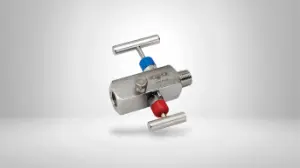
Valve accessories add control, feedback and protection to valves. Actuators, positioners, limit switches, handles and locking devices make valves easier and safer to run.
Accessories Available
- Actuators – pneumatic and electric automation
- Positioners – modulating control
- Limit switches – position feedback
- Gear operators and handwheels – manual operation
- Locking devices and extensions – safety and access
Choosing Accessories
Match valve type, size and mounting standard (ISO 5211). Choose environmental ratings for the installation.
Centro supplies valve accessories and automation packages.
Related categories: Valves | Gate Valves | Ball Valves | Valve Repair Kits & Parts
$4.64$5.00
Subject to factory lead times
$61.49$77.00
Subject to factory lead times

$360.00$640.00
$565.39$637.00
Subject to factory lead times
$12.00
Subject to factory lead times

$224.56$253.00
Subject to factory lead times
$224.56$253.00
Subject to factory lead times
$224.56$253.00
Subject to factory lead times
$224.56$253.00
Subject to factory lead times
$224.56$253.00
Subject to factory lead times
$224.56$253.00
Subject to factory lead times
$224.56$253.00
Subject to factory lead times
$224.56$253.00
Subject to factory lead times
$224.56$253.00
Subject to factory lead times
$306.22$345.00
Subject to factory lead times
$306.22$345.00
Subject to factory lead times
$7.99$9.00
Subject to factory lead times
$3.56$4.00
Subject to factory lead times
$3.56$4.00
Subject to factory lead times
$2.67$3.00
Subject to factory lead times
$3.56$4.00
Subject to factory lead times
$3.56$4.00
Subject to factory lead times
$7.11$8.00
Subject to factory lead times
$9.77$11.00
Subject to factory lead times
$4.64$5.00
Subject to factory lead times
$61.49$77.00
Subject to factory lead times
$360.00$640.00
$565.39$637.00
Subject to factory lead times
$12.00
Subject to factory lead times
$224.56$253.00
Subject to factory lead times
$224.56$253.00
Subject to factory lead times
$224.56$253.00
Subject to factory lead times
$224.56$253.00
Subject to factory lead times
$224.56$253.00
Subject to factory lead times
$224.56$253.00
Subject to factory lead times
$224.56$253.00
Subject to factory lead times
$224.56$253.00
Subject to factory lead times
$224.56$253.00
Subject to factory lead times
$306.22$345.00
Subject to factory lead times
$306.22$345.00
Subject to factory lead times
$7.99$9.00
Subject to factory lead times
$3.56$4.00
Subject to factory lead times
$3.56$4.00
Subject to factory lead times
$2.67$3.00
Subject to factory lead times
$3.56$4.00
Subject to factory lead times
$3.56$4.00
Subject to factory lead times
$7.11$8.00
Subject to factory lead times
$9.77$11.00
Subject to factory lead times
- Selecting the right process instrument starts with defining four things: what variable you need to measure (temperature, pressure, flow, or level), the process conditions the instrument will face (media type, temperature range, pressure range, corrosiveness, and whether the environment is hazardous), the accuracy and response time your application requires, and how the measurement data needs to be communicated (local display only, 4–20 mA signal to a PLC/DCS, or digital protocol like HART or Modbus). For temperature, the choice between thermocouples, RTDs, and infrared sensors depends on the temperature range and accuracy needed. For pressure, gauge type, range, wetted materials, and whether you need local indication or a remote transmitter signal are the key decisions. For flow, the fluid properties (conductive liquid, gas, steam, slurry) determine whether a magnetic, ultrasonic, Coriolis, vortex, or variable-area meter is the best fit. For level, vessel conditions (open vs. pressurized, clean liquid vs. foam/solids) guide the choice between float switches, ultrasonic, radar, or differential pressure technologies. Centro's instrumentation specialists can help you match the right technology to your specific process conditions and budget.
- Accurate process instrumentation is the foundation of safe, efficient, and compliant operations. Every control loop — whether it manages boiler pressure, reactor temperature, tank level, or pipeline flow — depends on instruments that provide reliable, real-time measurements. If a temperature sensor reads inaccurately, a heater may overshoot and damage the product or create a safety hazard. If a level transmitter drifts, a tank may overflow or run dry. If a flow meter is undersized, the control system cannot maintain the correct feed rate. Beyond safety and quality, accurate instrumentation directly impacts energy consumption, raw material usage, and regulatory compliance. Calibrated, properly specified instruments reduce waste, prevent unplanned shutdowns, and provide the data required for regulatory reporting and quality documentation.
- A process control loop is a system that continuously measures a process variable, compares it to a desired setpoint, and adjusts an output to keep the variable at the setpoint. The loop consists of three elements: the sensor/transmitter (measures the variable — e.g., a thermocouple measuring temperature), the controller (compares the measurement to the setpoint and calculates a corrective output — typically a PID controller), and the final control element (adjusts the process — e.g., a control valve that opens or closes to change steam flow). Instruments are the eyes and ears of the loop — without accurate, responsive sensors and transmitters, the controller cannot make correct decisions, and the process drifts out of specification. The entire loop must be properly engineered as a system — sensor accuracy, transmitter range, controller tuning, and valve sizing must all be matched to the process requirements.
- Industrial instruments communicate with controllers and PLCs using standardized electrical signals. The 4–20 mA analog current loop is the most widely used signal in process instrumentation — it transmits a variable measurement as a proportional current (4 mA = zero/low range, 20 mA = full scale), and the current-based signal is resistant to voltage drop and electrical noise over long cable runs. The 0–10 V DC voltage signal is used in some HVAC and building automation applications but is more susceptible to noise and cable length limitations. Discrete (on/off) signals — from switches, relays, and transmitter alarm contacts — indicate threshold conditions like high level, low pressure, or flow/no-flow. Digital communication protocols — HART (layered on top of 4–20 mA for configuration and diagnostics), Foundation Fieldbus, PROFIBUS PA, and IO-Link — enable bidirectional communication between the instrument and the control system for advanced diagnostics, remote configuration, and multi-variable data.
- When instruments are installed in locations classified as hazardous (areas where flammable gases, vapors, or combustible dusts may be present), they must be approved for that classification to prevent ignition. Key considerations include the area classification (Class I for gases/vapors, Class II for dusts, with Division 1 for normally present hazards and Division 2 for abnormal conditions — or Zone 0/1/2 under ATEX/IECEx), the protection method (intrinsic safety, explosion-proof, non-incendive, or purged/pressurized), and the specific gas group and temperature class. Intrinsically safe (IS) instruments — used with IS barriers in the safe area — limit energy to levels too low to cause ignition and are the most common and practical approach for low-power sensors and transmitters. Explosion-proof enclosures contain any internal explosion and are used for higher-power devices. Always verify the instrument's certification (FM, CSA, ATEX, IECEx) matches the area classification before installation.