
Valves - Worcester/Flowserve
Industrial valves control, regulate, isolate, and direct the flow of liquids, gases, steam, slurries, and other process media. From simple shutoff applications to precise flow control and pressure protection, selec...

Centro offers a reliable selection of ball valves or flow control valves designed for smooth operation and long-lasting performance in a wide range of applications. These quarter-turn valves provide tight shutoff capabilities, making them ideal for use in fluid systems requiring low torque and minimal leakage.
Ball Valves are available in a variety of materials including brass, stainless steel, and PVC, our solutions support industrial needs. Whether you're managing water, oil, gas, or chemical flow, Centro's valve options ensure durability and precise control.
With configurations ranging from full port to reduced port and options for 1-piece, 2-piece, and 3-piece designs, we provide flexibility for everything from general plumbing to high-pressure industrial systems.
Explore our complete range of ball valves to find the right fit for your application or contact our experts for personalized guidance.

Valve accessories are additional components that enhance the functionality and performance of valves in fluid control systems. These accessories are designed to provide other features, improve safety, or simplify maintenance of the valves. Valve accessories enhance the reliability, efficiency, and safety of valve operations, making them essential for various industries such as oil and gas, chemical processing, water treatment, and power generation.
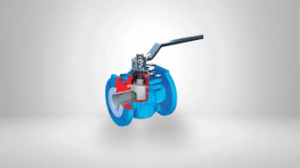
Plug valves are durable, versatile quarter-turn valves designed to provide efficient shutoff and precise flow control in a wide range of industries. These valves use a rotating plug, typically cone-shaped or cylindrical, to open or close the passageway, ensuring a tight seal and minimal leakage. Their simple yet effective design makes them ideal for applications requiring reliable performance in high-pressure or high-temperature environments.
Centro offers a comprehensive selection of plug valves to meet the needs of various industries, from chemical processing to water treatment and food and beverage production. Whether you need a lubricated plug valve for high-pressure systems or a non-lubricated design for minimal maintenance, we have the right solution for your application.
Types of Plug Valves We Offer
- Lubricated Plug Valves – Designed for high-pressure and high-temperature applications with reduced friction and wear
- Non-Lubricated Plug Valves – Low-maintenance option with a self-lubricating sleeve for smooth operation
- Eccentric Plug Valves – Provide enhanced sealing for handling slurries, wastewater, and abrasive media
- Expanding Plug Valves – Offer a bubble-tight seal for critical isolation applications
- Multi-Port Plug Valves – Allow for multiple flow configurations in complex piping systems
Why Choose Plug Valves from Centro?
- Engineered for tight sealing and reliable shutoff in demanding environments
- Available in a variety of materials, including stainless steel, cast iron, and polymer-lined options
- Suitable for industries such as oil and gas, water treatment, chemical processing, and food production
- Backed by industry-leading manufacturers to ensure quality, durability, and performance
Centro is your trusted source for high-quality plug valves. Browse our selection and order online today, or contact our team for expert guidance in selecting the right valve for your application.

Valve positioners are used to achieve precise control in industrial applications where the flow of liquids, gases, or steam needs to be accurately regulated. These devices adjust the valve actuator's position based on input signals, ensuring optimal performance and efficiency in process control systems.
Types of Valve Positioners
Centro offers a full range of valve positioners to meet various industry needs, including:
- Pneumatic valve positioners—These use air pressure to adjust valve positions, and they are ideal for applications requiring fast and reliable control.
- I/P valve positioners (current-to-pressure) – Convert electrical signals (4-20mA) into pneumatic pressure to precisely control valve actuation.
- Electro-pneumatic positioners – Combine electrical and pneumatic inputs for enhanced control in automated systems.
Choosing the Right Valve Positioner
Selecting the right valve positioner depends on factors such as:
- The type of actuator (linear or rotary)
- Control signal requirements (pneumatic, electric, or hybrid)
- Environmental conditions, such as temperature and pressure
- Desired precision and response time
Why Choose Centro for Valve Positioners?
- Extensive selection of valve positioners, including pneumatic and I/P models.
- High-quality products sourced from leading manufacturers.
- Competitive pricing to ensure cost-effective solutions.
Expert support to help you find the best positioner for your system.
Whether you need a simple on/off control or a complex proportional positioning system, Centro has the right valve positioner for your application. Browse our selection online or contact our team for expert assistance in choosing the best solution for your process control needs.
$144.62$198.00
$173.11$237.00
$327.23$448.00
$481.35$659.00
Subject to factory lead times
$407.58$558.00
Subject to factory lead times
$485.73$665.00
$780.82$1,069.00
$691.71$947.00
$165.08$226.00
$205.98$282.00
$249.80$342.00
$270.26$370.00
Subject to factory lead times
$144.62$198.00
$173.11$237.00
$327.23$448.00
$481.35$659.00
Subject to factory lead times
$407.58$558.00
Subject to factory lead times
$485.73$665.00
$780.82$1,069.00
$691.71$947.00
$165.08$226.00
$205.98$282.00
$249.80$342.00
$270.26$370.00
Subject to factory lead times
- Use a ball valve for simple on/off shutoff, a control valve when you need to regulate flow rate or pressure, and a check valve to prevent backflow. The choice comes down to whether you need to stop flow, control it, or protect against reverse flow.
- Cv is the flow coefficient — how much water a valve passes at a given pressure drop. Full port means the valve opening matches the pipe diameter for unrestricted flow; regular port is slightly smaller. End connections describe how the valve connects to pipe (NPT threads, flanges, etc.). Body material determines compatibility with your media and environment — brass, stainless, and PVC are the most common.
- Start with your required Cv based on flow rate and pressure drop. Then confirm the valve's pressure and temperature ratings exceed your system's maximums. Undersizing causes excessive pressure drop; oversizing reduces control precision. Always size for your actual operating conditions, not system maximums.
- Fail-open means the valve opens if power or signal is lost; fail-closed means it closes — critical for safety applications. NPT is a threaded connection best for smaller pipes and lower pressures. Flanged connections bolt between pipe flanges and are preferred for larger pipes, high pressure, or applications requiring frequent removal.
- Ball valves use a rotating ball for fast quarter-turn shutoff and are ideal for frequent operation. Gate valves use a rising gate for full open/close and are better for infrequent operation where minimal flow restriction matters. Ball valves are generally more reliable, longer lasting, and easier to operate.
- Because no single valve works well in every application. Pressure, temperature, media type, flow control needs, pipe size, and safety requirements all vary dramatically across industries. Each valve type is engineered to solve a specific set of those problems efficiently.
- Ball valves offer tighter shutoff and are better for smaller lines or where zero leakage matters. Butterfly valves are lighter, more compact, and more cost-effective for larger diameter pipes. For high-volume water flow in large lines, butterfly valves are typically the practical choice.
- Look for stainless steel or carbon steel body construction, graphite or metal seat materials, and valves rated for your specific pressure-temperature combination. Globe valves and ball valves with metal seats are commonly used in high-temp applications. Always verify the valve's published P-T rating before specifying.
- Match the valve type to your application (shutoff, control, or check). Verify body material compatibility with your media. Confirm pressure and temperature ratings exceed operating conditions. Consider end connection type, actuation method, and maintenance requirements. When in doubt, over-specify on pressure rating rather than under.