
Level Control
Level Control systems are essential for monitoring and managing the amount of material stored or flowing within bulk solids handling equipment such as silos, bins, hoppers, and conveyors. These systems help prevent...

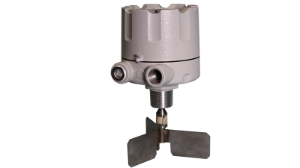
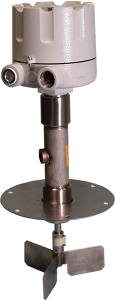
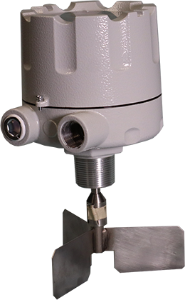
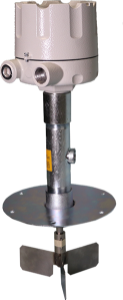
Level Switches are critical devices used to detect and control specific material levels within hoppers, silos, bins, and other bulk storage containers. Designed for bulk solids such as powders, granules, and pellets, these switches trigger alerts or system actions when material reaches a defined point whether high, low, or intermediate. This helps prevent overfilling, ensures continuous flow, and protects equipment from running empty. Available in a variety of technologies including rotary paddle, vibrating rod, capacitance, and tilt switches, Level Switches offer reliable, low-maintenance solutions for demanding industrial environments. They play a vital role in maintaining safety, efficiency, and process accuracy in material handling operations.
Rotary airlocks, also known as rotary valves or feeders, control the flow of bulk materials while maintaining an effective air seal in pneumatic conveying systems. Installed beneath hoppers, bins, cyclones, and dust collectors, they ensure consistent material discharge while minimizing air leakage and preserving system efficiency. Available in multiple configurations, including round flange, square flange, drop-through, and blow-through designs, rotary airlocks are suitable for handling powders, granules, and pellets across food, pharmaceutical, plastics, chemical, and industrial applications. Durable construction and precision engineering deliver reliable, long-term performance in demanding environments.
Configure product to see pricing
Configure product to see pricing
Configure product to see pricing
Configure product to see pricing
Configure product to see pricing
Configure product to see pricing
Configure product to see pricing
Configure product to see pricing

Configure product to see pricing
Configure product to see pricing
Configure product to see pricing
Configure product to see pricing
Configure product to see pricing
Configure product to see pricing

Configure product to see pricing
Configure product to see pricing
Configure product to see pricing
Configure product to see pricing
Configure product to see pricing
Configure product to see pricing

Configure product to see pricing
Configure product to see pricing

Configure product to see pricing
Configure product to see pricing
Configure product to see pricing
Configure product to see pricing
Configure product to see pricing
Configure product to see pricing
Configure product to see pricing
Configure product to see pricing
Configure product to see pricing
Configure product to see pricing
Configure product to see pricing
Configure product to see pricing
Configure product to see pricing
Configure product to see pricing
Configure product to see pricing
Configure product to see pricing
Configure product to see pricing
Configure product to see pricing
Configure product to see pricing
Configure product to see pricing
Configure product to see pricing
Configure product to see pricing
Configure product to see pricing
Configure product to see pricing
Configure product to see pricing
Configure product to see pricing
- Rotary paddle level switches (also called rotary bin indicators) are the most common and cost-effective point-level device for dry bulk solids. They work mechanically — a low-speed motor slowly rotates a paddle inside the vessel, and when material contacts and stalls the paddle, a switch activates. Rotary paddle switches are reliable for a wide range of bulk materials including powders, granules, pellets, and flakes, and they are available with different paddle styles (standard multi-vane, collapsible, extended) to suit various material densities and mounting configurations. Vibrating probe switches use a vibrating rod or fork — when material contacts the probe, it dampens the vibration and triggers the switch. These are better for fine powders and materials that might not reliably stall a paddle. Capacitance level switches detect changes in electrical capacitance caused by the presence of material near the probe, making them suitable for materials with consistent dielectric properties. Magnetic sensing switches like the SafePoint use a patented magnetic sensing approach with smart-sensor processing, providing a self-validating fail-safe system that continuously confirms the sensor is working correctly — this overcomes risks more common with optic-sensing systems. The best choice depends on the material's bulk density, particle size, flow characteristics, temperature, and the mounting location on the vessel.
- Rotary paddle level switches can be fitted with different paddle actuators to optimize performance for specific materials and mounting situations. The paddle selection should account for the material's bulk density, particle size, flow characteristics, and where the sensor is mounted on the bin or silo. Standard multi-vane paddles (such as the 4-vane style) are the most common — they provide good surface area for reliable detection across a broad range of bulk densities and particle sizes, and are a good general-purpose choice for granular materials like pellets, grains, and coarse powders. Larger diameter paddles provide greater torque sensitivity for detecting lighter, lower-density materials like fine powders or flour. Collapsible paddles are designed to be inserted through a standard mounting hole without needing to cut a larger opening in the vessel wall — the vanes fold during insertion and expand once inside, making them ideal for retrofitting sensors on existing bins and silos where access is limited. The paddle material of construction (often stainless steel for food-grade or corrosive environments) must also be compatible with the product being stored. Selecting the wrong paddle can result in false triggers, missed detections, or premature wear.
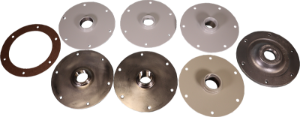
- Level switches can be mounted on the side or top of a bin or silo depending on the application and the level point being monitored. Side mounting is the most common configuration — the sensor extends horizontally through the vessel wall so the paddle or probe sits at the exact height where material presence needs to be detected. This is typically used for high-level (overfill prevention), mid-level, or low-level detection. Top mounting positions the sensor vertically through the roof of the vessel with the paddle or probe extending downward to the desired detection height — this is used when side access is limited or when monitoring level near the top of the vessel. Mounting plates are available in various configurations to connect level switches to different vessel types. These plates are selected based on thread size, coupling type, and material of construction, and include options for both side and top mounting with appropriate gaskets. When choosing a mounting location, consider the material flow pattern inside the vessel — avoid locations directly in the fill stream where incoming material could damage the sensor, and position the sensor where material will reliably reach it during normal operation rather than in a dead zone where material may bridge over or rat-hole past the detection point.
- A fail-safe level switch is designed so that if the sensor itself fails — due to a motor burnout, wiring fault, power loss, or electronic component failure — it automatically goes to the safe (alarm) state rather than silently failing and allowing a dangerous condition like bin overflow or equipment damage. In bulk solids applications, this is critical because a level switch that fails undetected could allow a bin to overfill (causing material spills, structural damage to the vessel, or safety hazards for workers) or allow a process to run dry (damaging downstream equipment like conveyors, feeders, or pumps that rely on a steady material supply). Self-validating fail-safe level switches like the SafePoint go a step further — they continuously monitor their own operation and confirm that the sensor is functioning correctly, providing a visual LED indication and an independent relay contact output for status. If the sensor detects an internal fault, it immediately signals an alarm condition so operators can address the issue before a process upset occurs. This self-validating approach provides a higher level of reliability than standard level switches that simply change state on failure, because it actively confirms healthy operation at all times rather than only alerting when something goes wrong.